Archive for the ‘Family’ Category

Best Doggone Dog In The West*

December 2, 2011


    That’s Sauger looking over Great Sand Dune National Park during a road trip with his soul mate a few summers ago.  He’d already turned twelve by then which is old for a big dog – just check out his grey muzzle.  He loved his home, but wouldn’t be separated from her if it was within his power not to be and he thus enthusiastically accompanied her on this artist-in-residency.

  Although we have many photos of him with friends and all family members, I am quite drawn to the one above.  It makes me think hard about what the world must have looked like through his eyes.  It makes me remember the subtle new verve in his demeanor I noticed when the two of them picked me up at the dusty windblown airport about an hour from that remote park.

  He’d seen things.  Smelled them first probably.   Ya, imagine the rich sensual experience it was for him, an Iowa boy, to take it all in from high up the side of a mountain.  Then near the end of their stay, it must have been an immensely satisfying, if uncomplicated, recapitulation of an incredible existential adventure.

  He’d had to worry about blowing sand, coyotes at night, weird birds and bugs, a thundering herd of elk, steep mountain trails, and the cold snow rimmed (in summer!) mountain lake far above tree line – all the while keeping close tabs on his companion.  He and she had survived it all – together – and their bond deepened to unplumbed depths by the end of the experience. 

  In his book Dogs Never Lie About Love, Jeffrey Moussaieff Masson goes to a very great length to describe canine capacity for emotion and our capacity to be drawn into it.  “Perhaps it harks back to a time when humans were more like dogs, more spontaneous, more capable of expressing joy, able to experience intense emotions and enjoy the world outside our skins more immediately, in the same way we see our dogs doing.”

  “If any species on earth shares this miraculous ability with us [to love intensely and completely] it is the dog, for the dog truly loves us, sometimes beyond expectation, beyond measure, beyond what we deserve, more, indeed, than we love ourselves.”

  Holy Dogs.  Our friend Sauger moved on earlier this week just a few months shy of his fifteenth birthday.  He was strong and vigorous till nearly the very end and the marvel of vet, friend, and foe.

  Here’s how it is for his favorite artist: “It came to me that every time I lose a dog they take a piece of my heart with them.  And every new dog who comes into my life gifts me with a piece of their heart.  If I live long enough, all the components of my heart will be dog and I will become as generous and loving as they are.”

  Jeesh.  Best doggone dog in the west.       

*From the lyrics to the song you just heard.  See the movie if you haven’t.

**cf post of 6/9/10 for Sauger’s near drowning

***cf post of 10/17/09 for more about the Sand Dunes

****cf post of 5/8/09 for a photo and emotional prelude

*****cf post of 11/21/08 for a photo and a brief look into his mind
Wonder If He Still Had An Accent

November 18, 2011


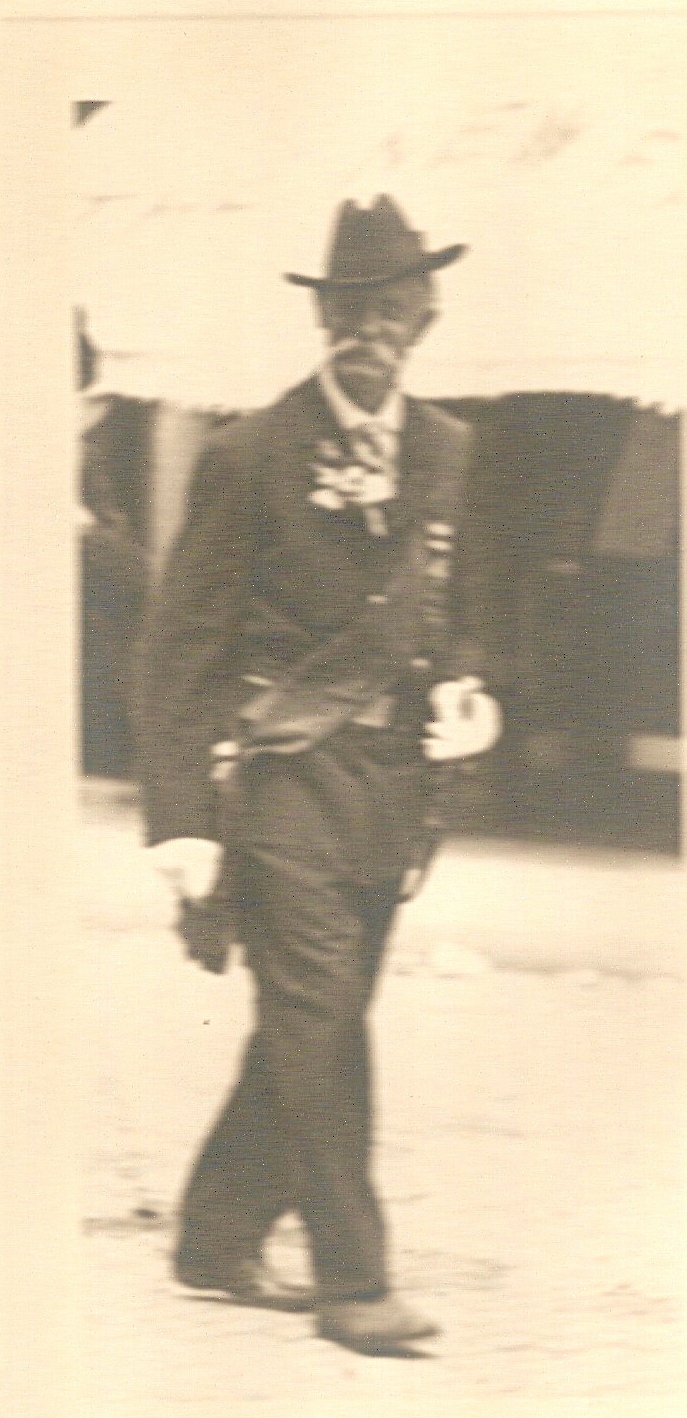
   OK.  See that guy?  That’s William Godfrey. He was born in Kent England late eighteen-forties and began life in an orphanage.  Somehow left/escaped and in 1855 made his way to the states as a stowaway.  Found work as a butcher’s apprentice.  Few years later mustered into the Union Army.

  Was captured and taken to the infamous “Can this be hell?” Andersonville prisoner-of-war camp shortly after its opening in February 1864.  Roughly one in three fell to its deadly mix of beatings, squalor, and disease.  Before succumbing, one, hometown Geneseo Illinois, showed a tintype of fiancé.  Her name, Myra, was the last word to leave friend’s lips.

  Emaciated and dehydrated, Godfrey said that he survived interment by making his way, under the dark of each night, over and around the dead and dying to a fetid creek.  Months felt like eternity, but miraculously, come summer, he became part of a prisoner exchange and led a group of forty men driving 200 cattle 300 miles to meet Sherman in Atlanta.

  Fourteen survived to join the General’s conflagratory march to the sea.  There, he boarded a ship which caught fire and foundered off Cape  Hatteras.  Didn’t know how to swim and went down three times that he remembered – the last of which fondly…  Came to on deck of another ship making north.

  Marched in a parade in Washington, DC.  Eastern army was done up in crisp uniforms and white gloves.  Passing before President Lincoln’s box, Godfrey and the rest of the Western army were bedraggled, barefoot, barehanded, and bareheaded.  They felt disgraced, but were fed and regained energy and horizon.

  War ended soon thereafter and he mustered out to homelessness.  Thought of that tintype which he’d somehow kept, made his way to Geneseo, and even though the scrap was by then but a vestigial facsimile found where lived she of whom it had been taken.  Found her in a garden.  Found her beautiful beyond any dream. 

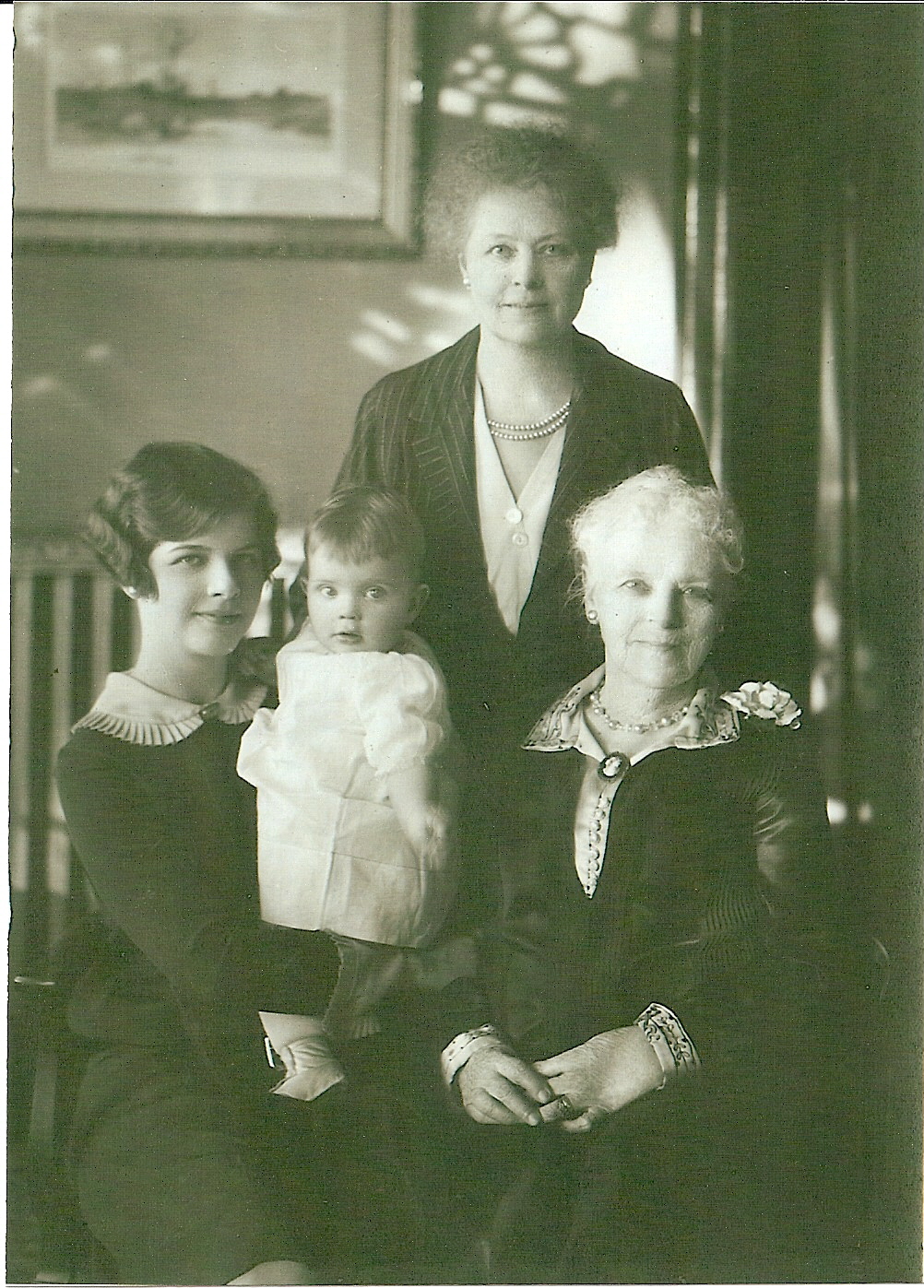
  She’s the one in the photo below, at lower right.  Great-Great-Grandma Godfrey.   Babe in starched linen is my mom. Grandma Gretchen is holding her with Great-Grandma Lu standing behind.  Grandpa Godfrey was gone by then, but had apparently led every town and county parade – fully festooned – till he was no longer able.  Wonder if he still had an accent.

Nice Shorts

September 16, 2011


  Just after the first of the year a twentysomething, uh, friend noticed a problem.  Performing a Lance Armstrong inspired inspection while showering he noticed a bit of topography that had not previously been there.  Uh, oh.  Oh well, probably nothing.

  Was something and it got bigger over the course of the following few months.  “Jeesh, better look into this” he thought.  “But how?” he wondered being a long way from last doctor visit and starting to get a bit nervous. 

  Tough not to think of stuff like that once your mind wraps around it.  “I don’t give a shit if I never win the Tour de France” he thought.  “But I know I don’t want my olive skewered or whatever else treatment might involve.”  Thoughts of excision came soon to his mind.  Dirt nap next.

  After calling a few friends he found himself at a clinic about which he’d been told by one who’d used it to procure allergy medicine.  “I got a lump on my leg” was all that he’d given when making the appointment.  “Right or left?”  “right”.

  Nurse guided him back to a room where he sat in wait upon one of those weird uncomfortable tables.  Door opened after a few minutes and in walked an attractive woman approximately five years his senior.  “Hi, I’m Dr. Anniston, what seems to be the problem?”

  Friend isn’t shy, but for a moment lost track of his thoughts.   “Problem with your left leg?” Doc asked.  “Not exactly.”  “Not exactly?”  Sigh.  “I noticed something in the shower a few months ago and it’s only gotten bigger”. 

  “Oh I see.  Right one I take it then?”  “Ya.”  “OK, stand up, drop your pants, and we’ll have a look.”  His attention lapsed again for a split second as he recalled the old bit regarding the wisdom of leaving home in less than perfect underwear.

  She pulled up a stool sat down and waited for clothes to hit the floor.  “Nice shorts”.  Palpated left then right then each again.  After a few moments of this she said “you’re probably ok, but we had better have an ultrasound.  Nice to meet you and we’ll be in touch with the results.”

  The procedure was done a few days later.  Was much less embarrassing.  Pants only part way down, towel covering all but the one orb.  Nonchalant technician rubbed the thing with warm gel and then gently passed a wand all around it while peering into a screen.  Didn’t say much except at the end to proffer tissue and to expect a call.

  Later that afternoon, it came: “Hi, this is Dr. Anniston.  Would you like to meet me later today?  I’m working late.”  “Uh sure, at the clinic?”  “No, 1323 Montana Santa Monica, R and D.  8:00 PM, ok?”  “Uhm OK”.  That had all transpired so quickly and he’d been taken so aback that he didn’t ask any questions.  He was terrified.  “R and D, that can’t be good” he thought.  On the drive over he debated whether or not to call friends or folks.  Decided against it. 

  Everything was ablur and it was too dark to read addresses anyway.  He parked the car in a spot he knew had to be close and made his way.  Heart racing three times his resting pulse, he almost got hit in a cross walk. 

  Found the place and went in.  There were lots of people.  It was a bar*.  Doc walks up, big smile, hot pink low cut wrap around dress.  “Call me Andrea and let’s have some drinks.  “You’re fine and I thought it’d be fun to celebrate!”

*http://www.hillstone.com/#/restaurants/cafeRandD/

**coincidentally, “friend” did some design work for men’s grooming products company Axe some of which are depicted in advertisement below.


Probably Not PC

July 2, 2011

  I’ve always loved fireworks and come naturally by that I guess.  Dad always had ordnance around in abundance.  He went fishing once with dynamite up in Canada.  I love the memory of him relishing the retelling.  It was Bikini Atol revisited with boats rolling gunwale to gunwale; all soaked to the bone; and non-swimmers trembling uncontrollably.  But no fish.

  Explosives have successfully been employed to kill things of course,but – in an incredible yet elementally characteristic paradox of this universe – as modes and expressions of creativity as well.  Several examples:

  First, well first “Let there be light”.  The Big Bang from whence arose all beautiful metaphysical wondering.  Whether or not you believe these fireworks were orchestrated by a dude in robe and slippers you’ll have to admit its unfolding to date is amazing to behold.

  Isn’t that what comes to mind each July 4th or 14th or whatever national holiday or celebration as you watch maybe a chrysanthemum burst first forth

  and then a palm

  and then a crossette

  and then a kamuro

  All followed by first the light and then the resound of the mighty salutes?

  Fireworks were invented in China some 2000 years ago.  The story goes that a Chinese cook accidentally mixed the key ingredients too close to a fire and thus soon saw a flash.  Duly impressed with himself, he made more, packed it in a bamboo tube, and then, well, however you say ‘voila’ in Chinese.  Marco Polo took the stuff back to Florence where color was added and pyrotechnics joined the other arts of the Renaissance with which you might be more familiar.

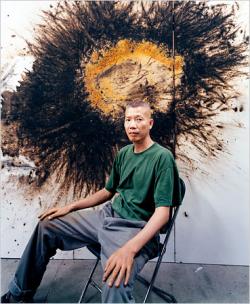
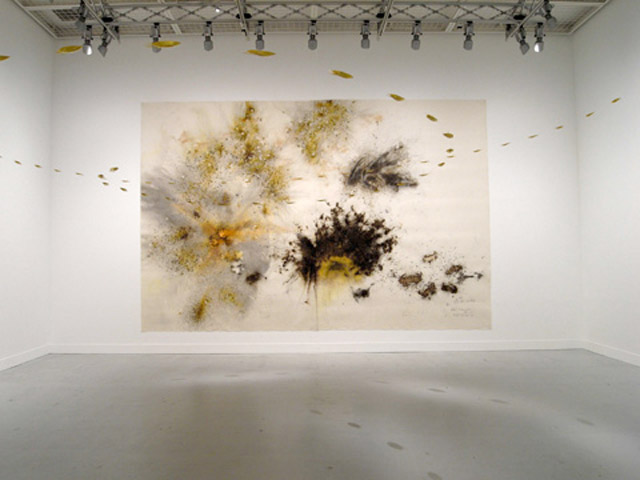
  More recently, Chinese artist Cai Guo Qiang (b 1957 in Quanzhou) has built a career with gunpowder as the original component of his medium.  He’s big stuff.  He first employed it in the creation of (believe it or not) works on paper – ‘gunpowder drawings’- embodying spontaneity and confronting authority.  They’ve been the subjects of exhibitions in prominent museums around the world including one at the Hirschorn in 2004 over which wife, daughter #1 and I marveled.

  From there he’s gone on to create magnificently choreographed “explosive events” including one watched by billions – the opening of the Beijing Olympics in 2008.  His work is not just of chemistry.  It incorporates motifs, metaphors, and representations of shanshui paintings, Mao*, fengshui, and much more.

  After all of this one should not be surprised to learn that a certain pair became engaged on one July 4, watched the show from a mountain top, and had Handel’s Fireworks  play at the ceremony some weeks later.  It’s been a blast!

*cf Post 2/13/09

Pas Timide

June 17, 2011


  Can you believe the news of men of late?  Deeds done that you’d call inane if not for collateral damage, ramifications, and victims?  A presidential candidate with a love child.  A governor with one too.  A congressman broadcasting his ‘package’.  The French president of the International Monetary Fund accused of violent sexual abuse.  Jeesh.  Brings to mind the first line of a Neruda poem: “It so happens I am sick of being a man”.

  Well, I don’t wish I played for another team and understand those actions to be, like, mutations in the drive without which none of us would be here.  Still, what’s up?  Take the last incident cited above.  How could one of the most prominent men on the planet undertake such horror?  From whence could he have come?

  First reports from France conveyed a sense of outrage for the fact that a front runner for their next presidential campaign was seen across all media doing a perp walk.  Soon though came reports of other unwanted encounters with DSK and then, amazingly, of a broader related permeation of French society.

  It was incredible to listen to a female editor of the prominent French newspaper, Le Monde, describe conditions for women, though not perfect, as much better here in the USA than en France.  This from a culture in which the employment of idiomatic Americanisms can be illegal and American taste and popular culture vilified. 

  Made me break out de Tocqueville.  “In France… women commonly receive a reserved, retired, and almost conventual education… then they are suddenly abandoned, without a guide and without assistance, in the midst of all the irregularities inseparable from democratic society.”

  Yikes!

  “Long before an American girl arrives at the marriageable age, her emancipation from maternal control begins: she has scarcely ceased to be a child, when she already thinks for herself, speaks with freedom, and acts on her own impulse.  It is rare that an American woman, at any age, displays childish timidity or ignorance.”

  Democracy in America was first published in France en Francais in 1835.  Perhaps “plus ca change plus ca meme chose” – More things change the more they remain the same.  The American women with whom I’m most familiar would most definitely not be taken for ignorant or timid.  Toward one should an uninvited paw be extended, a bloody stump would be what was pulled back. 

*Walking Around

**cf post of 10/9/09 for more examples of neat stuff us guys think up

I (Sorta) Wonder What It’d Be Like…

May 20, 2011


  Brother was riding his bike recently, came upon an unexpected obstruction, went over the handlebars, and fractured his wrist.  His recollection of the event was interesting.  “It was all in slow motion.  I remember the sound pattern made by my helmet on the sidewalk.”

  Perfect timing.  Maybe not for him, but for us.  In the April 25 edition of the New Yorker, there’s an article about scientist David Eaglemen whose research seeks to understand our perception of time.  He was drawn to that study by the experience of falling off a roof as a child.  “In life threatening situations, time seems to slow down.  It’s a moment of absolute calm and eerie mental acuity.”

  Why?  Well, it seems that it’s a matter of how much information is on the way to the brain and how it coordinates.  By way of example, light travels faster than sound, but they use a starting pistol in the Olympics instead of a light flash because the brain reacts more quickly to sound.  Cavemen would have been well advised to flee a rustling of the brush long before a predator presented itself visually.

  The more stimulating and/or serious a situation, the more input sent to our accreted cerebral “hodgepodge of systems”.  One component, the amygdala, is sort of an emotional node and seems to become hyperactive when scared and records far more detail than when bored. 

  As a result, one’s experience of the passage of time is vivid and slows significantly.  During an experiment, subjects terrified by a uniquely “plausibly deadly” amusement park ride overestimated the passage of time by thirty-six percent.

  Ok.  What event would put one most in extremis… would push the phenomena the furthest?  Having your head cut off comes most immediately to my mind, but to be honest I have to admit that not an original thought.    

  From the perspective first of a caveman finding his neck in the jaws of a saber toothed tiger, through the likes of John the Baptist, Anne Boleyn, and Marie Antoinette, writer Robert Olin Butler wrote a book entitled Severance in which he presents sixty-two different takes of what the experience of decapitation might be like.

  He begins with these two epigrams to set tone and style:  “After careful study and due deliberation it is my opinion the head remains conscious for one minute and a half after decapitation.” (Attributed to a Dr. Dassy D’Estaing 1883) And: “In heightened state of emotion people speak at the rate of 160 words a minute.”  The math works out to about 240 words for that ninety seconds and is thus the length of each of the stories.

  Sweet précis, eh?  Mull that around a bit.  Would you be dizzy if your head rolled? Would it feel claustrophobic if your noggin fell into a basket?  Would you be able to close your eyelids?  Would you if you could?

  Courtesy of Mr. Butler, here’re the last 240 words that came to the mind of Ta Chin, a Chinese wife beheaded by her husband in 1838:

“straight and whole are my feet I would rise and run as I have loved for many winkings of the moon to run with my brothers but I press my feet side by side and wiggle my toes this last time and whisper to them goodbye I know what is before me my mother in the courtyard singing prayers to Kuan Yin the goddess of mercy, not to spare me a life of pain but to wither my feet to perfection, the mercy of the golden lotus, the mercy of a wealthy man to keep me, I tremble I am ready to weep but for these tiny stones of anger Kuan Yin has placed in the corners of my eyes even as the footbinder puts the soaking tub before me that first night even as my husband trembles before me in the torch light trembling always from the opium but this night he trembles from what he believes about the brushing of my sleeve by a man he himself brought to our house and my mother sings and my toes are seized and folded hard under and the wrappings wind and wind and squeeze and my arch cracks and I see Buddha in heaven sitting on his lotus but it is my naked foot the golden lotus he sits upon and hands push me down my neck made bare and I cry please, before my head cut off my feet

  Think I’d try to think of the Marx Brothers.  Or maybe Mel Brooks.  Ya, that’s it – Young Frankenstein.

*New Yorker, April 25, 2011, “The Possibilian” by Burkhard Bilger

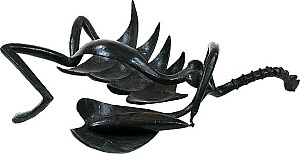
**Sculpture above?  It’s Woman With Her Throat Cut by Alberto Giacometti.

Tornado in a Lumberyard

April 29, 2011


  The 1913 Armory Show was arguably the most important exhibition of art ever organized on this continent.  It introduced cubism, futurism, Cezanne, Duchamp, Picasso, and much more to audiences on this side of the pond and inflected the NA zeitgeist like nothing else before or since.    

  It was up in NYC from February 17 to March 15 of that year and then traveled to Chicago where it hung in the Art Institute March 24 to April 16.  From there it went back east to Boston.

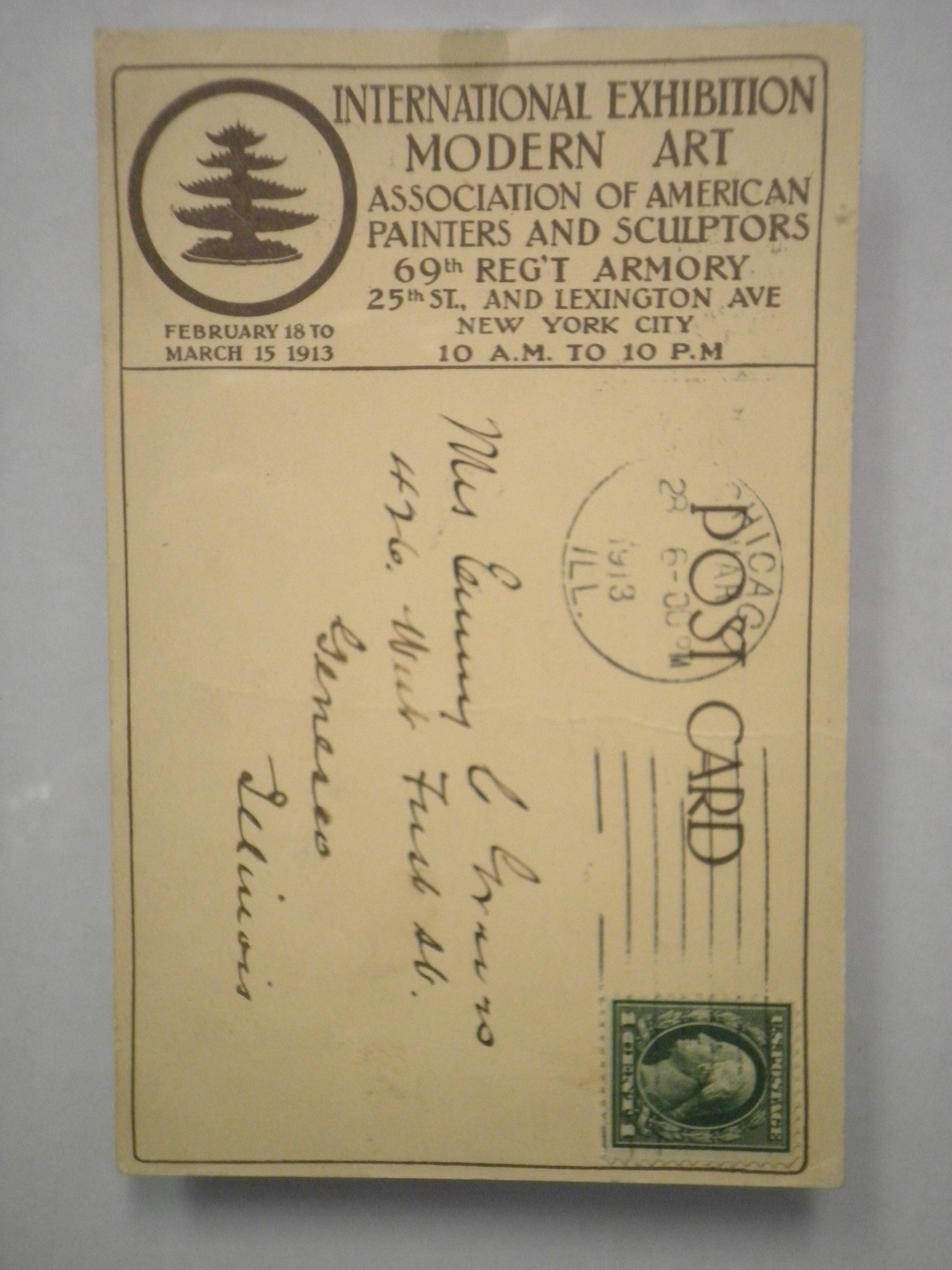
  The postcard image above is, of course, Duchamp’s Nude Descending a Staircase.  My great-grandfather sent it to my great-grandmother from the Chicago venue.  His handwriting encircling the picture reads:

 “This is a photo of one of the cubist pictures.  It is said to be a picture of a nude woman walking down stairs.  I don’t think any of the postal authorities will object to it as improper as it goes through the mails.  I have one more I will bring home with me.” 

  “There is no news.  I went to see this exhibit and must say it is a fright.  Yet I heard one or two fools raving over the beauty of these daubs.  It was worth going to see however just to see what some will praise.  Lorado Taft* says it reminds him of nothing so much as a lumber yard after a tornado.  Home as usual tomorrow at 6.  Yours, EC”

  My great-grandfather was a judge who frequently traveled between Geneseo, Illinois and Chicago.  He died young and left my grandmother, one of five offspring to survive, and great grandmother to fend for themselves.  Grandma adored her father and held dear precious memories and memorabilia through to the end.  Interesting now to allow them to take one back…

   Compare the image on top with the one just above and you will get an idea of an experience none of us will ever again have.  An in-person audience with a work of art will always be different than one with a reproduction**, but any potential for shock and awe has been removed by the quality and ubiquity of virtual experience.

  On second thought, I retract that observation.  Or qualify it I guess with the addition of the following phrase:  given current knowledge of our universe…

*Lorado Taft (1860-1936) was a prominent American sculptor and teacher.  His studio was in Chicago and he taught at the Art Institute.

**I’m pretty sure I’ve used this in a previous post, but in case you’ve forgotten, New Yorker critic Peter Schjeldal wrote: “Reproductions are like pandering ghosts, they show us what we want to see”. 


Blow Me Away

April 11, 2011

  Kids all live in California.  For now anyway.  Closest pattern in years by far so we decided to visit.  Spent two days with each, drove up coast for two, and rode train home for two.  It was fun.

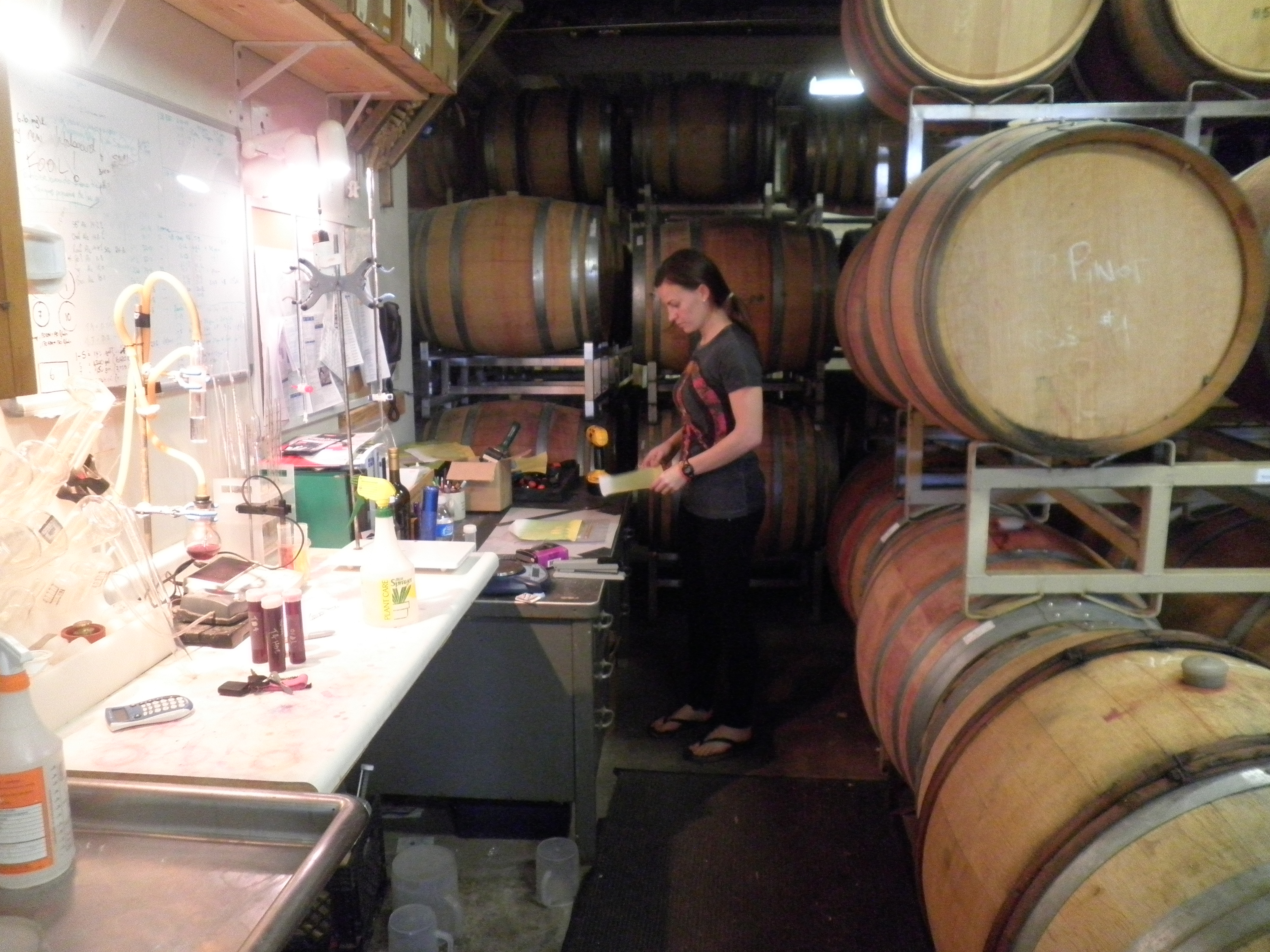
  Beautiful thing above is the work of youngest daughter.  It’s a bit of found art in a way.  She’s an assistant winemaker in Sonoma and that image is – believe it or not – the result of a test (chromatograph) assessing the degree to which a certain type (malolactic) of fermentation has progressed in this year’s chardonnay. 

  The winemaker drops a few drops onto the paper and then holds it upright to allow for capillary action.  The resulting patterns and distribution of color convey the necessary information.  At the appropriate point a sample is taken to  their lab and analyzed for enzymatic malic acid.  It is this aspect of the chardonnay’s chemistry that can create a ‘buttery’ sensation.    Daughter is responsible for this and the rest of Petroni oenological midwifery while boss is in New Zealand for a month.

  The above is a digital representation of the design for the 2K Sports Corporate Offices in San Francisco courtesy of son/Section V Media.  He and partner/friend from grad school set up shop in Hollywood and dang if they aren’t making a go of it in these incredibly difficult economic conditions.   Speaking as an SOB (son of the boss),  I’m impressed.

  Firm offers a range of design services and has left tracks from coast to coast.  Spaces from Madison Square Garden to UCLA stadium have been graced with the fruits of their labors.  Nike, Simon Malls, Williams Sonoma, Diet Pepsi, and more have had their missions furthered therewith.  You see him above atop Runyon Canyon, the trail for which begins paces from their office.

  Photo above is of the grave of Cesar Chavez  on the grounds of the Foundation commemorating his life and work.  Chavez launched the United Farm Workers for which oldest daughter is a lawyer.  (She can’t call herself a lawyer there because she’s not yet taken the California bar.  But she’s admitted in Maine and Massachusetts and I’m her dad and can call her anything I want).

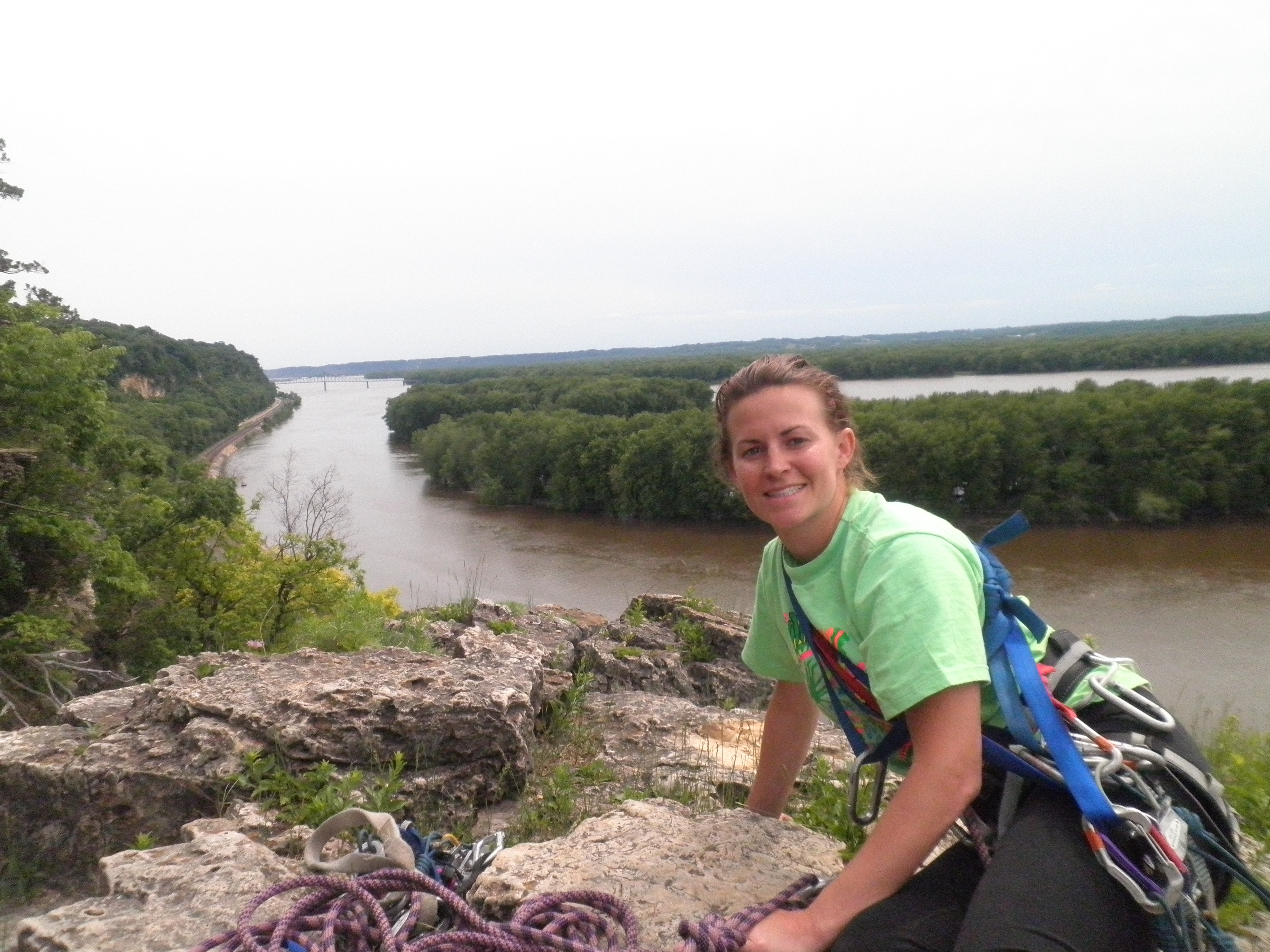
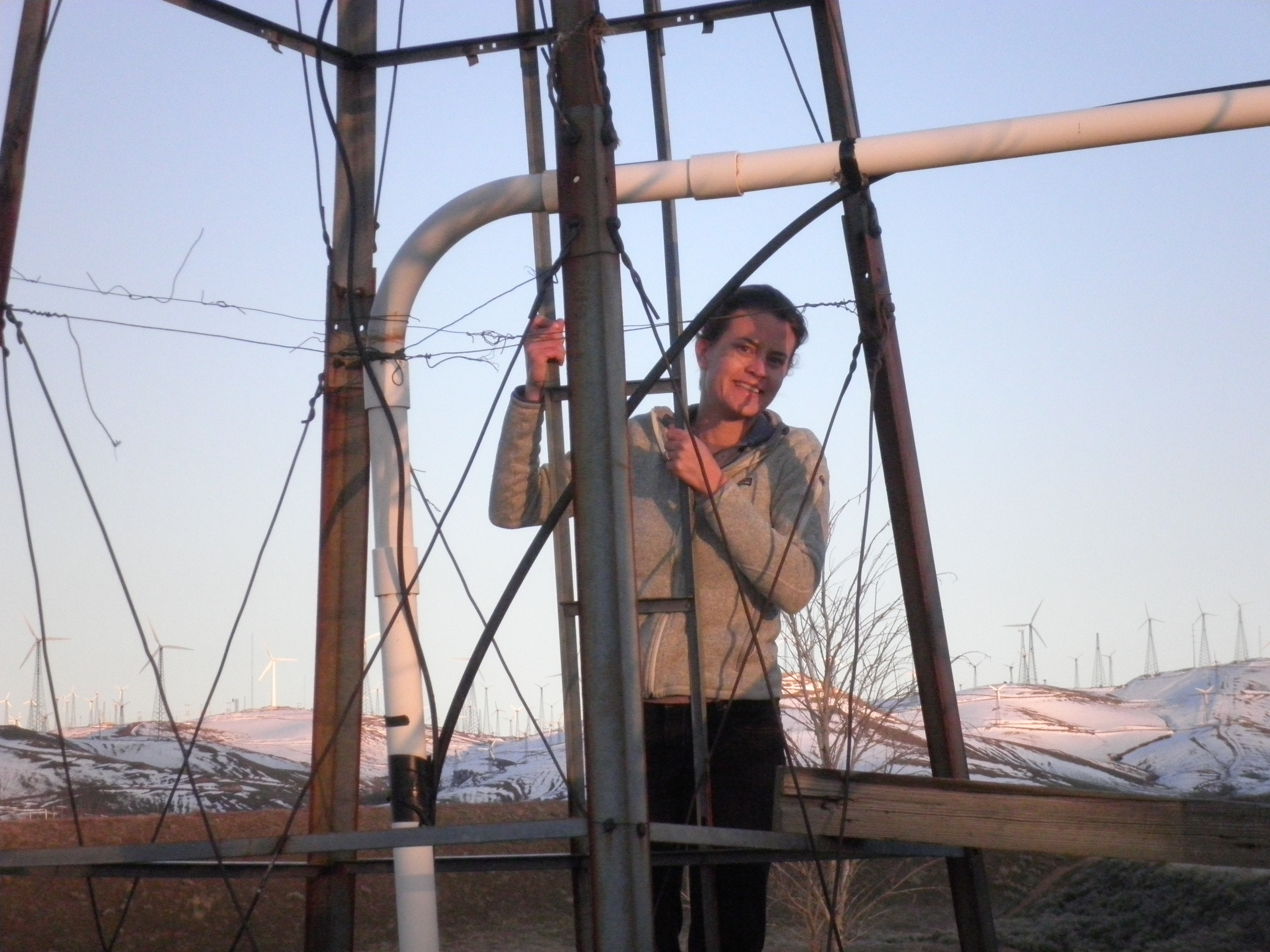
   She speaks fluent Spanish and enjoys the opportunity to use it in that demanding environment in which accuracy is crucial and picking up on inflection can make a difference. The skill is but one of a considerable set held together by an incredible sense of compassion.  She and her neat (space industry start-up) husband live on a farm off the grid.  Long way from Middlesex St in London or Manhattan’s lower east side.  Below you see her working on their windmill.

  As I’ve said before*, trains are a great way to travel.  The intimacy thus engendered is of a sort all its own and as you can see below, I thus again found myself the subject of my artist wife.  Paraphrasing Giacometti’s last surviving model’s description of the sitting experience: “I think her gaze travelled elsewhere, beyond the person in front of her.  So much so that when she was working on a sketch of me, I had the impression that she was in fact searching for my skeleton”.**  Or even deeper…

  Giacometti’s wife also sat for him and was his most ardent supporter.  “They had a highly poetic outlook on life.  I can’t explain it, [their marriage] was something that broke all the conventional rules.  Sculpture was a mediator between husband and wife, it both united them and highlighted their differences.”

  Yup.  Blow me away.

*cf post 1/31/09

**The Art Newspaper April 2011 p48

Mirabile Dictu

March 4, 2011


    News reports regarding the Catholic Church over the last few years have largely been ugly.  It was thus a relief to read yesterday of  praise for Pope Benedict.  Though issues related to his regard for actions of Pope Pius XII in Europe during WWII are yet unresolved, his statements exonerating Jews of complicity in the death of Jesus Christ were very clear.

  About the Pope’s remarks Israeli Prime Minister Netanyahu said: “…I commend you for forcefully rejecting in your recent book a false charge that has been the foundation for the hatred of the Jewish people for many centuries…”

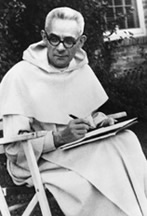
  Brought to mind an enlightened French cleric about whom I’ve read and with whom I’ve metaphorically crossed paths several times.  Father Marie-Alain Couturier fought and was wounded in WWI, became a Dominican priest in 1930, and was vigorously outspoken in refutation of Anti-Semitism in Vichy France*.

  “…I beg of you, remember that you are Christians, that charity tolerates no anti-Semitism, and that even if certain measures seem politically inevitable among those who have been conquered, at least let us maintain the integrity of our hearts…. As for myself, I love only freedom, and as I get older, I couldn’t care less about the rest”

  Another component of Father Couturier’s career (and my initial point of contact) had to do with the integration of art and the sacred.  As an artist and founder of the journal “L’Art Sacre”, he sought to invigorate that relationship as had Abbot Suger centuries ago with the development of the first Gothic cathedral.  Suger coined the marvelous term “metaphysics of light”.

  Fr Couturier worked closely with Matisse on the Chapel de Rosaire in Vence on the Riviera.  Matisse was a lapsed Catholic, but Fr Couturier said: “Better a genius without faith than a believer with talent…Trusting in Providence, we told ourselves that a great artist is always a great spiritual being, each in his own manner…”

  Similarly, when commissioned to provide a sculpture of the Virgin Mary, Jacques Lipchitz asked the priest: “But, don’t you know I am a Jew?”  “If it does not disturb you, it does not disturb me” was the answer.

  Perhaps even more radical was Couturier’s decision to work with twentieth century giant Le Corbusier who “had no place for institutionalized religion within his ideal society”** and sought to demolish historic Paris and replace it with “machines for living” – expressways and high rises.

  Interesting, then, that the most well known project of their collaboration was the chapel at Ronchamp (photo way above and interior just below) which was a decidedly uncharacteristic departure for Le Corbusier.  About it he said: “People were at first surprised to see me participate in a sacred art.  I am not a pagan.  Ronchamp is a response to a desire that one occasionally has to extend beyond oneself, and to seek contact with the unknown”.

  In prewar Paris Fr Couturier had met John and Dominique de Menil who were captivated by his vision.  He told them that a museum is a place where “you should lose your head”.  Heirs to the Schlumberger fortune they fled France to the USA settling in Houston where they assembled an incredible collection of art, architecture, and good works.

  Italian architect Renzo Piano designed two wonderful museums for them there both incorporating the powerful Texan sun to sublime effect.  The Menil holds an eclectic collection of western and African art.  The other only the works of Cy Twombly and if you’ve never seen his stuff start there.

  It is the first of Piano’s experimentations with translucent roofing systems.  The lid of Twombly filters the natural light through a four part system with tautly drawn Italian sailcloth forming the interior ceiling.  The combination of the refined light, the character of the space, and Twombly’s work yields an experience of preternatural transcendence.

  Once, upon entering, a woman disrobed to bathe in the light.  French philosopher Roland Barthes recalled that he there felt as if in the thrall of a Buddhist awakening.  Several years after my visit, allergic reaction shocked into a near death episode, the quality of the ‘white light’ evoked therein seemed identical.  No foolin’. 

  The major work is the fifty foot triptych “Say Goodbye, Catullus, to the Shores of Asia Minor”.  Catullus was a Roman poet whose brother died and was buried in part of what is now Turkey.  As if crossing west across the Mediterranean, the painting leaves color behind on the right, reading left toward pale shades of emptiness.

  I was bowled over even though I didn’t know the story of the picture at the time of my visit – only upon a bit of research once back home.  That knowledge gives special poignancy to memory of the experience because it was on that day one of my two younger brothers underwent surgery for a cancer that claimed his life some months later. 

  He was an independent thinker, extremely intelligent, creative, sensitive, and spiritual.  His challenges to my world view catalyzed significant personal growth.  Hmmm…  His Tibetan Buddhist friends could engage in interesting speculation related to the fact that Father Couturier died about nine months before Ed was born.

*Father Marie-Alain Couturier, O.P., and the Refutation of Anti-Semitism in Vichy France; Robert Schwartzwald, UMass/Amherst.

**”Almost Religious”; Dennis MacNamara, The Institute for Sacred Architecture, Volume 2.

***Mdm de Menil once offered one of Barnett Newman’s Broken Obelisks to the city of Houston which declined because it was dedicated to the memory of Martin Luther King.  It now is in front of the nearby Rothko Chapel.  With President Carter, she formed the Carter Menil Human Rights Foundation.  The Rothko Chapel gives an award to those struggling against oppression.  Another, The Oscar Romero Prize, was named for the murdered El Salvadoran priest. 

Dirt

October 29, 2010


  Sometimes while passing through the entryway to my grocery store I watch pasty sorts of folks assiduously scrubbing down shopping carts before touching them.  No foolin’.  A little exercise would boost their immune systems far more than the deficit a few germs might cause and would put a bit of color in their cheeks to boot.

   You can be too clean.  When I was a kid my MD grandfather would say that the healthiest babies were those nursed from coke bottles to which plastic nipples had been attached.  Recent research would uphold his observation.  As recounted in (among other places) a fine article by Melinda Beck in the 5-18-10 WSJ, the “hygiene hypothesis” holds that “exposure to a variety of bacteria, viruses, and parasitic worms early in life helps prime a child’s immune system much like sensory experiences program his brain”.

  The simile is made even more interesting by the fact that Gerald Edelman, awarded the medicine Nobel for his elucidation of immune system mechanics, was the one who later drew the analogy between it and neuronal development.  He coined the term “Neural Darwinism”.

  Allergies and autoimmune diseases were rare before the advent of modern sanitation and still are in the third world.  Furthermore, there are clinical trials underway (re)introducing bugs such as pig whipworm to the gut as treatment for those “modern” ailments.

  The article also points out that “children who grow up on farms have low rates of allergies and asthma”; “children who attend day care during the first six months of life have lower incidence of eczema and asthma”; “Having one or more older siblings also protects against hay fever, asthma, multiple sclerosis and Type 1 diabetes” (you’re welcome bro); and more.

  Very obviously however, one does not wish a return to the unsanitary conditions of yore.  The ultimate ramifications of poor water quality are even more pernicious than the obvious tragedy of an elevated infant mortality rate.  The energy drained by endemic diarrhea during impoverished youth will irreversibly attenuate cerebral potential and thus that of an eventual ruling class.

  But, still, here we are.  I once asked MD brother how dogs could drink from questionable puddles and not get sick.  He said “a better question is why we would”.  In the 10-15-10 Men’s Journal, Yvon Chouinard gave as his best survival tip that one should drink out of every stream one might fish.  Gave him a good gut.  “I can go to any country and eat out of the bazaars and don’t get sick.”

  Hmm.  Never seen catfish in a Patagonia catalogue…

*Top photo from the WSJ article

**Kid who rolled in paint went then to a mud hole.  Dad got in trouble.

***Bottom photo shows that we count on her for everything.