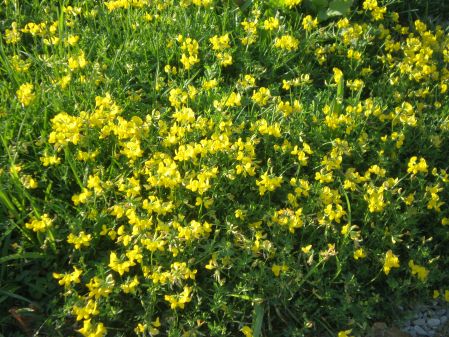
No, alas, this is not in my yard. Not yet anyway. It’s called Bird’s Foot Trefoil (Lotus corniculatus to a botanist) and is a member of the huge Pea or Bean (Fabaceae or Leguminosae) family. The photo was taken along the interstate at the end of our ravine.
The name Trefoil comes from Latin via Old French meaning three leaves -like the clover to which it is related.* It has just come into bloom now and will remain so for most of the summer. This bright delight is not native to North America having been imported from Europe for forage.
According to Iowa State University Extension, it was only first planted in 1938 but now covers more than 500,000 acres in Iowa alone. Farmers like it because it is hardy once established; will withstand close grazing; is highly nutritious; and non-bloating. It has provided daily weight gains in cattle exceeding a 30% premium over fertilized grass.
Laterly the plant became popular with road crews whose mission was/is to stabilize roadside growth. It creates a dense low mat, will crowd out plants with a yearn to grow tall, blooms low and so can be cropped close. If you live around here and are not agoraphobic, it will doubtless and frequently play a role in your field of view.
Not surprisingly, citing almost exactly the same factors listed above, the philistines about consider it invasive, a weed, and incredibly difficult to control. “An ecological threat” Control by conflagration not only doesn’t work, but instead increases seed germination! Ha!
There is a new book out** that explores the chasm between us and our setting – the green movement notwithstanding. The author writes of the seafarers of Puluwat in the South Pacific who can navigate by means of subtle swell patterns. And of the Inuit who do the same with wind. The Bedouin the stars. Here in suburbia some use a GPS to cross town. What’s up with the disconnect? Is there a cost?
The Trefoil’s beautiful, isn’t it? Shades of yellow pea-like flowers with clover-like leaves. The seed pod arrangement sort of resembles a bird’s foot hence the name. Doesn’t the fact that a lowly weed can be so gorgeous and have such a wonderful back-story give you pause? Makes me think of Blake:
To see a world in a grain of sand,
And a heaven in a wild flower,
Hold infinity in the palm of your hand,
And eternity in an hour.
*The word also serves as a term in Gothic architecture referring to a manner of ornamentation by foliation or cusping. Look for it in church window-lights.
**The book is You Are Here Why We Can Find Our Way to the Moon but Get Lost in the Mall, by Collin Ellard. It was reviewed in the NYTBR Sunday July 12 by Jonah Lehrer.
Ever watch a hawk cough up a pellet? It’s kind of gross, but interesting nonetheless.
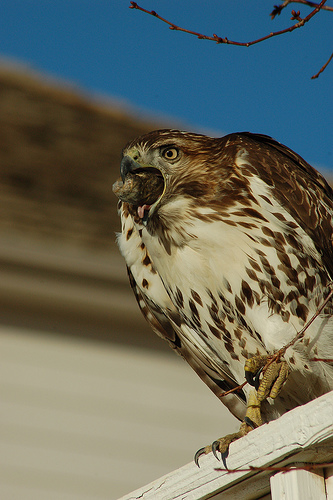
The other day just as I walked out of my garage a goshawk swooped in to snatch a chipmunk feeding just below a birdfeeder. Happened so quickly that I would not have been able to sort it out had not the bird flown high up into and upon a branch of a nearby tree.
Mercifully, the poor little critter (Sammy) was dead by the time I got binoculars and approached. Goshawks are of the type that dispatch their quarry by ‘footing’. Repeated rapid application of talons. Ouch. Yep, that’d work.
I was careful at first not wanting to spoil the hard earned meal. I read somewhere that raptors’ energy requirements are so high that a significant percentage of their attacks (“stoops”) must succeed or they starve.
Apparently the bird felt secure enough in its position that it paid me no heed whatsoever. It tore through the small carcass ravenously. Watching through the binoculars I realized why the editors of natural history films cut quickly away from, say, lions tearing through a zebra.
It is too easy to anthropomorphize and imagine one’s self subject of some cruel twist of fate. Wrong place wrong time. Disrespected the gods – like Prometheus. Or something. (Just read an article in the New Yorker about the new infestation of Florida by released pets. Matter of time until a kid ends up lengthwise inside a big snake it said.)
Anyway, half through the macabre repast the hawk began to choke. Its beak was opened way obtuse and head jerked quite vigorously up and down. I thought uh oh, what’ll I do if it passes out and falls to the ground? If I tried to help, it might turn my hands into mince meat.
Slowly it dawned on me. I’ve found and examined owl pellets before, but seen none in production. Birds of prey have no teeth and thus must rip their prey apart and swallow by the chunk.
Some species definitely engage in torture: they catch and hold, don’t foot, start the meal at the rear of their victim and work forward. Lying in your bed have you ever thought you heard a baby screaming in the woods? Likely it’s the scream of a rabbit being devoured by an owl. Falconers sometimes slit the throat of the unlucky in related situations. Eases the conscience as well as attenuating the sound effect.
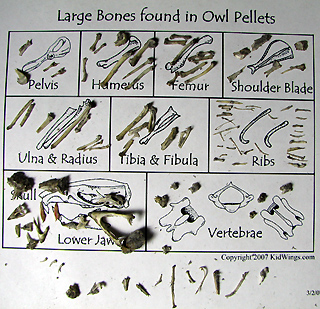
Their digestive systems slowly separate the stuff, turn the meat into energy and the bones etc into a mass which they regurgitate. It’d scratch coming out the other end I guess… These pellets can be picked apart and some pieces identified as feather, hair, bone etc.
Relieved, my goshawk returned to its meal. Once done, it took wing and knocked what was left to the ground. To call what fell picked clean would be an understatement. To a naïf it would clearly be evidence of some sort of natural horror – actual provenance completely indeterminable.
Clean plate club. Parent would be proud.
*Don’t know if this is more or less gross, but it also did not dawn on me until then where the phrase “hawk up a loogie” originated
Of all sorts of contractors, bridge builders are those most in tune with nature. Homebuilders, general contractors, and road builders take steps to hew to unremitting schedules of which their predecessors would never have dreamed. In the winter, they thaw the ground. Once the framing is up, they enclose with polyethylene sheeting and plumb and electrify. Once there is a lid on a project there is not much that will slow them down.
Bridge projects however are often remote and astride a force of nature that won’t be ignored. Thus the crews are more independent, flexible, and solemn than other types. They know they can’t bullshit mother nature. River comes up, they move to higher ground and wait for the sun to return.
Something humane in that sort of pace. Primal maybe. I was thinking about it this morning, first when running along the river. Ran under a bridge and saw a few carp swirling about thinking of spawning. It’s really turbulent when they all get the idea. Ducks and geese with their rafts of ducklings and goslings. Felt sorry for one duck and drake pair whose progeny had dwindled to just two.
Driving to work I noticed the fluff of the cottonwood trees along the river. Jeesh it gets thick. Every year the algorithm in my mind takes me first to dandelions and then “oh ya, there’s too much too high, it’s the cottonwoods’ turn”.
For one sitting in an office remembering a nasty recession at the beginning of a career while sweating a new one, the throes of Mother Nature’s rhythms hold allure.
Freud wasn’t exactly thinking about the economy or weather when he wrote Civilization and Its Discontents, but, well, it’d sure be great to have a sailboat and shove off. Leave the razor’s edge behind.
At sea the choices are clear and Mother Nature won’t be trifled with. There’s work, relaxation, and terror. One emerges from this last either stronger and respectful or, uh, quite wet.
“Confronting a storm is like fighting God. All the powers seem to be against you and, in an extraordinary way, your irrelevance is at the same time both humbling and exalting.” Francoise Legrand.
“For the truth is that I already know as much about my fate as I need to know. The day will come when I will die. So the only matter of consequence before me is what I will do with my allotted time. I can remain on shore, paralyzed with fear, or I can raise my sails and dip and soar in the breeze.” Richard Bode.
Approximately 70% of the earth’s surface is water. Our bodies are about 60% water. Brains 70%. Blood 80%. H20 is us. Why is it then that many if not most of us consider a rainy day gloomy?
Truth be told, most of my customers work outside and thus (this is another thing not to tell my wife and kids) I prefer that it rains on weekends. (Added benefit: my dandelions and ground ivy don’t get thirsty and I don’t have to disturb them…)
Interestingly, raindrops do not form in the familiar teardrop shape. Shape depends on size. Small ones are nearly spherical. Medium drops are flat on the bottom. As they fall, large ones become concave on the bottom like a mushroom cap.
Obviously, gardens and crops need rain to grow. Farm belts – breadbasket areas are used to receiving amounts adequate and appropriate for cultivation. Annual variations can cause moderate to disastrous problems. Wars have been fought over water. It is predicted that related disputes will only increase with the growth of the planet’s population and the turbulence in our climate.
Inhabitants of arid regions probably prize the resource most highly as evidenced by the following two cultural examples. The movie Chinatown was about the political machinations behind the irrigation of the San Joaquin Valley in California. The currency in Botswana is called “pula” which is the Setswana word for rain.
Not surprisingly then, one who could call forth a deluge was considered to have special powers long before we took up the plow and hoe. Prehistorically, a rainmaker was a shaman or medicine man who through ritual and/or incantation was thought to be able to make the heavens weep. More lately it’s more like a man, a plane, and silver iodide. (Or pollutants – in urban areas rainfall is 20%+ more likely on Saturdays than Mondays)
Metaphorically, it is also a positive term. In the business world a rainmaker is one with a particular facility to recognize incipient financial opportunity, instinctually know how best to fertilize it, and finally to coax out liquidity in torrents. In the movie “Rainmaker” Dustin Hoffman plays a savant who, possessed of a special mathematical aptitude, was enable to “count cards” and make his brother, played by Tom Cruise, a lot of money in Vegas.
My kids always yawn when I remark about how great it smells as rain finally comes at the end of a long dry spell. It is great isn’t it? The scent is caused by the fact that clay soils and rocks absorb and accumulate an oil produced by some plants, petrichor (means blood of the gods), which is released by contact with moisture.
I love rainy days. All sorts. To be in the lightest of rains is like walking in a cloud. Standing still you don’t notice or hear the fall of drops, but move forward and you begin to push through a curtain of mist.
In a hard rain, it’s neat to run down along the river by the large arrangement of water lilies near my home. Before dawn for the best effect. Even though drenched and being sharply pelted, one’s attention is drawn inexorably forward toward the incredibly resonant sound up which is newly mysterious and intriguing every time.
As you approach, you naturally begin to parse the theretofore blended sounds of rain on water and on the uplifted broad thick leaves. Close by, the emerging new sound becomes almost ominous until alongside they’re separate. Oh ya wow. There’s a moment of perfect antiphony just before they begin to blend together again as you move on by.
Torrential thunderous downpours let you know you’re alive by the fear they strike. (I love that they’re called “tormentas” in Spanish. Perfect!) The level of instilled terror is directly related to the precarity of one’s position. Top of a mountain or middle of the ocean will be found to be pretty scary in a big storm. Basement of NORAD in the mountain in Colorado less so.
Lighteningless rain sounds wonderful under a thin roof or in a tent. Pull up the covers and relax. Can’t do anything outside anyway. Once, at scout camp, I was laying upon my back on cot under a simple canvas fly in a hard rain. It was late afternoon and nearly lulled to sleep I turned over to watch mother mouse drag five fuzzie young pups out of a puddle to safety beneath me. I had forgotten about the rescue until several years ago I saw them again dry, older, and more accomplished singing “Blue Moon” and “That’s Amore” as the Chorus in the movie Babe… (Another unbelievably great flic)
Before he died, my brother (who took the above short clip about three months before his death) gave my kids a rain stick. You know, those things that when up-ended imitate the sound of rain on a thin roof with great virtuosity. Thought to have originated in Chile they are made out of dried cacti with the thorns removed and then forced back in. They are neat and never cease to amaze this simple mind. Here’s what Seamus Heaney has to say:
The Rain Stick
Up-end the rain stick and what happens next
Is a music that you never would have known
To listen for. In a cactus stalk
Downpour, sluice-rash, spillage and backwash
Come flowing through. You stand there like a pipe
Being played by water, you shake it again lightly
And diminuendo runs through all its scales
Like a gutter stopping trickling. And now here comes
a sprinkle of drops out of the freshened leaves,
Then subtle little wets off grass and daisies;
Then glitter-drizzle, almost-breaths of air.
Up-end the stick again. What happens next
Is undiminished for having happened once,
Twice, ten, a thousand time before.
Who care if all the music that transpires
Is the fall of grit or dry seeds through a cactus?
You are like a rich man entering heaven
Through the ear of a raindrop. Listen now again.
A while back* I described the joy I take in the gorgeous array of dandelions that presents itself every year at about this time. More subtle (at least visually) as well as more interesting is the ground ivy which is just beginning its ephemeral (again visually) resplendency.
To all but those who take pride in their bluegrass and fescue, the lavender blanket is a welcome sign of spring. That the color lasts but a week or so makes it worthy of a Basho haiku. He’s long no longer with us so:
Lush thick lavender.
Funeral blanket for the
Mouse the hawk swooped up?
It’s scientific name is Glechoma hederacea and is found just about everywhere. When in flower, it stands only a bit taller than the newly awakened and as yet uncut lawn. It is a member of the mint family and spreads even more aggressively than the Derby Julep eponymous component.
I find it interesting on account of its provenance. Settlers from Europe brought it to the new world to help in the brew of their beer. Its use predates hops and was called Alehoof and employed widely by Saxons for the flavoring, clarification, and preservation of their favorite beverage.
There should be no surprise that it found its way to these parts given the large scale nineteenth century emigration of people from that region of Germany to our area. Some of my own ancestors, even. Prost!
Most of the time when we hear about mankind abetting the migration of some species or other from here to there it is with a more or less negative tone. Like zebra mussels across the inland waterways, or rabbits to Australia, or (believe it or not) everything not winged or finned to New Zealand.
Diets of the developed world would be far less kaleidoscopic had it not been for, say, potatoes coming north from Peru, tomatoes and corn to Europe, and ground ivy from our Teutonic ancestors. And the sun in my every breakfast, oranges.
Columbus himself brought them to these shores (well close), but they are thought to have originated in China near the South China Sea. From there they made their way down the Malay Peninsula and then probably with the Indian Ocean current to the east coast of Africa.
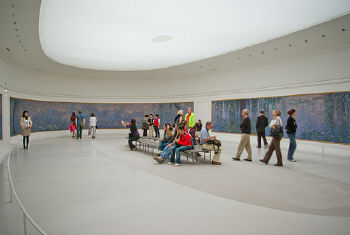
Caravan north to the Mediterranean and thence throughout Europe. In Paris Louis XIV thought so highly of his 3000 orange trees that 1n 1617 he built the Orangerie in the gardens of the Louvre to house them. In that pre-Versailles palace is no longer a citrus arbor, but rather a display of Monet’s water lilies of incredibly ineffable beauty. It’s a 360 degree experience and imbues even the most stolid with a wonderful spiritual tumescence.
Funny how stuff works out. Just think of all that would be lost if we were alone in this universe and collided with an asteroid. Poof. Remember, In Heaven there ain’t no beer.
*5/9/08: Please don’t let my wife see this.
**If you like oranges read John McPhee’s Oranges It’s fascinating.
Hemingway wrote: “… a thing is true at first light and a lie by noon and you have no more respect for it than for the lovely, perfect weedfringed lake you see across the sun-baked salt plain. You have walked across that plain in the morning and you know that no such lake is there. But now it is there absolutely true, beautiful and believable.”
What a way to go through life. If something is beautiful one should simply allow it to be so. There is beauty all around if you’re open to it – especially if out in nature’s throes. Your choice.
The river flows east and west here, a geographical anomaly with which I’ve never really become comfortable. (I guess it’s probably the reason I always carry a compass.) Rivers flow north to south in this hemisphere, right?
Anyway, at sunrise, over these particular few days of fall, this orientation of the landscape makes for an incredible display on my drive to work in the morning. Traveling west along its northern bank, the sun flames up over the horizon behind me and spectacularly engulfs our downtown some distance ahead as the river bends a bit southward – windows cracklingly ablaze and masonry all coppered up.
Each year, for a moment, I ask myself if it is that time of year, or might there really be a fire? I’m forced to turn off my radio and concentrate. Soon, I realize that it’s my bit of autumnal bliss and relax and sometimes even pull over. As I’ve said above, I’ve always enjoyed pyrotechnics.
Further along, just before my office, a wooded island blocks view of the river (as long as limbs are leafed). During these few days, by now several minutes past dawn, its canopy is burst ablaze, flames blowing about wildly, and spreading ever eastward.
These are events of existential relativity just like rainbows and, uh, the proverbial tree falling in the forest. You’re not there, they are fundamentally not seen or heard. The rainbow only occurs in the brain of one with vision and in the right place at the right time. Similarly, the tree may fall in the forest, but there is no sound if there is no tympanum upon which the sound wave for to fall.
Shame, crime, sin to miss or dismiss or – more – not to enjoy any such sweet “spot of time”.
Tip tops of trees
At dawn – peak autumn color
Like flames in a breeze
This is the time of year when white pelicans rest here in SE Iowa on their way north from winter break to their summer breeding grounds. They are one of this universe’s many paradoxes because while they are ungainly up close, they are preternaturally elegant in flight.
Regarding the proximate view, many will be familiar with this short poem by Dixon Merritt:
A wonderful bird is the pelican,
His bill can hold more than his belly can,
He can take in his beak,
Enough food for a week,
But I’m damned to see how the hell he can!
The brown pelicans look very similar to the white in silhouette, but differ in plumage, behavior, and range. The brown are frequently seen in small groups coasting smoothly over a southern shore. Spotting a fishy morsel they’ll fold their wings (looking like a hipped umbrella) and dive into the sea.
The white don’t dive, but oh do they soar. Individuals or small groups rise on thermals so high and with such a complete lack of apparent effort that they resemble lower case ‘t’s floating at the outer ranges of one’s field of vision. Larger groups closer to the ground form slowly pulsing or undulating chevrons.
Squadrons sometimes slowly describe circles in the sky suddenly changing from black to white and back depending upon their aspect to the sun. Large groups form gently rotating cylinders suspended in the air which bring to mind a friendly tornado in very slow motion.
I have no recollection of having ever seen them during my youth. Thus, every spring as they pass through these parts I have to re-convince myself that their visit is no freak of nature.
Reminds me of a passage in Robert Coles’ Spiritual Life of Children. The Harvard psychiatrist interviewed children of widely diverse religious and secular backgrounds for insights into their inner lives and world views. My favorite bit is of his time with an eight year old Hopi girl sitting outside her spare home high on a mesa.
As they talked, she noticed a pair of hawks soaring high above. Then silent, she followed their graceful flight until the raptors were out of sight and then said: “I guess they’ll find something to eat. I wish they were just going on a ride and not really hungry. I love when they glide, then stop, flap their wings, and continue gliding.”
The conversation then resumed for a time when of a sudden she stopped talking and “Her head turned about forty-five degrees to the left, she looked up – the hawks had returned. How had she known?”
Coles concludes: “Some young people go through intense visionary moments… These are times when a mix of psychological surrender and philosophical transcendence offers the nearest thing to Kierkegaard’s “leap of faith” I can expect to see”.
Do you recall having had such a moment at the ripe old age of eight? Or later? How likely can one be for those continuously perched in front of any sort of tube? Is there a cerebral analogue to Fast Food Nation and obesity? Remote Control Nation and, like, uh, uh, say what??


 Doesn’t the fact that a lowly weed can be so gorgeous and have such a wonderful back-story give you pause? Makes me think of Blake:


 The Subtle Landscape