Blow Me Away

April 11, 2011

  Kids all live in California.  For now anyway.  Closest pattern in years by far so we decided to visit.  Spent two days with each, drove up coast for two, and rode train home for two.  It was fun.

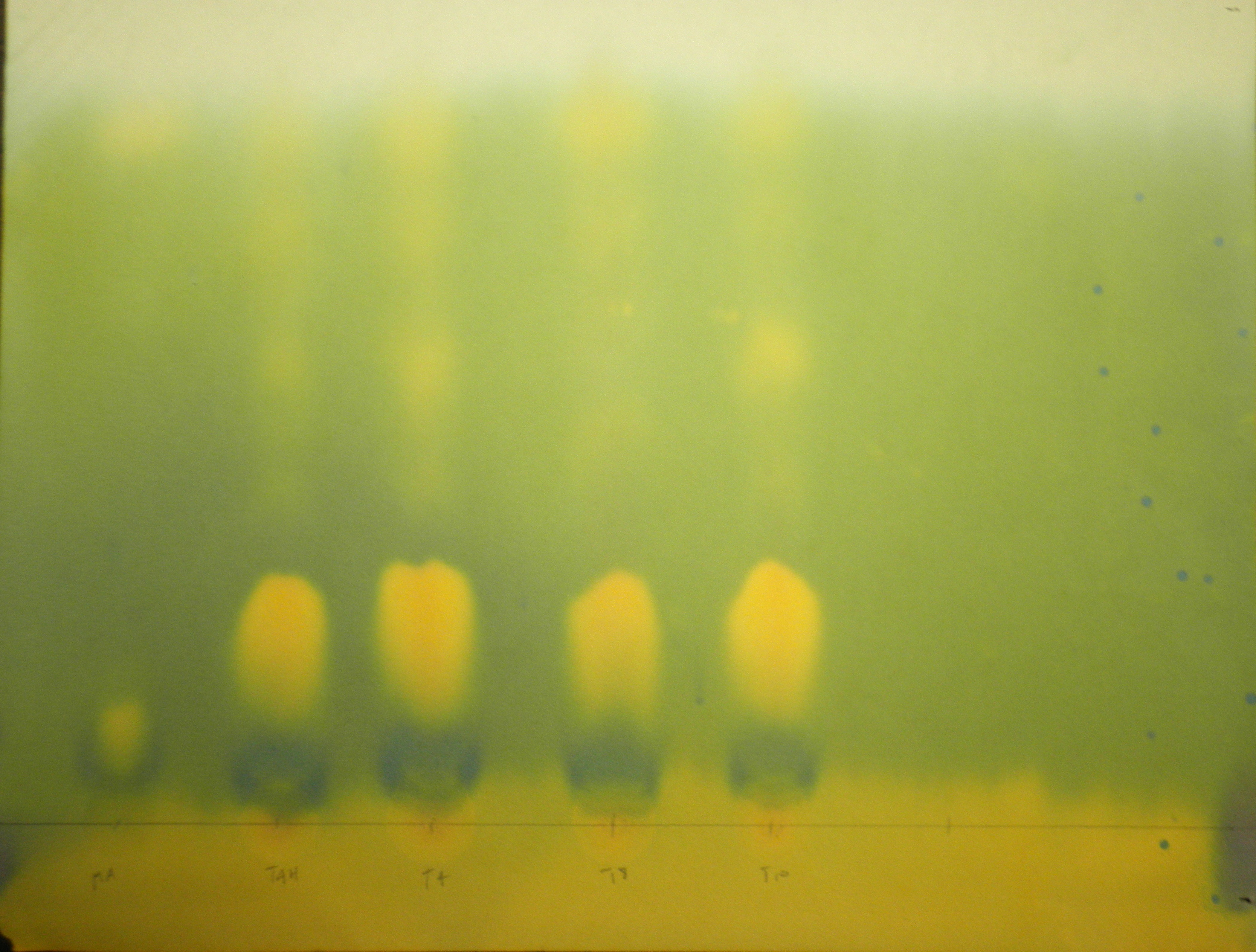
  Beautiful thing above is the work of youngest daughter.  It’s a bit of found art in a way.  She’s an assistant winemaker in Sonoma and that image is – believe it or not – the result of a test (chromatograph) assessing the degree to which a certain type (malolactic) of fermentation has progressed in this year’s chardonnay. 
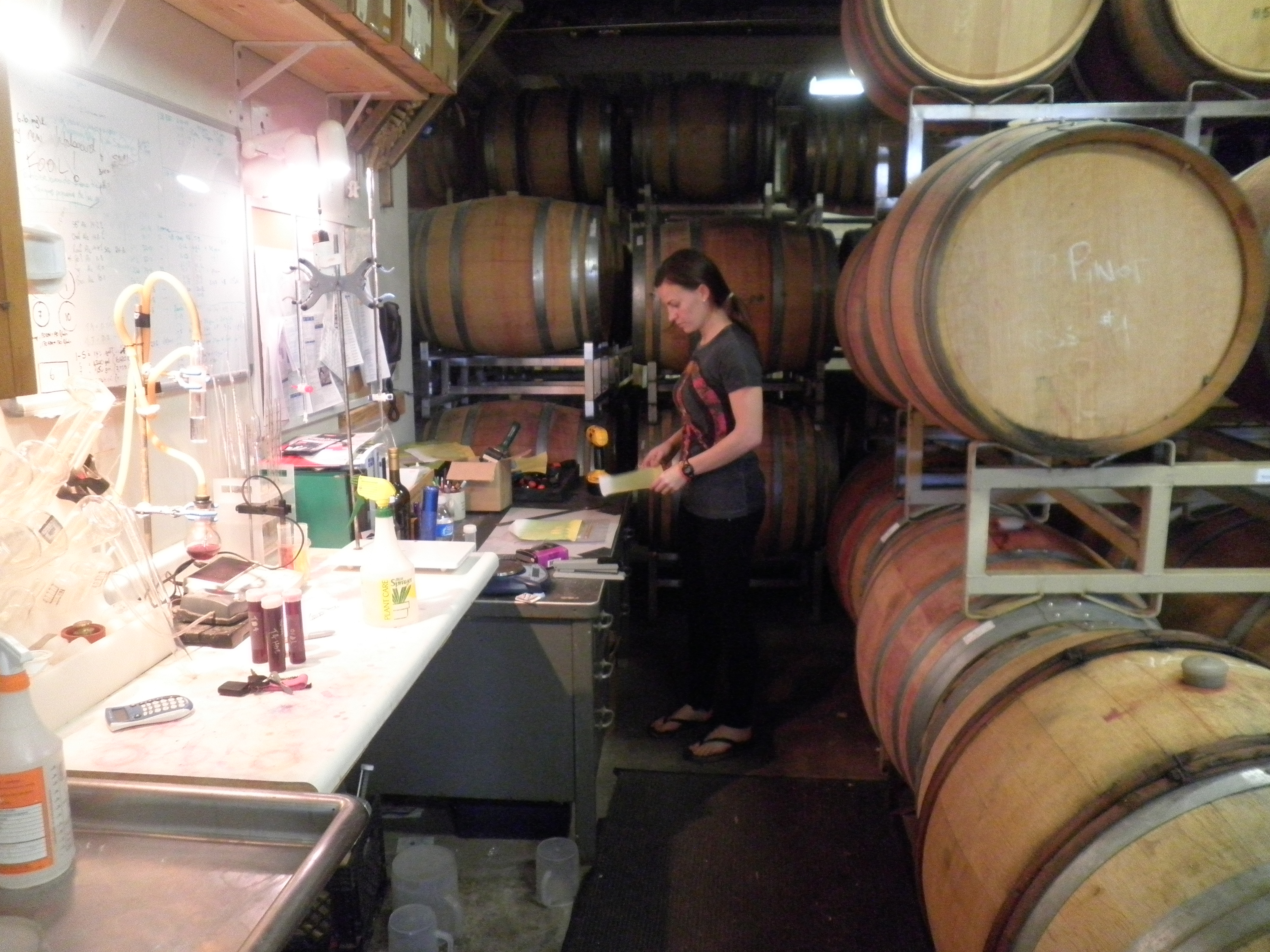
  The winemaker drops a few drops onto the paper and then holds it upright to allow for capillary action.  The resulting patterns and distribution of color convey the necessary information.  At the appropriate point a sample is taken to  their lab and analyzed for enzymatic malic acid.  It is this aspect of the chardonnay’s chemistry that can create a ‘buttery’ sensation.    Daughter is responsible for this and the rest of Petroni oenological midwifery while boss is in New Zealand for a month.
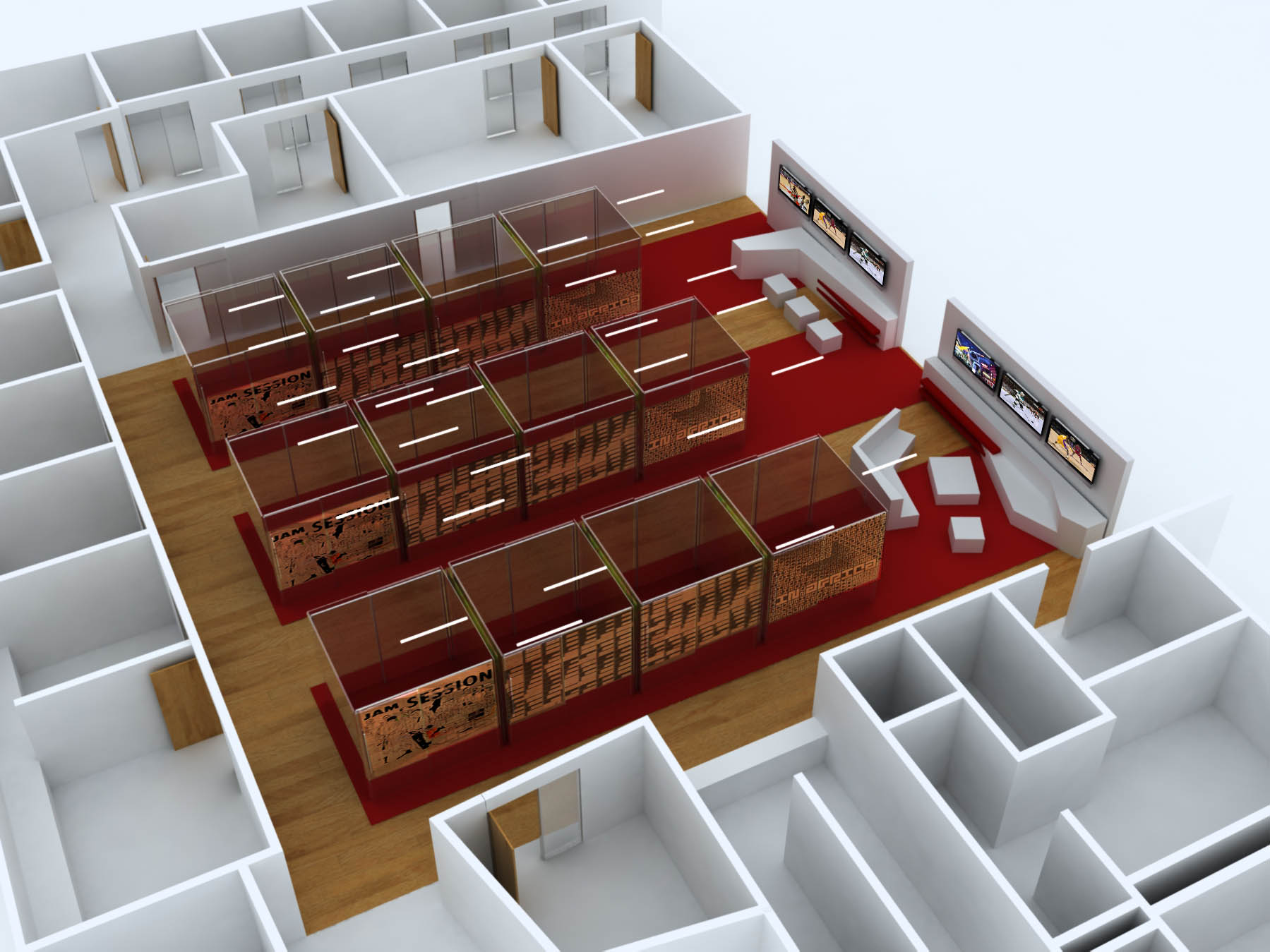
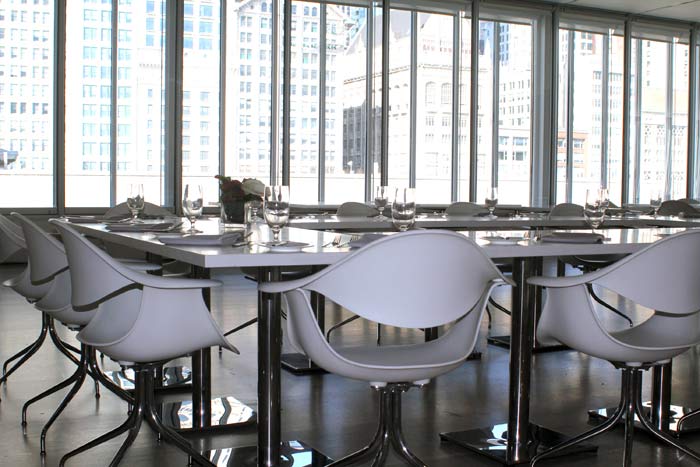
  The above is a digital representation of the design for the 2K Sports Corporate Offices in San Francisco courtesy of son/Section V Media.  He and partner/friend from grad school set up shop in Hollywood and dang if they aren’t making a go of it in these incredibly difficult economic conditions.   Speaking as an SOB (son of the boss),  I’m impressed.

  Firm offers a range of design services and has left tracks from coast to coast.  Spaces from Madison Square Garden to UCLA stadium have been graced with the fruits of their labors.  Nike, Simon Malls, Williams Sonoma, Diet Pepsi, and more have had their missions furthered therewith.  You see him above atop Runyon Canyon, the trail for which begins paces from their office.

  Photo above is of the grave of Cesar Chavez  on the grounds of the Foundation commemorating his life and work.  Chavez launched the United Farm Workers for which oldest daughter is a lawyer.  (She can’t call herself a lawyer there because she’s not yet taken the California bar.  But she’s admitted in Maine and Massachusetts and I’m her dad and can call her anything I want).

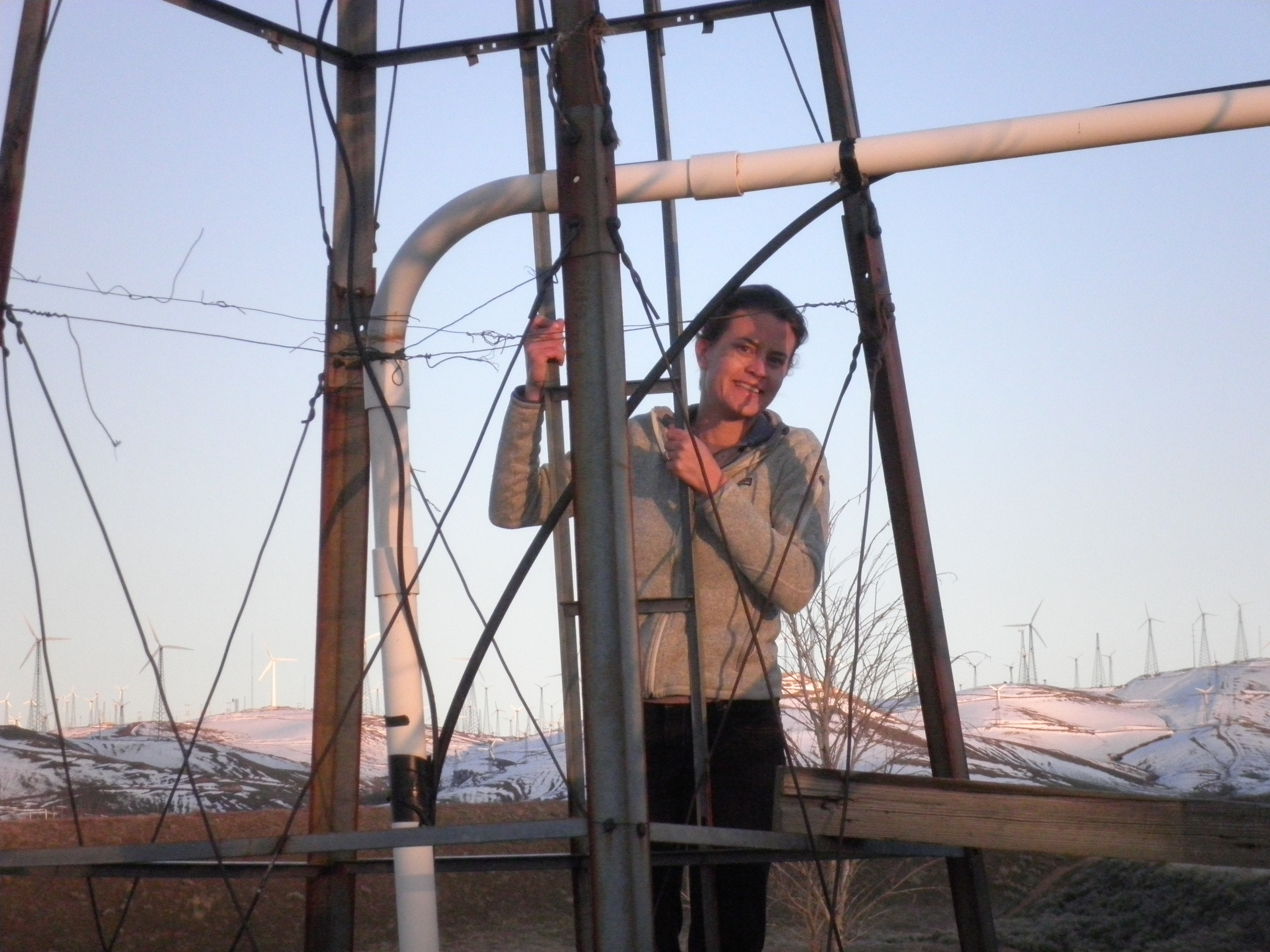
   She speaks fluent Spanish and enjoys the opportunity to use it in that demanding environment in which accuracy is crucial and picking up on inflection can make a difference. The skill is but one of a considerable set held together by an incredible sense of compassion.  She and her neat (space industry start-up) husband live on a farm off the grid.  Long way from Middlesex St in London or Manhattan’s lower east side.  Below you see her working on their windmill.
  As I’ve said before*, trains are a great way to travel.  The intimacy thus engendered is of a sort all its own and as you can see below, I thus again found myself the subject of my artist wife.  Paraphrasing Giacometti’s last surviving model’s description of the sitting experience: “I think her gaze travelled elsewhere, beyond the person in front of her.  So much so that when she was working on a sketch of me, I had the impression that she was in fact searching for my skeleton”.**  Or even deeper…

  Giacometti’s wife also sat for him and was his most ardent supporter.  “They had a highly poetic outlook on life.  I can’t explain it, [their marriage] was something that broke all the conventional rules.  Sculpture was a mediator between husband and wife, it both united them and highlighted their differences.”

  Yup.  Blow me away.

*cf post 1/31/09

**The Art Newspaper April 2011 p48

Astonished

April 2, 2011


Ok, here’s what to do next time you visit Chicago’s Art Institute to scintillate the constellation of your synapses. Enter through the original portal between the lions on Michigan Avenue, negotiate admission, and go down and right to room 109 – The Ando Gallery.

As I’ve mentioned before (4/4/08) this particular confluence of space, cirumstance, and spirit engenders the sort of roundedness for which pilgrims yearn. Experience with the objects in this serene room is one of communion not idolatry. you leave imbued with far more than didactics alone could possibly convey.

Make your way down the hall that used to be lined with swords, armor, and coats of mail, but now Buddha, Hinduism, and the way of the Tao. At its end (decorative arts to the right) go left and be overwhelmed by the cavernous great hall of the new wing. Whoa.

Continue north to its end and climb the stairs (!) to the Terzo Piano* – the restaurant on three. It is neutral but well fenestrated inside and breathtakingly open on the outside deck. maintain composure, walk around, and choose a perch.


From any point of vantage you will join the ebullience of this big shouldered city breaking bread head to head with the work of Burnham, Gehry, et al. Enjoy the fine repast, your friends, and the skyline. It’s astonishingly fine to be human. There may yet be hope for us all.


*Terzo Piano – A play on words. It means third floor in italian, but also refers to the architect of the new wing – Italian Renzo Piano.

**Sorry about last week.

Been on a whorl wind road trip. On train now. About all that later. Photos for this post too.

Time Makes You Bolder

March 20, 2011


  Landslide.  Great song. Not least because it doesn’t’ easily give up much to exegesis. When you can learn all there is to know from one take of a work of art – whatever medium – it may be enjoyable, but also either shallow, pandering, or pornographic.

  Music and lyrics must weave fine fabric of course.*  More importantly however, the former must find that resonance rooted in our evolution that signals the presence of emotional and/or existential truth.  Then we find ourselves motivated to search for understanding.

  It is sort of like a shared dream.  The words draw meaning from that mind from which they emanate as well as that upon which they fall.  There’s an overlap, but not a complete one.  Each mind has its own constellation of chemistry, experience, and complexes.

  Ms. Nicks has offered different, even slightly contradictory, sources of inspiration for this song.  For me, this makes it all the more interesting – oracular even.  While you’re working to figure out where it came from in her, you’re trying to figure out why it fits with you.

  “I wrote it for Lindsey – for him about him.  It’s dear to both of us becaue it’s about us.  We’re out there singing about our lives”.  “It’s about a father-daughter relationship”.  “It meant the whole world could tumble around us.”

  As I piece the background together, the pair tasted a moment of success, but were quickly set back to waiting tables and cleaning homes.  Buckingham left Nicks in Aspen for a spell while he took a few gigs with the Everly Brothers.  Left alone to ruminate among the jagged peaks, Nicks conjured up all manner of pitfall and possibility. 

  She left to visit her folks for a bit for second opinion(s).  Dad told her to give it more time and that he and her mother would be there for her whatever fate might befall.  “Cool, I can do that”.  Father then fell ill and underwent successful surgery.

  Then back to Aspen with Buckingham, where they somehow found themselves in a beautiful house with a piano and – voila – out it poured.  “Landslide I wrote on the guitar and it’s another one that I wrote in about five minutes”.  Like how it takes only a few seconds to win the Olympic gold in the 100m dash.  That and a gift, work, and inspiration.

  Mountains can indeed be a place to see something about oneself.  French alpinist Gaston Rebuffat said that they brought “before him a mirror of stone or ice, a mirror which helps us to get to know ourselves…”  Same with relationships.  Love is not always long requited.  Bad shit will happen in both the physical and emotional realms.

  The issue is how one handles what comes.  Will he/she struggle past the mother and father complexes catalyzed in every youth – only after which can really begin the process of individuation?  Or will they first lead to a twelve step program?  Acceptance of the very real possibility for anxiety is preferable to giving up to depression and rage.

  Well, children do indeed get older; I’m getting older too; and amazingly enough it does feel like time is making me bolder.  Be interesting to see what happens next.  

*And well woven such fabric can even cover up mixed or run-on metaphors…

**Covers.  There have been a few.  Dixie Chicks below.  Their three part harmony is wonderful and I love myth and metaphor, but I prefer the video on top.  The one below – not without some beautiful images – is too florid for me. 


I’ll Have What She’s Having…

March 11, 2011


  Normally, I hesitate before expounding upon something I have not yet seen in person.  More to the point, I avoid even thinking about a building in which I have not actually been.  It’s the “Ce N’est Pas Une Pipe” thing.  It’s not a pipe, it’s a painting of a pipe.**  So to be clear, what follows is my impression of a building of which I’ve only seen photos and read reviews***.

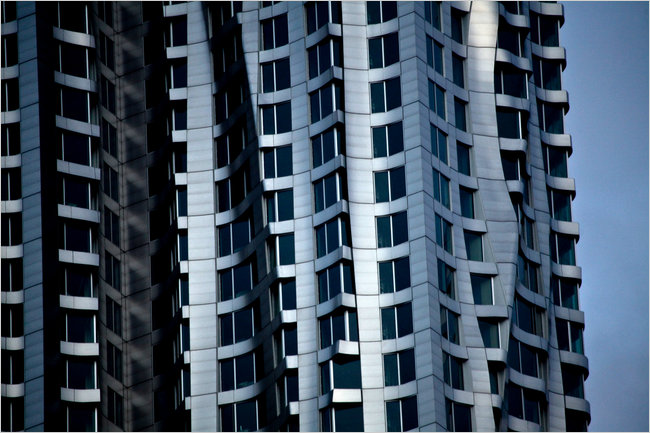
  It’s Frank Gehry’s first skyscraper – an apartment/mixed use building at 8 Spruce St in NYC.  It is the tallest such building in the city standing some seventy-six stories and holding more than nine hundred apartments, a gym, a swimming pool, and a new public school.  The assemblage of those spaces is reportedly pleasingly functional, but the building’s allure is far greater than their sum. 

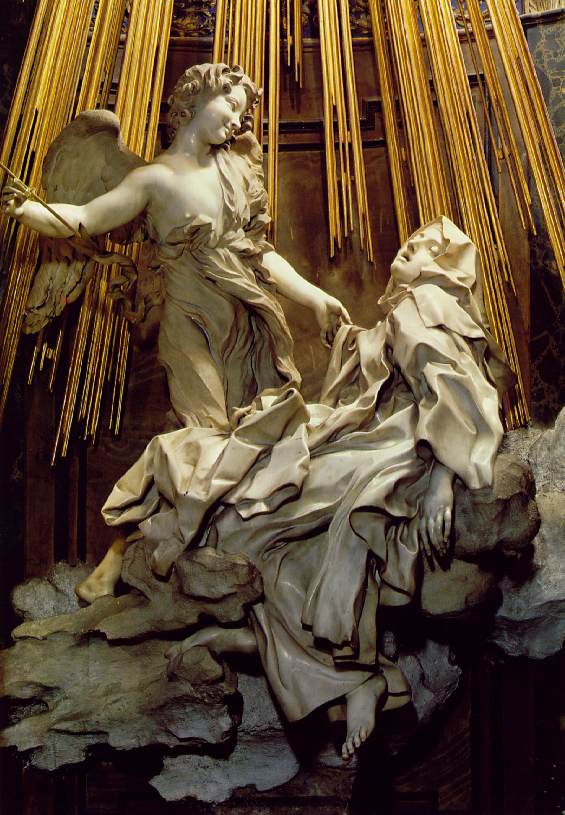
  Something immediately tingled inside me when I turned to that page, but it was Gehry’s description of his motivation that brought me full flush:  “I had one of those eureka moments, at three o’clock in the morning, when I thought of Bernini.  Michelangelo is rounder, Bernini is edgier”. Right on.

  I’m in awe of the subtle manner of Michelangelo’s graceful conveyance of form and tension in his sculpture, David for example.  It’s cool and I’ll not forget the experience of it.  But, well, when one thinks of Bernini, how could not the image of the Ecstasy of St. Teresa leap into one’s mind? 

  In a book about art and beauty Umberto Eco wrote of the expression of pain in the visage of that St Teresa.  How could he possibly have had that reaction?  He needs to see an ophthalmologist or shrink maybe.  That woman is in the throes of something grand whether the tumescence was spiritual or otherwise.

  I have been in, on, and around several Gehry projects and enjoyed those experiences.  There’s often an element of exuberance.  But this is different.  Does not that building appear to be on the verge of a shudder? 

  This might be a stretch, even for me, but the east elevation of 8 Spruce St makes me think of Katy Perry:

I might get your heart racing
In my skin tight jeans
Be your Teenage Dream tonight
Let you put your hands on me
In my skin-tight jeans
Be your Teenage Dream tonight…

*If you don’t get this allusion, that’s your problem

**cf post of April 24, 2009

***Photo at top by Richard Barnes in a review by Paul Goldberger in the 3/7/11 New Yorker.  Other photo of the building is from article by Nicolai Ouroussoff in the 3/9/11 NYT

Mirabile Dictu

March 4, 2011


    News reports regarding the Catholic Church over the last few years have largely been ugly.  It was thus a relief to read yesterday of  praise for Pope Benedict.  Though issues related to his regard for actions of Pope Pius XII in Europe during WWII are yet unresolved, his statements exonerating Jews of complicity in the death of Jesus Christ were very clear.

  About the Pope’s remarks Israeli Prime Minister Netanyahu said: “…I commend you for forcefully rejecting in your recent book a false charge that has been the foundation for the hatred of the Jewish people for many centuries…”

  Brought to mind an enlightened French cleric about whom I’ve read and with whom I’ve metaphorically crossed paths several times.  Father Marie-Alain Couturier fought and was wounded in WWI, became a Dominican priest in 1930, and was vigorously outspoken in refutation of Anti-Semitism in Vichy France*.

  “…I beg of you, remember that you are Christians, that charity tolerates no anti-Semitism, and that even if certain measures seem politically inevitable among those who have been conquered, at least let us maintain the integrity of our hearts…. As for myself, I love only freedom, and as I get older, I couldn’t care less about the rest”

  Another component of Father Couturier’s career (and my initial point of contact) had to do with the integration of art and the sacred.  As an artist and founder of the journal “L’Art Sacre”, he sought to invigorate that relationship as had Abbot Suger centuries ago with the development of the first Gothic cathedral.  Suger coined the marvelous term “metaphysics of light”.

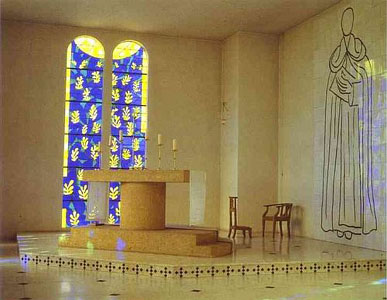
  Fr Couturier worked closely with Matisse on the Chapel de Rosaire in Vence on the Riviera.  Matisse was a lapsed Catholic, but Fr Couturier said: “Better a genius without faith than a believer with talent…Trusting in Providence, we told ourselves that a great artist is always a great spiritual being, each in his own manner…”

  Similarly, when commissioned to provide a sculpture of the Virgin Mary, Jacques Lipchitz asked the priest: “But, don’t you know I am a Jew?”  “If it does not disturb you, it does not disturb me” was the answer.

  Perhaps even more radical was Couturier’s decision to work with twentieth century giant Le Corbusier who “had no place for institutionalized religion within his ideal society”** and sought to demolish historic Paris and replace it with “machines for living” – expressways and high rises.

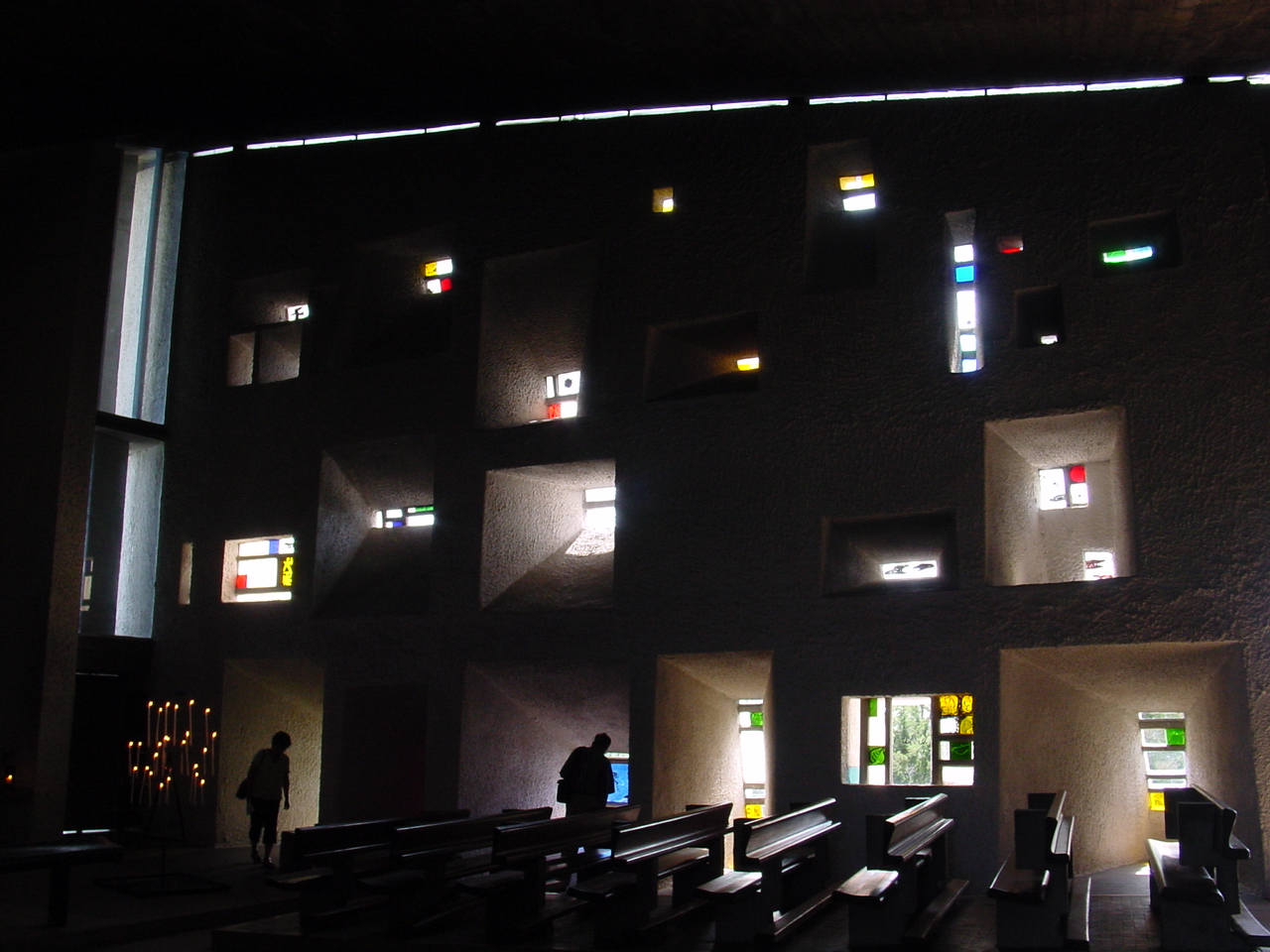
  Interesting, then, that the most well known project of their collaboration was the chapel at Ronchamp (photo way above and interior just below) which was a decidedly uncharacteristic departure for Le Corbusier.  About it he said: “People were at first surprised to see me participate in a sacred art.  I am not a pagan.  Ronchamp is a response to a desire that one occasionally has to extend beyond oneself, and to seek contact with the unknown”.

  In prewar Paris Fr Couturier had met John and Dominique de Menil who were captivated by his vision.  He told them that a museum is a place where “you should lose your head”.  Heirs to the Schlumberger fortune they fled France to the USA settling in Houston where they assembled an incredible collection of art, architecture, and good works.

  Italian architect Renzo Piano designed two wonderful museums for them there both incorporating the powerful Texan sun to sublime effect.  The Menil holds an eclectic collection of western and African art.  The other only the works of Cy Twombly and if you’ve never seen his stuff start there.

  It is the first of Piano’s experimentations with translucent roofing systems.  The lid of Twombly filters the natural light through a four part system with tautly drawn Italian sailcloth forming the interior ceiling.  The combination of the refined light, the character of the space, and Twombly’s work yields an experience of preternatural transcendence.

  Once, upon entering, a woman disrobed to bathe in the light.  French philosopher Roland Barthes recalled that he there felt as if in the thrall of a Buddhist awakening.  Several years after my visit, allergic reaction shocked into a near death episode, the quality of the ‘white light’ evoked therein seemed identical.  No foolin’. 

  The major work is the fifty foot triptych “Say Goodbye, Catullus, to the Shores of Asia Minor”.  Catullus was a Roman poet whose brother died and was buried in part of what is now Turkey.  As if crossing west across the Mediterranean, the painting leaves color behind on the right, reading left toward pale shades of emptiness.

  I was bowled over even though I didn’t know the story of the picture at the time of my visit – only upon a bit of research once back home.  That knowledge gives special poignancy to memory of the experience because it was on that day one of my two younger brothers underwent surgery for a cancer that claimed his life some months later. 

  He was an independent thinker, extremely intelligent, creative, sensitive, and spiritual.  His challenges to my world view catalyzed significant personal growth.  Hmmm…  His Tibetan Buddhist friends could engage in interesting speculation related to the fact that Father Couturier died about nine months before Ed was born.

*Father Marie-Alain Couturier, O.P., and the Refutation of Anti-Semitism in Vichy France; Robert Schwartzwald, UMass/Amherst.

**”Almost Religious”; Dennis MacNamara, The Institute for Sacred Architecture, Volume 2.

***Mdm de Menil once offered one of Barnett Newman’s Broken Obelisks to the city of Houston which declined because it was dedicated to the memory of Martin Luther King.  It now is in front of the nearby Rothko Chapel.  With President Carter, she formed the Carter Menil Human Rights Foundation.  The Rothko Chapel gives an award to those struggling against oppression.  Another, The Oscar Romero Prize, was named for the murdered El Salvadoran priest. 

At Me Too Is Someone Looking?

February 25, 2011


  A recent experiment* suggested that certain sorts of simple movements can improve creative thinking.  Researchers had students squeeze a rubber ball with their right and left hands before taking a test – success on which required “the formation of associative links between otherwise unrelated concepts in order to solve problems in novel ways”.

  Those squeezing the ball with their left hand outperformed both those using their right and those with their hands clutching nothing at all.  Researchers assume that the activity undertaken on the left stimulated the brain’s right hemisphere in which at least part of one’s creative potential is thought to reside.

  I’ve exposited in this space many times in different ways about movement and its importance to cerebral dynamics and physical fitness.  If a few forearm contractions can measurably enhance one’s imagination, think about the benefits of a holistic regimen for a while and then consider the ramifications of a lack thereof.

  OK.  Let’s start at the very beginning – a very good place to start.  In an article in the New Yorker** Rebecca Mead tells us “How tot lots became places to build children’s brains”.  She tells us that an understanding the expenditure of valuable energy in ‘play’ activities begins with the observation that the most intelligent animals all engage in them.

  Ms Mead cites anthropologist Melvin Konner who defines play as “inefficient, partly repetitive movements in varied sequences with no apparent purpose”.  He goes on: “The idea is that natural selection designed play to shape brain development … [it is] directing [one’s own] brain assembly”.

  And ya gotta keep doin’ it.  Most will agree that physical activity is essential for physical health.  It’s essential for your headbone too.  No one will convince me that hours spent moving a mouse or flippin’ IPad pages will supplant squeezing that ball.

  If the only vigorous exercise you get is struggling with footwear at either end of the day you’ll end up like Vladimir in Beckett’s Godot: “We have time to grow old.  The air is full of our cries.  But habit is a great deadener.  At me too someone is looking, of me too someone is saying, He is sleeping, he knows nothing, let him sleep on”.

* Psychonomic Bulleton & Review 2010, 17 (6), 895-899 Goldstein et al

**State of Play, The New Yorker, July 5, 2010

***cf post 1/24/2008 – “Let’s Dance”

In His Image*

February 18, 2011

  On January 3, 1963 aired an episode of the Twilight Zone that I’ve not forgotten even though I was then not quite eleven years old.  My memory doesn’t always serve up perfection, but generally does well enough to summon up the gist. 

  We meet the chief protagonist, Alan Talbot, early on.  He seems to be going about his life in an average sort of way, but starts getting headaches and memory problems.  Visiting his hometown with his girlfriend he finds that nothing looks familiar.  Then, walking along a road confused, a car bumps him and he rolls into the ditch alongside.  Shaken, he stands up and checks for injuries. 

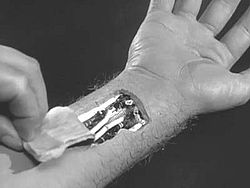
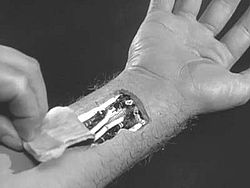
  Just before giving himself a clean bill of health, he examines an abrasion on his right forearm which strangely does not bleed.  We watch as he peels it back revealing lights and gears etc.  He’s a robot and no less astonished uncovering that fact than are we.


  Good story huh?  Well, it came to mind the other day when I read a paper written by Nick Bostrom, a professor in the Department of Philosophy at Oxford.  It’s serious, well wrought, and entitled “Are You Living In A Computer Simulation”.

  “This paper argues that at least one of the following propositions is true: (1) the human species is very likely to go extinct before reaching a “posthuman” stage; (2) any posthuman civilization is extremely unlikely to run a significant number of simulations of their evolutionary history (or variations thereof); (3) we are almost certainly living in a computer simulation.”

  It is all too easy to understand statement (1), but it is not unreasonable to doubt (hope!) that’s (not) how the future will unfold.  For statement (2) to be the way things pan out Bostrom argues that all future civilizations must converge in their inability or unwillingness to undertake ‘ancestor-simulations’.

  Statement (3) is by far the most interesting.  Perhaps we are not in the fundament of reality.  Perhaps some zitty ubergeek is at the controls.  When he/she/it detects incipient awareness in one of us he/she/it rewinds and edits or maybe just sends us to a bar.

  Computing power has increased incredibly and the pace seems only to quicken.  Moore’s Law has shortened from eighteen to twelve months.  Watson, the supercomputer that just bested the Jeopardy human champs juggles 80 trillion calculations a second spread over ninety servers.  At least one big thinker, Ray Kurzweil, predicts that a PC sized machine will be able crunch that much that fast in a decade or less.

  Bostrom demonstrates that there are no theoretical limits to continued expansion.  In a posthuman stage of civilization, he posits, such a mature stage of technological development will make it possible to convert planets and other astronomical resources into enormously powerful computers.

  Extremely sophisticated simulations are employed today for all manner of undertakings.  It seems inevitable that our distant descendants would run simulations of their forebears.  Furthermore, …”if we don’t believe that we are currently living in a computer simulation, we are not entitled to believe that we will have descendants who will run lots of such simulations…”

  Implications?  No radical ramifications.  There might well be subtle modifications to our belief systems related to a desire to understand posthuman motivations, but “no tendency to make us ‘go crazy’”.  However, I guess I’d hope that they don’t run out of computer power or trip over the plug.    

*In His Image was the name of the Twilight Zone episode…

**Veracity of proposition (3) would ‘aha’ the manner in which mathematics perfectly describe the whole fabric of our universe.

***cf Post of 12/24/11 in which I discussed the concentric circles in the cosmic background radiation that Roger Penrose posits are vestiges of a former universe and how it might relate to “a Platonic world of abstract realities that can be discovered by human investigation, but are independent of human existence”.

****Here is Professor Bostrom’s paper.  Read it.  You’ll be blown away.

http://www.simulation-argument.com/simulation.html

Take The Stairs

February 11, 2011

  I’m interested in stairs.  Their purpose is obvious, but appearance and experience vary considerably.  More than any other aspect of the built environment, they make you aware of your own presence within or upon it..  Successful negotiation of even a single step transition requires a greater portion of one’s attention than the whole rest of a structure’s circulation pattern. 

  That’s not my photo, but I’ve seen and climbed such steps (moki or moqui steps) in a place called The Maze in Canyonlands National Park.  I’m not afraid of heights and find pleasure in challenging vertical progress, but was impressed, scared, and thrilled during several such ascents.  I learned something about the nature of the consciousness of their engineers.

  They were hardy and adventurous souls not yet numbed by the comforts of life nor inured to the possibility of an exuberant experience of it.  They didn’t have to go up there.  Not that way anyhow.  Consequences of a fall are obvious.  That stairway to heaven is more than just a short cut in something “nasty, brutish, and short.

  A grander, more complex, and dramatic moment will be had upon the steps in the vestibule of Michelangelo’s Laurentian Library in Florence.  Even from the photo one can get a sense of the power of that small space.  Look at the foreboding cascade of those stairs.  They make you either shrink back or scurry quickly upward to the safe solemnity of the reading room.

  Other aspects add to the pressure by manipulation of classical ideas.  Michelangelo’s friend and biographer Vasari wrote that it: “broke the bonds and chains of … common usage”.  For example, the columns seem to be swallowed up by the walls rather than exhibiting discrete strength in the foreground.  They are indeed load bearing elements, but with convoluted psychological effect.

  This project, designed for the Medicis in 1558, displayed the range and depth of Michelangelo’s architectural power for the first time and marked the transition to its practice that dominated the rest of his life.  Even so, one might find him/herself here alone while having had to wait in lines to David across town or hours to gaze up at the ceiling in the Sistine Chapel.

  Finally, I’m just about ready to go to a meeting in our art museum.  All front of house traffic either ascends the staircase pictured above or via the elevator.  Which mode one selects significantly impacts the entire visit.  The interior of the large elevator is stainless.  You feel like you’re in a ‘Sub-Zero’ kitchen for a few moments and they you’re there.

  The Grand Stair, by contrast, makes for a powerful exercise in the clearing of one’s mind.  Thoughts fall away as you move slowly upward.  Wow.  Wonder what’s up here.  At the top you catch your breath eager for interaction with beauty – the world left far behind.  Take the stairs. 

“Of Such Poetry Is Consciousness Made”

February 4, 2011


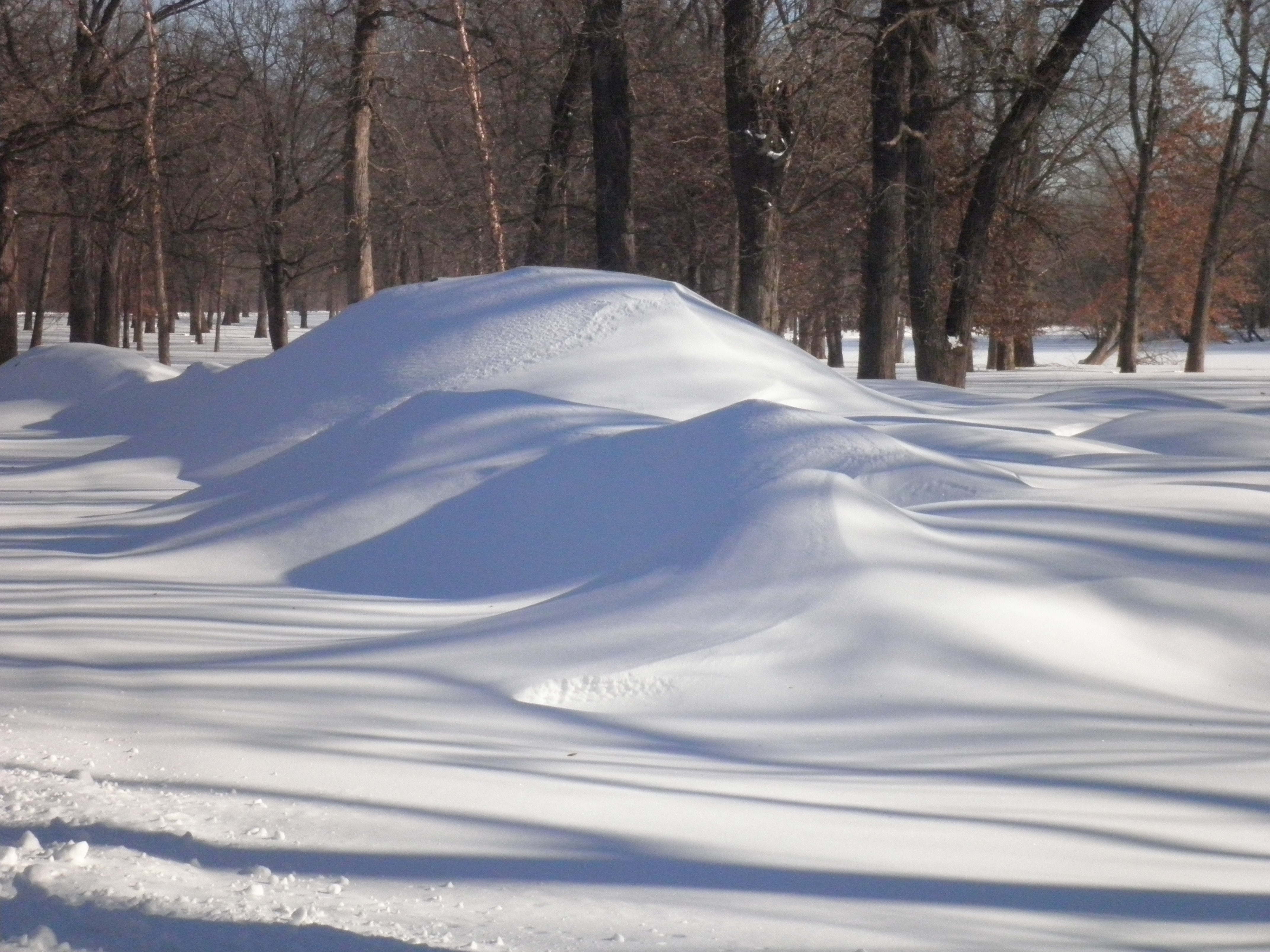
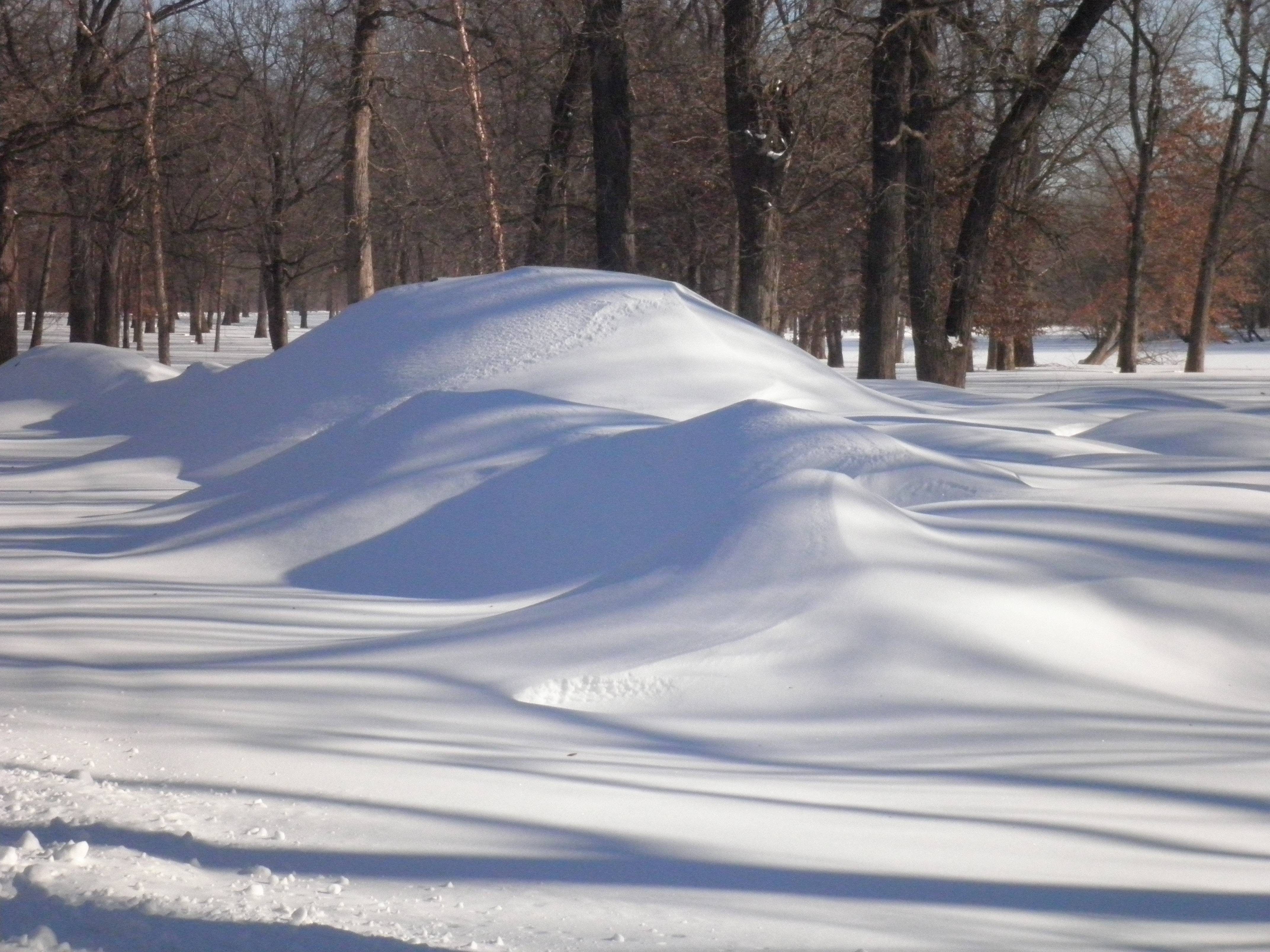
  Snow blanketing the earth… This metaphor came to mind while discussing figures of speech with my youngest daughter the other day just as the recent blizzard picked up steam.  (There goes another one – and I’ve mixed ‘em already!  Dang!)

  Metaphors and similes are interesting.  No, much more than that.  They’ve been the generative force behind the development of language and the concomitant expansion of our consciousness.  Think about it.  You’re trying to explain a new concept to, say, your child.  “Well sweetie, it is uh, sort of like…

  See what I mean?  Take that back a few eons when the tongues of our ancestors first started wagging and you will find that “language and its referents climbed up from the concrete to the abstract on the steps of metaphors”.  Take for example the conjugation of the elemental, but irregular verb ‘to be’.   

  It comes from a Sanskrit word meaning “to grow” or “make grow”.  The English forms ‘am’ and ‘is’ evolved from the Sanskrit verb ‘to breathe’.  The consideration of this is sort of like linguistic archaeology.  “It is a record of a time when man had no independent word for existence and could only say that something ‘grows’ or that ‘it breathes’. 

  The ability to construct metaphors and similes must have greatly quickened the pace of evolution for both language and consciousness.  Pick a body part and think off the endless words and concepts for which it is the root: “head of an army, table, page, bed, ship, household, nail, steam, water; eyes of needles, winds, storms, targets, flowers, or potatoes…” etc etc.

  Or back to the snow.  The idea of a white blanket upon the earth generates the notion of seasonal dormancy.  The earth, plants, hibernating animals are all put to a cozy rest till spring.  Whole lot of info conveyed by the employment of a single word in this referential manner.

  What really blows me away is that by extension, the content of our subjective conscious mind is but a metaphor itself for the external real world.  And, frustratingly, that being the case we shall never be able to achieve an understanding of our consciousness in the same way we can of something of which we are conscious.

*This quote, the ones below, and the content of this post were drawn from one of the most incredible books I’ve ever read: The Origins of Consciousness in the Breakdown of the Bicameral Mind by Julian Jaynes.  I’ve referred to it before and I’m sure I will again.

**In a footnote of my 9/3/10 post I mentioned the visit by my daughter and son in law to the library in Alexandria, Egypt.  They reported that 98% of the many computer screens were logged on to Facebook. It will be interesting to see how the current state of affairs pans out.  Social media breathing life into democracy or chaos.  And, in either case, does go any credit/blame to GWB?


At Least I Know What A Newt Is…

January 28, 2011


  Some time back, somewhere, I read that business people have just about the biggest vocabularies of all professions.  False.  Not even close.  My doctor brother knows all the words I do (me businessman) – and a whole lot more.

  The other day I was looking through an issue of one of his Journals of the American Medical Association and had to use a dictionary so often that I’d lose the sense of a passage and have to start over.  Exactly similar to reading something in a nearly forgotten foreign language. 

  Nonetheless, I’ve never met a periodical I didn’t like and this was no exception.  The most interesting bit (so far) was entitled: “Re- ‘evolutionary’ Regenerative Medicine”* which asks: “Can an evolutionary perspective on the mechanisms used by ‘lowly’ organisms inform the approach to human tissue regeneration?”

  Through most of the article the authors use the example of a newt, or more specifically one minus a limb.  How does it grow back and why won’t they, damaged heart tissue, etc grow back in humans?  Seems that science has long thought that a limb-bud (blastema) was made of “multipotent” cells (like stem cells I guess) that somehow took appropriate new form.

  Turns out not to be the case.  Instead, the already specialized cells  (cartilage, bone, neural, and muscle) of the stump/bud are enabled to re-enter the cell cycle and proliferate anew.  Furthermore, “A crucial step would likely entail ‘lifting the brakes’ on cell division, but only transiently, to avoid uncontrolled proliferation and tumor formation.”

  It sort of follows that mammals and other species might have lost to cancer the ability to regenerate.  Those of our (way) distant ancestors that did finagle new stuff also developed cancer at an unsurvivable rate.  I think that’s what they mean.  Does make you wonder about how newts et al made it through though.

  Anyway, they figured out that inhibition of a certain tumor suppressing gene mediated newt limb regeneration.  In humans the suppression of a homologous gene does not.  Seems that the culprit is a certain ‘alternative reading frame protein’ which isn’t found in any species capable of regeneration.   This ARF is frequently inactivated in human cancers.

  The above described existing route to a new limb (for some creatures) is then different than the one based upon stem cells and has several  advantages warranting further research.  Some tissues don’t seem to have stem cells.  Methods to steer stem cell development towards a specific destiny haven’t been worked out nor has a means of reintroduction of new into diseased or damaged tissue.

  No brainer then huh? 

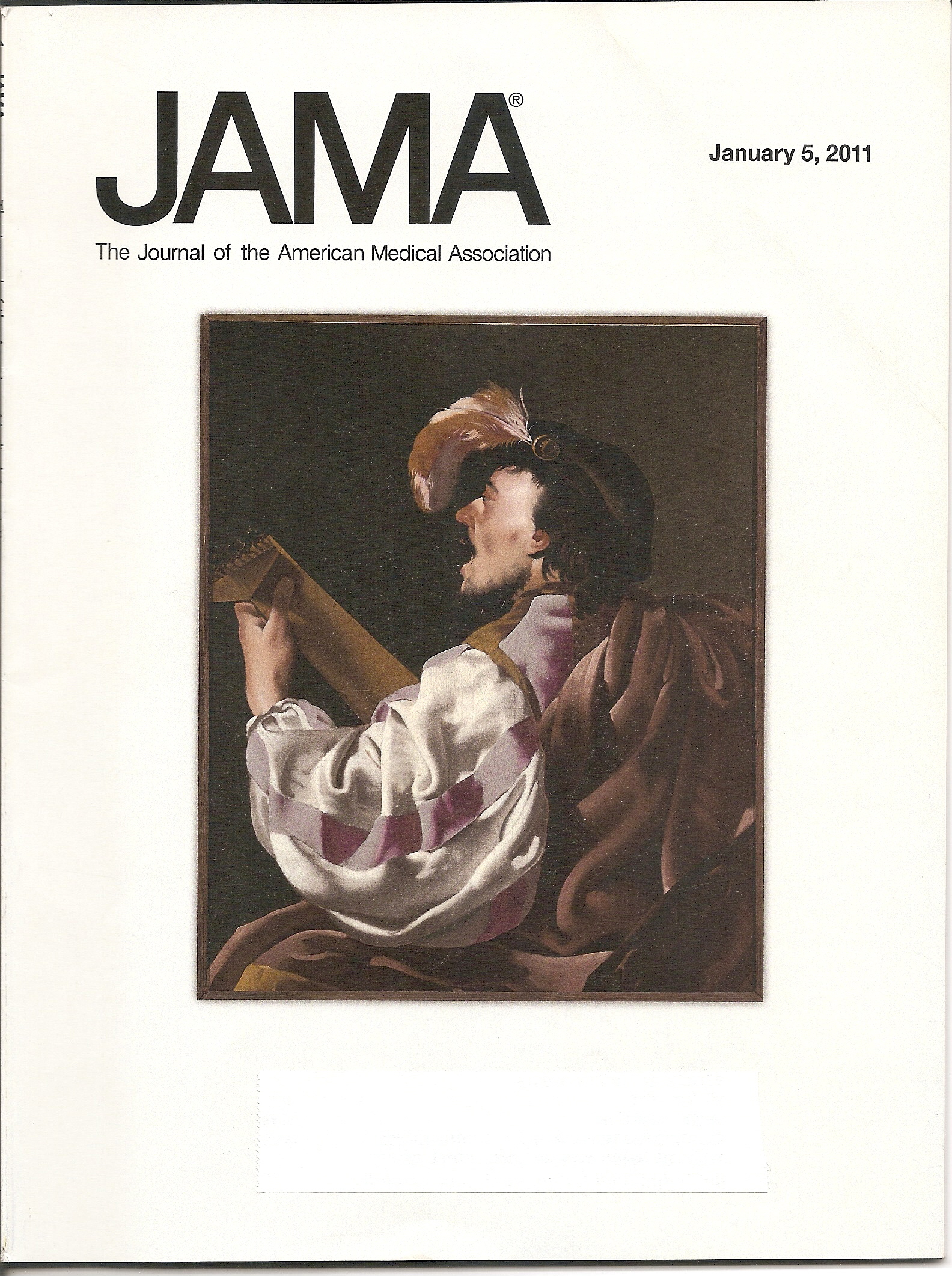
  Also, seems obvious that those against stem cell research must not be avid readers of JAMA.  Final (for now) point of interest is that a work of art graces the covers of each issue and that three recent ones have borne works from our (Figge Art Museum’s that is) vault.  Cover of this issue pictured below.

*Re”evolutionary”Regenerative Medicine; H.M Blau; J.H. Pomerantz; JAMA 1/5/11; p87