Hancher Dreams

September 3, 2010


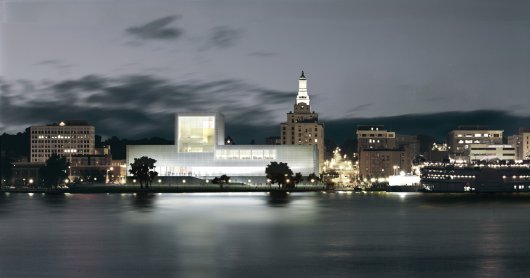
  Sometime this month, the University of Iowa will decide which of four finalists will design the new $125 million Hancher Auditorium  which will replace the one ruined by flood several years ago.  It will be the most important performing arts venue for quite a swath of this part of the world and thus will have an elevated prominence.

  And elevated in more ways than one.  Its new site will be near the old, but somewhere just a bit uphill toward the Levitt Center – above the levels of the record high water.  There had been thought of a move downtown, but access to I-80, parking issues, and the riparian sublimity kept it closer to the original. 

  The context of the site is indeed remarkable.  Nearby Art Campus buildings include the Levitt Center designed by Charles Gwathmey, The Advanced Technology Lab by Frank Gehry, and The Art Building West by Steven Holl.  There’s an expansive park north of the Levitt Center. The gold dome of the Old Capital can be seen toward the south.

  The finalists are: Pelli Clarke Pelli/New Haven, CN; Trahan Architects/Baton Rouge, LA; William Rawn Associates/Boston, MA; and SnØhetta.  For some reason all of the reports give SnØhetta’s home as NYC where they do have an office, but practice HQ is in Oslo*.  And for me they’re the one to chose.

  I knee jerk eliminate Pelli and Rawn because even though they’ve done neat stuff, they have other projects nearby.  Cesar Pelli designed the wonderful Faulconer Gallery on the Grinnell campus which by the way is walking distance from Sullivan’s bank.   

  I’ve visited and admired a dorm Rawn designed on the Bowdoin College Campus and he was called the “…go to architect for elite universities”** in a review of another project there.  A performing arts building in fact.  But like I said, he designed the under construction Federal Court House in Cedar Rapids.

  The  U of I hasn’t shied from risk and this is the perfect opportunity to take another which both Trahan and SnØhetta would represent.  I’m not much familiar with Trahan, but perusal of their site takes one’s breath away.  If they win, great – but my vote would be for the Scandanavians. 

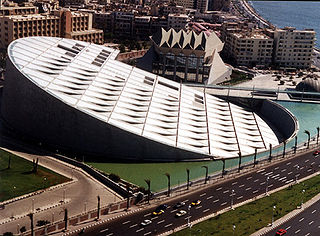
  I’ve never been in a SnØhetta project*** but began following them with great interest after reading about the library they designed in Alexandria, Egypt.  The firm didn’t exist in 1989 when three Norwegians, an Austrian, and an American teamed up to submit a proposal for the project commemorating the most important library and place of learning in the ancient world.
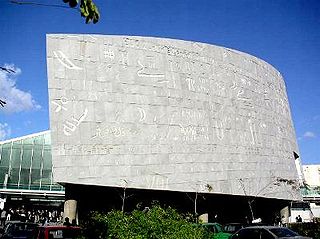
  The site, very near the original one, is between the campus of Alexandria University and the sea from which the building appears to be just emerging anew.  The circular 160m diameter glazed roof is tilted toward the sea like an ancient sundial.  Inside, thirty-two meters below lies the main reading room.  Outside walls are gray Aswan granite inscribed with characters from 120 different languages.

  Egyptians have great pride in this twenty-first century take on the celebration of its antiquities. For it they won one of the prestigious Aga Khan awards for architecture during the 2004 cycle.  The award is given to projects that enhance the understanding and appreciation of Islamic culture.****

  Other significant and interesting projects in the Middle East ensued.  SnØhetta opened in New York after winning a competition for the 9/11 site which has morphed through controversy and iterations.  Recently SnØhetta was retained by  SFMoma to design its $250 million expansion. 

  Guess we’ll soon see about IC.  Whatever, should you be driving by on I-80 get off and look around.

* You’d have thought the Ø would have been a clue…

**Architect May 2002.  Can’t wait to visit the courthouse.  Renderings are beautiful.

***But daughter and husband did and came away impressed… And amused: It was obvious that Facebook was on 98% of the computer screens banked in the main reading room.

****Coincidentaly, Cesar Pelli won one during the same cycle for the Petrobras Towers in Kuala Lumpur.

*****Check out their site: http://www.snoarc.no
Hey! Lose the ear buds!

August 27, 2010


  Furthermore, in an interview with Terri Gross on her NPR Fresh Air program Matt Richtel (the NYT reporter quoted in the previous post) drew an analogy between food and technology.  Too little of either can impair effectiveness and vitality.  Too much can lead to obesity, distraction, and actual neurological damage.

  Incredible as it may sound, the evolutionary precursor to this problem is the fight or flight syndrome.  Primitive man hears rustle in the bush, synapses fire, cortisol released, he runs or throws a spear.  Repeatedly induced by some signal to check your device or screen, same chain of events ensues all be they separately more diminutive.  Ill effects though are cumulative.

  Research on rats show that it is during downtime that memories form and creativity is enhanced.  “People need to take breaks.” Relatedly: multitaskers have more, not less, trouble filtering out irrelevance and staying focused.  The more often you switch from one screen or device to another the greater the negative impact upon your effectiveness.

  The reason you feel compelled to check is because of what’s called ‘intermittent reinforcement’.  Rats again.  If one in a cage knows that there will occasionally be a food pellet in its food dispenser, it will feel compelled to frequently check.  Similarly, while most of the stuff in your inbox is such junk it might as well be empty, sometimes there are gems.

  As mentioned in the previous post the researchers all felt a shift, if subtle, in their consciousness after the third day of their trip.  Ms. Gross commented that she noticed a difference in hers when a weekend extends from two to three days.

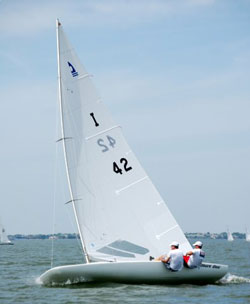
  I wonder if a similarly salubrious effect might be made possible in a shorter period by different conditions.  Extenuating, say… Wife and I were under sail last night in our twenty foot/216 sq ft sailcloth C Scow.  Breeze was way up and swells were big.  Barge and other boat traffic.  Last time we went over I broke ribs and wife’s eye was blackened. 

  Attention thus broadly drawn, there were no thoughts of Blackberry, office, bills, etc etc.  Matter of fact there was no thinking.  Way hiked out, minor adjustments in trim and body position were all that lay between full speed and swimming.  Back ashore, we felt renewed and refreshed.

*”Fresh Air” on NPR 8/24/10

**Research shows that it’s riskier to talk on a cell phone while driving – even hands free – than having a conversation with a passenger.  Passenger is even an asset: “they modulate their conversation – both topic and tone – based on what they see in front of them.”

***Sadly, Anne Franks’ tree went over last week.  Happily someone had the foresight to plant seeds and saplings have been distributed around the world.

The Mind Around Us

August 20, 2010


   On the front page of Monday’s NYT (8/16/10) was an article entitled: “Outdoors and Out of Reach, Studying the Brain”.  Reporter Matt Richtel accompanied a group of five neuroscientists who left technology behind while floating down the San Juan River in remote southern Utah.  Their purpose was to study the effect of today’s digital barrage on one’s mind as well as what might be the ameliorative effects of nature’s embrace.

  The group was comprised of two sorts: several who employ digital technology with abandon and the rest a bit wary and more judicious.  Trip leader David Strayer, one of the latter, compared the research to the study of the consumption of too much meat or alcohol.

  Dang stuff is sort of addictive.  I know it is rude to check my blackberry in the middle of a conversation or meeting yet I do it anyway.  Find it difficult to resist in fact.  Even worse is texting while driving.

  “Attention is the holy grail” said Strayer.  “Everything that you’re conscious of, everything you let in, everything you remember and you forget, depends on it”.  “Too much digital stimulation can take people who would be functioning O.K. and put them in a range where they’re not psychologically healthy.”

  By the end of the trip, having fallen into the rhythm of the river, all had noticed a change in the nature of their cognition.  Even one of the skeptics said: “There’s a real mental freedom in knowing no one or nothing can interrupt you…time is slowing down…”

  “…even the more skeptical of the scientists say something is happening to their brains that reinforces their scientific discussions – something that could be important to helping people cope in a world of constant electronic noise.”

  And other stuff even worse.  Here’s Anne Frank: “The best remedy for those who are afraid, lonely or unhappy is to go outside, somewhere where they can be quiet, alone with the heavens, nature and God.  Because only then does one feel that all is as it should be.”

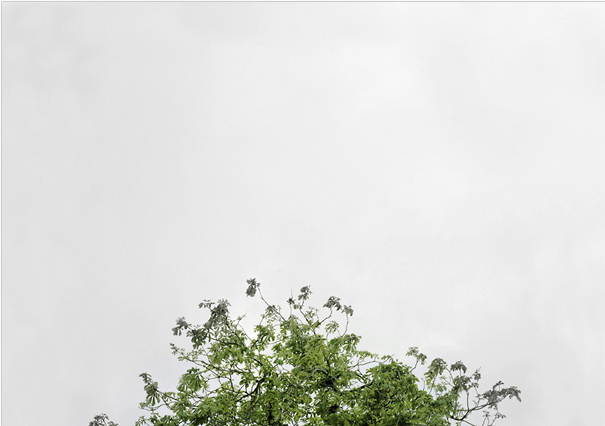
  The photo above is of the top of the tree she could see from her attic window and about which she wrote: “From my favorite spot on the floor I look up at the blue sky and the bare chestnut tree, on whose branches little raindrops shine, appearing like silver, and at the seagulls and other birds as they glide on the wind…As long as this exists, and it certainly always will, I know that then there will always be comfort for every sorrow, whatever the circumstances may be.”

  The scientists hope to develop strategies to identify the related specific neurological mechanisms surrounding attentional disorders wherefrom to enable curative therapies.  Jeesh.  Just turn it all off and go outside.  Or at least look out the window… 

*The photo and quotes came from the video installation by Jason Lazarus “The top of the tree gazed upon by Anne Frank while in hiding, Amsterdam, 2008”.  It can be seen at the Des Moines Art Center through 9/5/10

**In case you don’t get the allusion in the title, The Sea Around Us it the title of a best selling and prize winning book by Rachel Carson.

*** Relatedly (to me anyway) was the recent study showing accelerated hearing loss among the IPod generation.

… and then get back on your sled

August 13, 2010


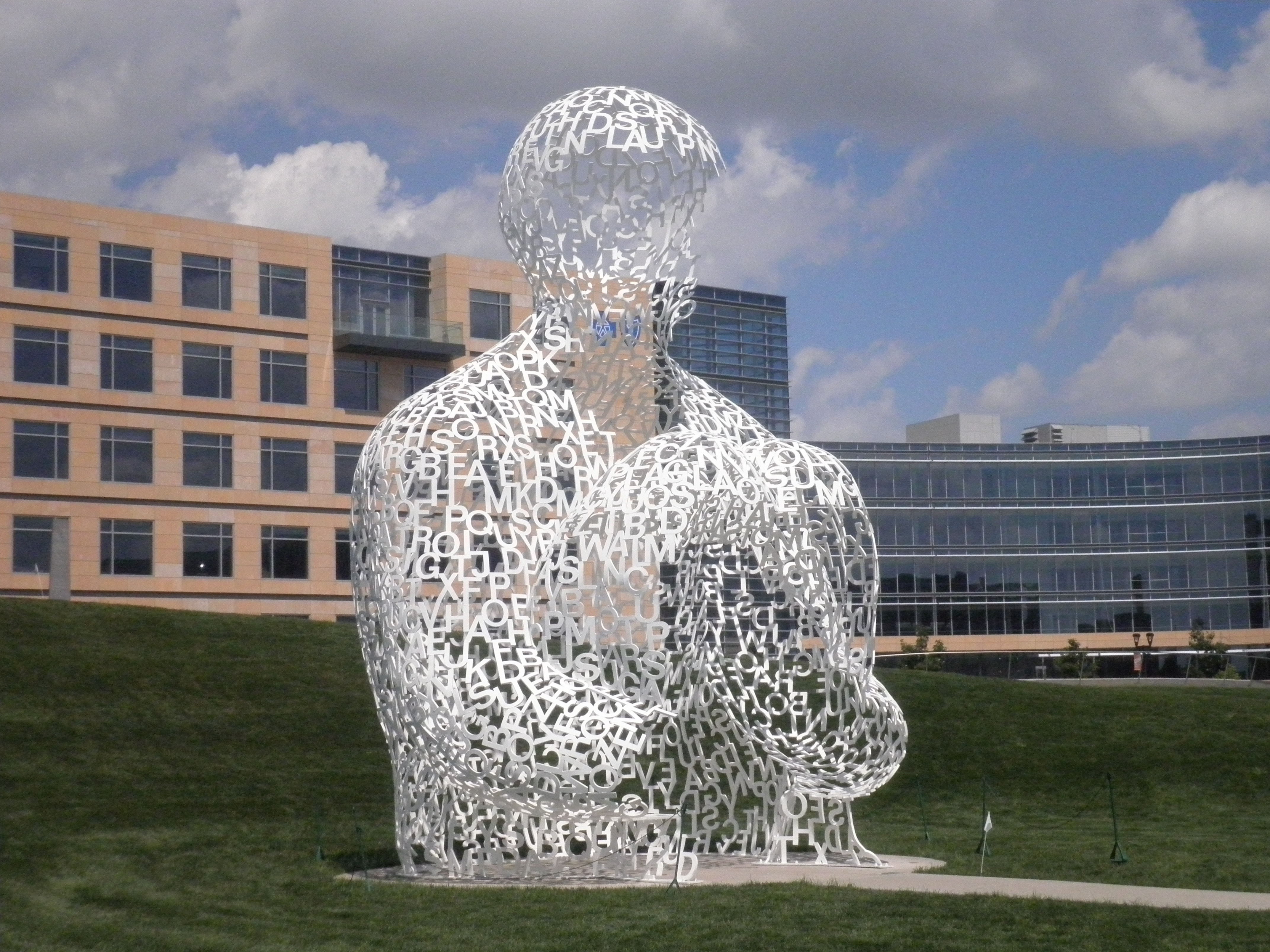
  That’s Nomade by Spanish (Catalan) artist Jaume Plensa.  It sits in Des Moines, Iowa’s Pappajohn Sculpture Park.  Plensa says that the form of the figure relates to the knees to chest contemplative position his son assumes from time to time.  Pretty cool.

  Though subtly, it is even more engaging than his wildly popular (and similarly scaled) Crown Fountain in Chicago’s Millennium Park.   A visitor’s connection with the fountain is quite physical – it literally spits at you. The experience is more cerebral in downtown Des Moines.

  Though quite large it does not impose, but rather floats somewhere in between concept and materialization.  The name ‘Nomade’ is French not for nomad, but for nomadic or wandering. An aspect of an open mind.  One can travel far from a state of quiet repose lingering wherever thoughts might crystallize – whether that be into person, place, or thing.

  Far as we know, we’re alone with that ability and along with an ability comes responsibility.  About another, very different work “La Larga Nit” Plensa recalled Catalan writer Vincent Andres Estrelles “who wrote that it is the responsibility of the poet to watch out for the whole community”.

  Plensa said about his Nomade: “It is made to embrace you as you walk into it, to transform the body as it creates a home for it.”  It may have been the heat, but I felt electrified.  Beam me up Scotty! 

*The Poppajohns gave $1.65 million for this sculpture at Art Basel Miami in 2007. 

**The park has work by many other artists including: Caro, Bourgeois, Butterfield, Kelly, Burton, Cragg, LeWitt, di Suvero, and Serra.

**The Poppajohn Sculpture Park is just west of the center of downtown.  If you’re going by on I-80 you could be All-American and see all of the installations without even getting out of your car.  But you’d be a dope to do that.  Get out, walk around, explore the nearby new public library designed by David Chipperfield, have lunch at Centro, then get back in your car, drive a bit west until you come upon the spectacular Des Moines Art Center. Check out its three wings: Saarinen, Pei, Meier. Then get back on your sled a new person and move on.

A Presence of Permanence

August 6, 2010


   Last week while riding my bike along the swollen Mississippi, my mind took me back to the architect selection process for the Figge Art Museum.  One of the reasons David Chipperfield was chosen was that he’d designed several projects alongside rivers, most notably (at that point*) the River and Rowing Museum by the Thames near Henley.

  We first met Mr. Chipperfield (now Sir) at that site and listened to him describe how even more stringent were flood plain building requirements in the UK than in the states.  And how, in any case, a river is a force of nature with which one best not trifle.  He quoted TS Eliot in that regard: “A river has a permanence far greater than mere humans.”

  That respect, in part, led him to set the volumes upon concrete columns thus placing them just above flood level.  Their shape was inflected first by the long obtusely peaked tents set up during the annual Henley Regatta.  The rooflines of traditional wooden barns of Oxfordshire were the second important influence. 

  The structure thus “fit in” and assuaged fears of local conservatives.  Chipperfield also though endeavored to clearly interject something new by having it appear to float over the site – resting it upon nearly invisible walls of glass.  The raised platform also bears resemblance to pavilions in Japan where will be found most of his early built work.

  The hovering effect was achieved for our project by exactly opposite means.  FAM looks like a glistening rectilinear crystal made to appear to float by its stark contrast with the dark concrete plinth upon which it rests.  Though the scale of the two buildings differs significantly, important similarity does not end there.  Both buildings honor their contents without sequestration. 

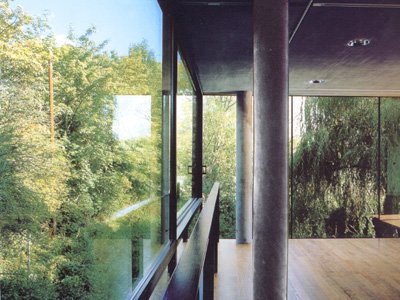
  Both employ skylights to allow for some natural lighting**, but more importantly both set up an opportunity for the visitor to visually interact with mother nature.  At Henley it’s the embrace (if not caress) of poplars around one small glazed room while here it’s the invigorating slap in the face one receives exiting fourth level exhibition space to look out and over the mighty Mississippi through a huge window sixty-one foot tall and nearly as wide.  Our own Grand Canyon.

*Chipperfield’s recently completed Neues project on Museum Island in the River Spree in Berlin was for ten years one of Europe’s largest.  It’s received raves.  Hope to visit one day…

**The skylights at Henley have been said to have been inspired by those at the Kimball.  Indeed, during our visit, Chipperfield was heard to say that “he’d work very hard to make the building what it wants to be” a phrase made famous by Kimball Architect Louis Kahn.

***cf June 26, 2009 – For a nearby work of Frank Lloyd Wright’s by a river.  There are some similarities as well as fundamental differences.  Wright’s has roots.

****cf June 5, 2009 to read about bridge builders and nature.

Lucifer

July 30, 2010


  Before setting up her studio in Hot Springs, wife returned to site of a previous residency in west central Arkansas* to visit with the two horses that lived in the barn below the apartment in which the resident resided.  Fred and Molly.

  The situation is remote, hot, and dusty.  National Park Rangers visit only rarely and the horses thus largely must fend for themselves.  Pat them on the neck or rump, flies scatter as dust cloud erupts.  When he did appear, rider ranger made a big deal about showing them “who’s boss”.

  Wife bathed them regularly and provided exotic additions to their diet like apples and carrots.  Attendant snorts and vocalizations were more rich and varied than could have been imagined. Wherever they might be, they’d rush to greet her whenever she’d appear.  Which they did enthusiastically early in July even though it’d been several years since her time in that park.

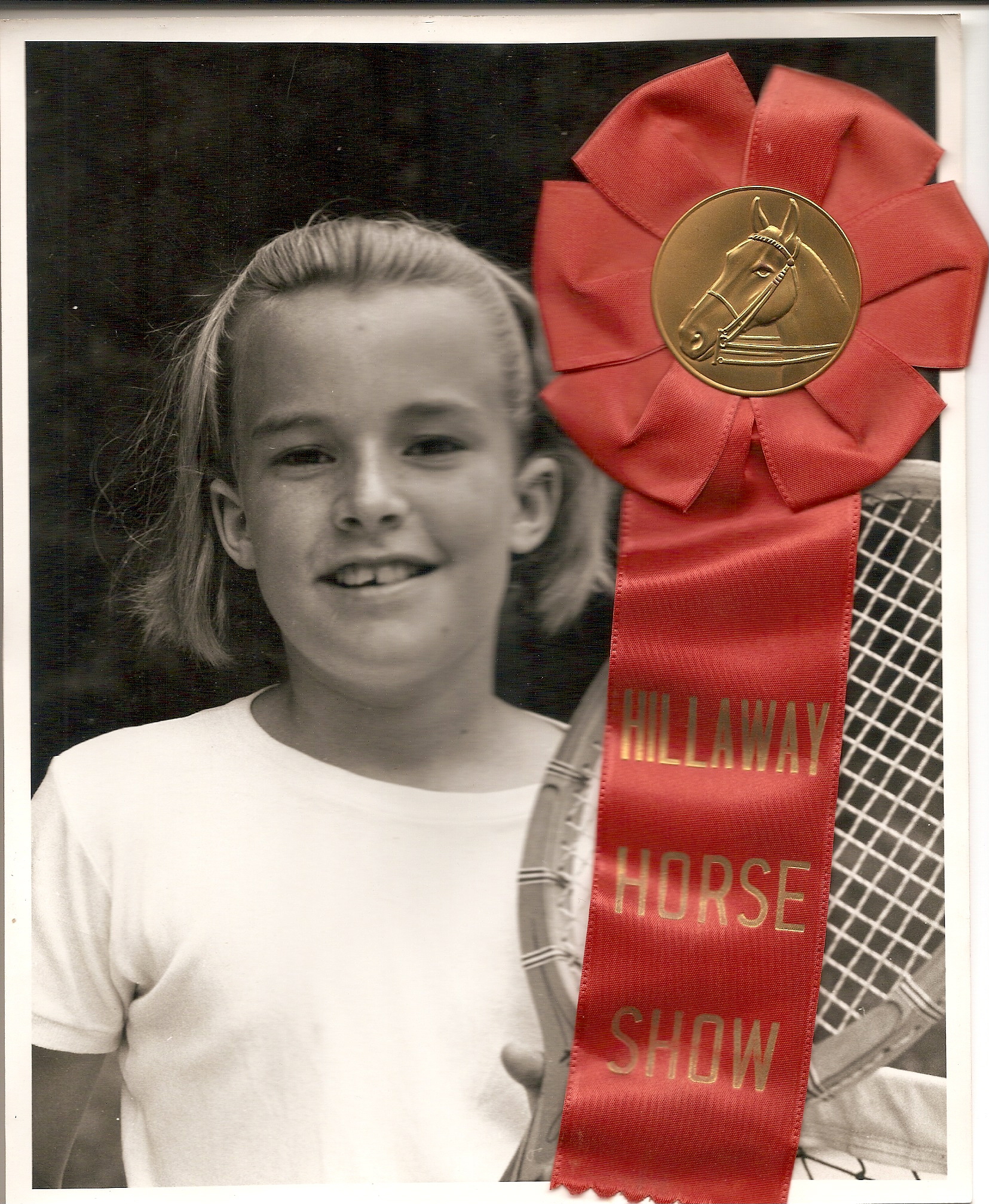
  That reunion brought to her mind one at camp during the summer of her thirteenth year.  Early on she had developed blood poisoning so severe that she passed out and rode the ambulance to a hospital where she spent two weeks (out of eight).  No one from home was able to visit.  As she began to recover all she could think about was Lucifer.

  Lucifer was a horse that none would ride.  He frequently kicked other horses and, less frequently, people.  Not possessed of that knowledge however, she’d noticed him the first day because he made vigorously about in a ring all by himself.  She’d wondered, approached, he came right over, and accepted her strokes.

  Wouldn’t happen in this day and age, but camp let her try to ride that devil.  They had quickly developed a deep mutual understanding and she knew he’d be waiting for her return.  Upon her release they rode every day after which she’d brush him down and braid his mane.

  Last day at camp was race day.  Riders would take horses through a difficult and technical series of obstacles including thirteen jumps.  Some (senior level!) were to go down.  The audience included parents and nail biting staff.  War hero father grew more nervous than he’d been at Guadalcanal.

  Invigorated by the commotion and excitement, the bay’s nostrils flared and he foamed at the mouth.  When their turn came, the little girl (she’s only 5’4” now) leaned over and whispered in Lucifer’s ear “I’m a little scared.  Don’t throw me.  We’re going to be a team!”

  They won the whole dang thing.  

*cf 8/7/09

**Wife took me riding once in Utah.  Asked for “the ones with most spirit!”  Gulp.  She took off, mine followed.  I fell off and I’m here to tell you it’s a long way down.

Unfinished Business

July 23, 2010


  Whenever I get bewildered or stuck, I like to look through Jung.  He once wrote: “Life is a luminous pause between two great mysteries which yet are one”.  And he spent most of his career assisting those in the second half of life figuring out how to incandesce.

Uh, perfect timing.

  “The more a man’s life is shaped by the collective norm, the greater is his individual immorality.”  Easy for him to say.  How does one dig deep, take risks, and still be a responsible member of this species?  I understand him to say that’s just it.  One has to will a way to be comfortable living in those questions.  “What work then, needs to be done?”

  Or put another way, Jung defined neurosis as “suffering in search of meaning”.  Or “it’s not so much that one has a complex, it’s that the complex has him.”  And should one, a parent, not feel like taking up this great challenge he/she “should be conscious of the fact that they themselves are the principal causes of neurosis in their children”.

  And it goes way back:  “Together the patient and I address ourselves to the 2,000,000-year-old man that is in all of us.  In the last analysis, most of our difficulties come from losing contact with our instincts, with the age-old unforgotten wisdom stored up in us.  And where do we make contact with this old man in us?  In our dreams.”

   Furthermore, I’m obviously interested in all aspects of neuroscience, its explication and promise.  But I don’t think that science alone will ever completely demystify the living of a life.      

  “Scientific materialism has merely introduced a new hypostasis…It has give another name to the supreme principle of reality and has assumed that this created a new thing and destroyed an old thing.  Whether you call the principle of existence “God”, “matter”, or anything else you like, you have created nothing; you have simply changed s symbol.”

  “The danger that faces us today is that the whole of reality will be replaced by words.  This accounts for a terrible lack of instinct in modern man, particularly the city dweller.  He lacks all contact with the life and breadth of nature.”

  I’m going outside.  Be right back.  Well,  maybe Monday…

Hot Springs

July 19, 2010


  Native Americans must have been amazed when they first came across the 143 degree hot springs in what is now south central Arkansas.  Should be no surprise that they imputed therapeutic properties thereto.  Choctaw introduced French trappers to the area in the 1700s and word spread.  After the Louisiana Purchase, Jefferson sent the (subsequently unheralded and overshadowed) Dunbar and Hunter expedition to investigate.

  Their reports were widely circulated and the purported healing properties catalyzed great interest.  The Hot Springs’ reputation grew so that in 1832 the federal government set aside four sections of land as its first act in protection of a natural resource.  Luxurious bathhouses arose to rival Europe’s finest.  In 1921 the Hot Springs National Park was established.

  Popularity peaked during the war years when 1 million baths were given annually.  It was ironic therefore that advancements in medicine born of wartime necessity led to a rapid decline visits during the fifties.  The rise of the motor vacation and its attendant flexibility also carried away many erstwhile bathers.

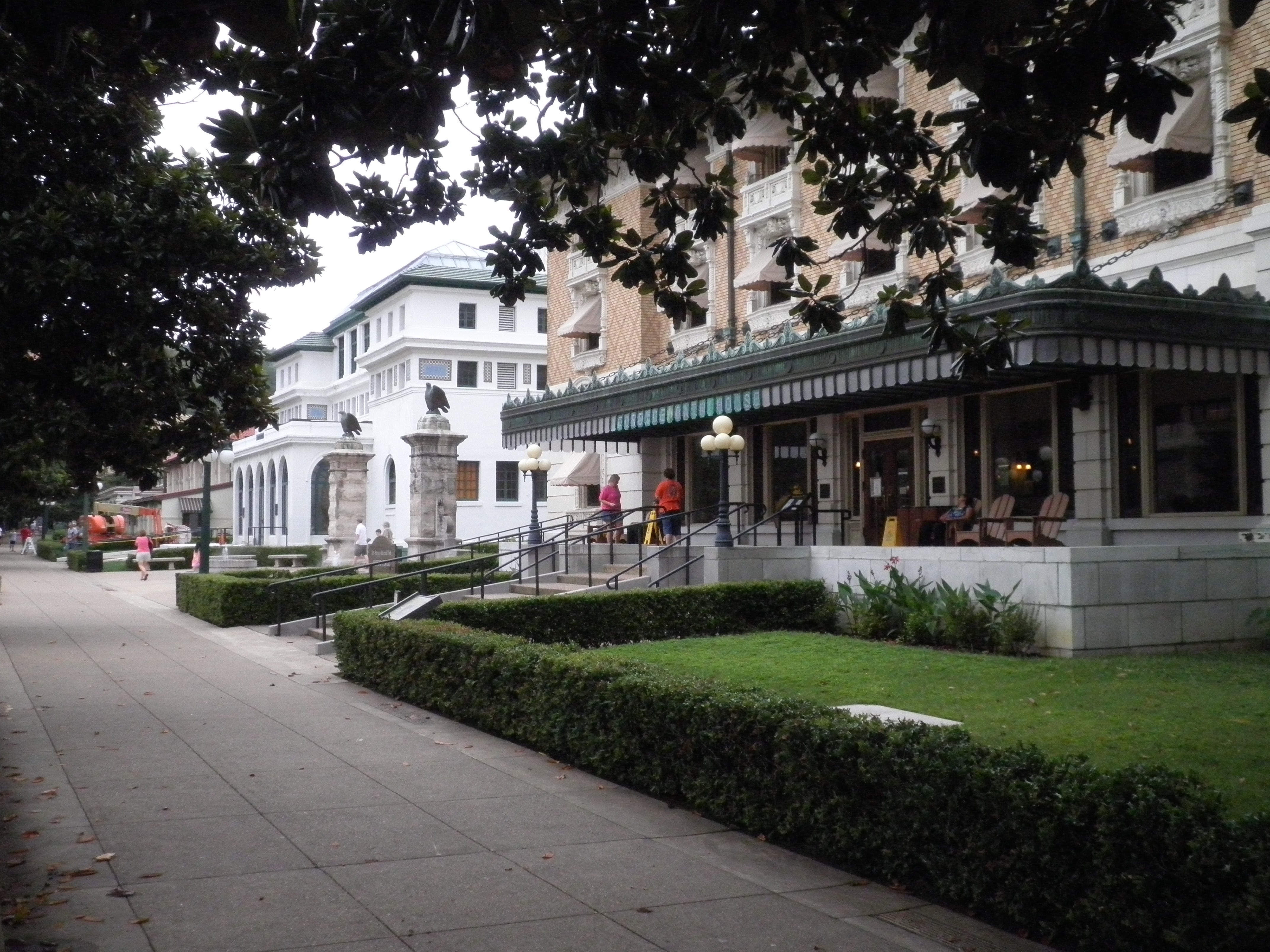
  Today two bathhouses remain in operation and others have been similarly carefully refurbished and are in the process of being repurposed.  Bathhouse Row now imbues one with a magical sense of place and time.  My first view down its length immediately brought to mind the first panning shot of the Grand Ballroom of the Titanic in the eponymous film*.

  The Fordyce Bathhouse has become Park Headquarters and museum.  The Quapaw and Buckstaff remain in operation.  The Ozark reopened as the Hot Springs Museum of Contemporary Art.  Nearby burgeoning retirement communities and proximity of potential weekend vacationers from Houston, Dallas, and other major metro areas virtually guarantee that it is only a matter of time till Bathhouse Row assumes even greater new splendor.


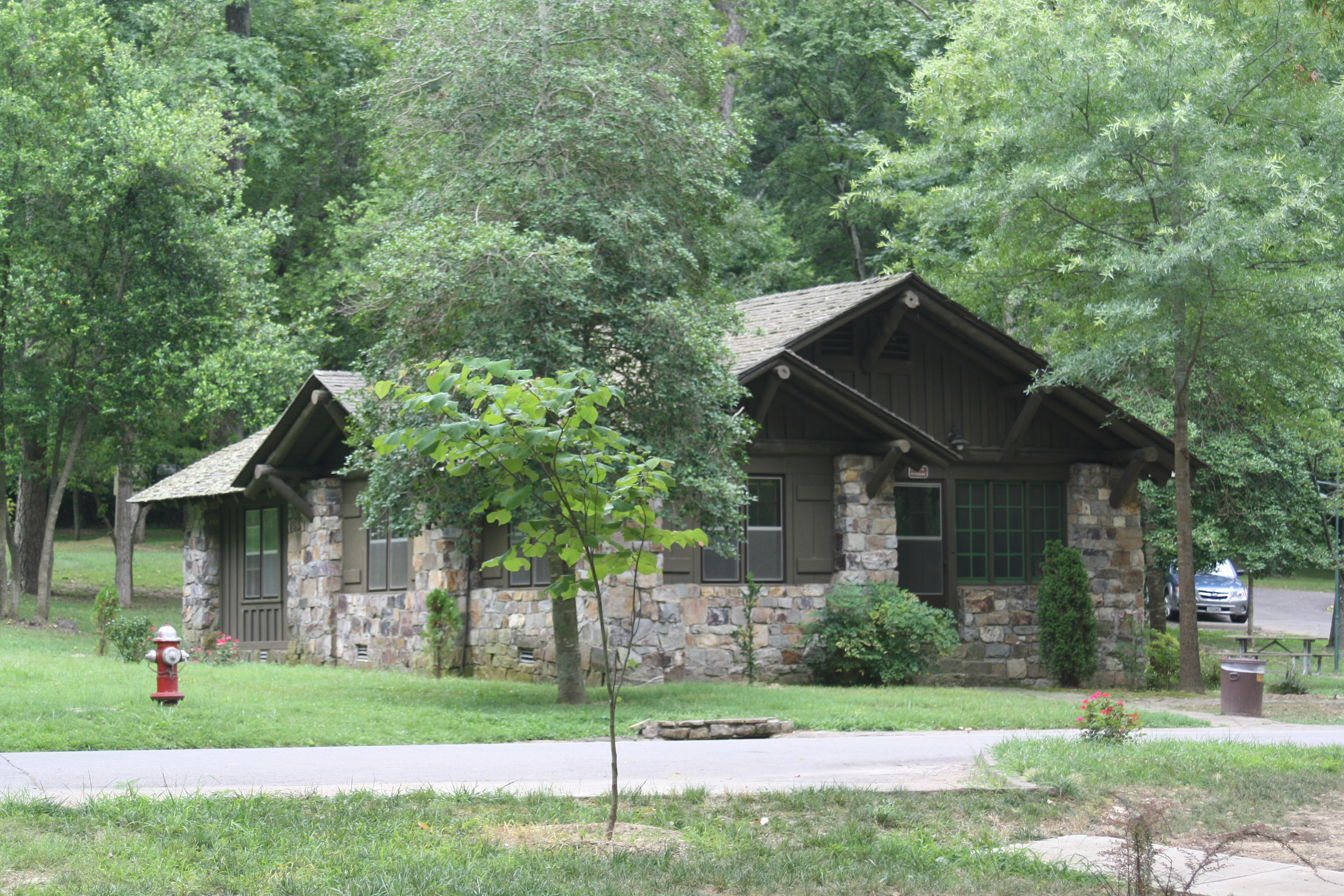
  Hot Springs National Park is one of about half of America’s best ideas to host artist-in-residency programs, hence our visit.  My artist took up hers several weeks ago a Gulpha Gorge stone bungalow.  As expected, by the time I arrived, she had befriended nearly everyone, had explored nearly every corner, created a prodigious amount of work – pottery and watercolors, and provided children with the benefits of her talent and warm enthusiasm***.

*I was thus induced to attempt to pick out the theme of the movie on the guitar I’d brought along.  Thought I’d figured it out and asked family members to guess (wife in person and others via Skype).  Closest anyone guessed was son: “Mission Impossible?”  Me very talented.

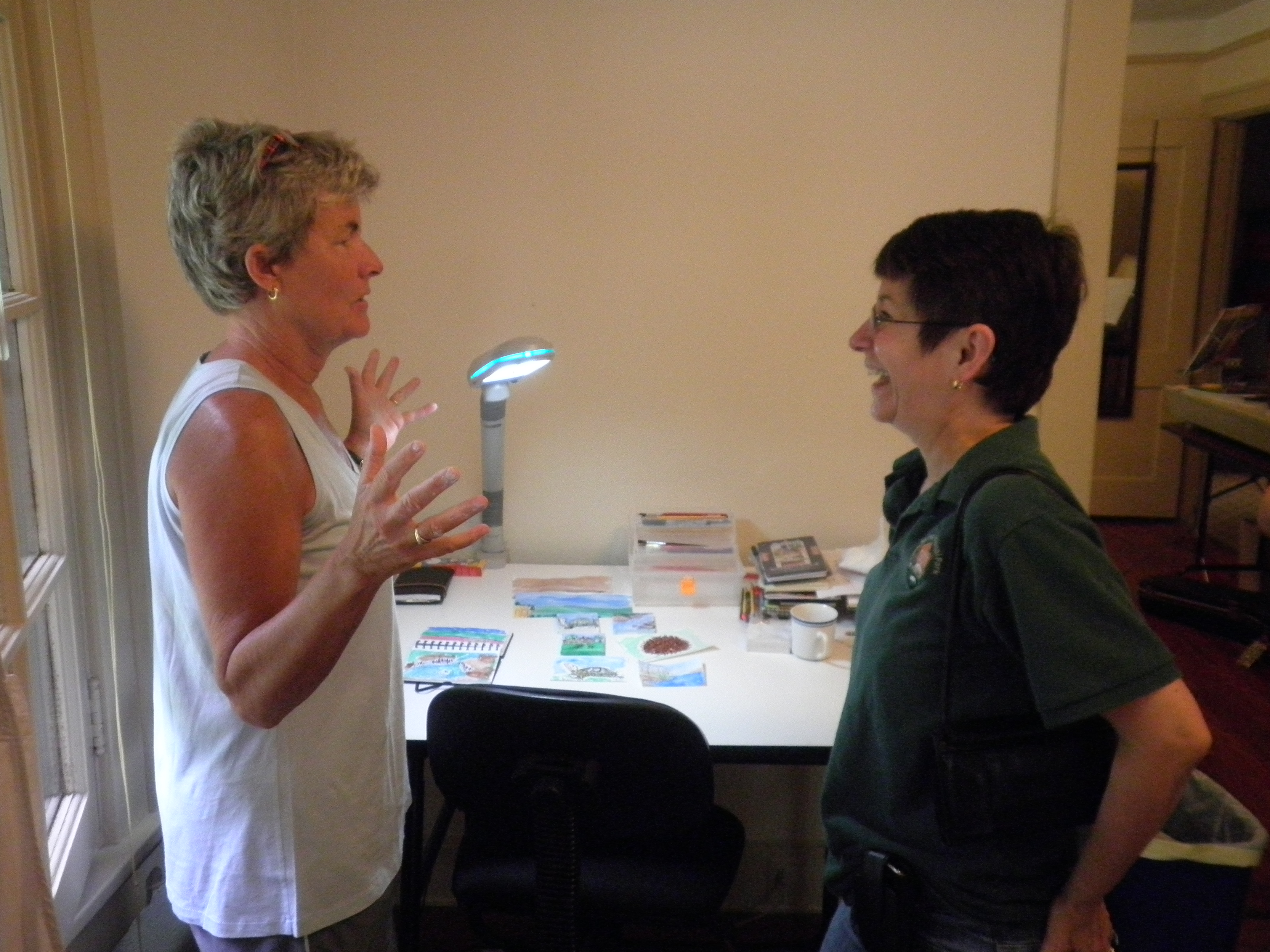
**Photo at bottom is of the A-I-R with HSNP Superintendant Josie Fernandez.   

***She sent home an in situ self portrait which developed an ever greater Klimptian aura as my bachelorhood bore on.

Without A Trace

July 9, 2010


  With wife out of town, dog doesn’t get the amount of exercise to which he’s become accustomed.  He’s thirteen, slower than he used to be, but still just as curious, so I can’t take him on five mile perambulation that does wife and still get to work on time.

  So last Saturday he had plenty of energy and we set out.  Once he realized that we weren’t just going around the block, he became so enthusiastic that he grabbed the leash in his mouth and began to pull.

  Our route takes us down a hill, across a busy street, by a park, across another busy street, and thence to a park along the river.  All that way I keep the pressure on the leash (once he gave it back) and hew to the middle of the road.  Those two things usually keep him from doing his business in residential areas.

  We nosed through a few hissing geese, dodged some bikers, and thoroughly marked off our territory.  After a mile or so we got to the spot where, when it’s warm, we unleash him and let him jump in the river to cool off.  Which I did and he did.

  Oddly for a Labrador he’s not a great swimmer so I wasn’t surprised, at first, when he seemed to flounder a bit.  But then he coughed a few times, regurgitated a small bit, and then passed out.  He went completely limp and began to sink below the surface down into the murk.

  Horror stricken, I got to him just before he fell from view and was swept away in the strong current.  Cradling him in my arms I stumbled and we both went under.  Quickly regaining my footing I soon had his head above the surface and made for shore.

  The bank there is steep and rocky and I made it up with some difficulty.  I laid him down and could tell he was looking at me, though without raising his head.  All possible outcomes ran through my head, worst first.  What would I tell his true love?

  After about fifteen minutes he rolled from side to side a bit and after another quarter-hour was on his feet ready to go.  It sure felt like a miracle.   I was light on my feet even though my knee still needs something magic to happen. 

  Only problem between there and home then was the fact that all of the duty bags I’d stuffed in my shorts fell out when we fell in.  He went three times. Fortunately I’ve trained him to back into shrubbery when it is time to make a deposit and thus leave no obvious trace.  Uh, a visual one anyway.

  Bowl of cherries tasted mighty fine that morning.

*Painting above is “Ophelia” by Pre-Raphaelite John Everett Millais.  It hangs in the Tate.  Ophelia from Hamlet just after a branch broke on the tree into which she’d climbed, she fell into the brook below, and drowned.  Why that picture with this post?  Whenever the image of lifeless dog underwater surfaces in my brain I conjure up Ophelia as sort of a cerebral side step.

Yep, She’s Out Of Town Again…

July 2, 2010

   In his Once And Future King, T. H. White wrote: “Don’t ever let anybody teach you to think, Lance, it is the curse of the world”.  Ever feel like that?  Analysis paralysis.  Think too much and you invariably come up with the wrong answer.  Unfortunately my usual M.O..

  I’m not talking about working a problem – more like when the problem is working you.  The opposite of being in the ‘zone’, or in ‘flow’ – the term coined by researcher Mihaly Csikszentmihalyi*.  So absorbed in a task or activity that there is no extraneous cerebration. 

  Take last week’s England v Germany game in the Bloemfontein-Free State Stadium.  It was clear that the lads were thinking too much.  The Germans floated through them like Luke Skywalker and the rebels through the forests on the moon of Endor at 500 kilometers per hour.  It was as if the English (and the trees) weren’t even there.

  Or take metaphysics.  How much mental energy has been spent, pain wrought, and lives lost trying to know the unknowable.  A famous Zen mondo illustrates another approach.  A samurai once asked Zen Master Hakuin what happened after death.  “How should I know” was his answer. The astounded samurai responded: “How should you know? You’re a Zen Master!!”  “Yes, but not a dead one” Hakuin replied.

  A personal example?  Well, thirty three years ago on this date I was at the start of a several day funk.  My heart told me that I should ask this one really cute girl to be my permanent roommate.  My head was certain that I ought to analyze every possible sequence of events from the hoped for positive response through to the end of time.  Finally, on July 4, in the rustic spot** pictured above, before that cold St Pauli Girl touched my lips, I went with the flow of my emotions.

  Fireworks ever since.  Sometimes you just have to get out of your own way.

* Flow – The Psychology of Optimal Experience, NY, Harper and Row, 1990.  Csikszentmihaly has written many interesting books.  Read my post of March 21, 2008 to hear about Talented Teens,  his study of what lead some identified as gifted to continue making the most of their talents throughout high school while many do not.

**Millsite Inn.  Ward, Colorado.