Vide Cor Meum

November 27, 2009

Vide Cor Meum, “See My Heart” in Latin, is the title of this beautiful aria written by Irish composer Patrick Cassidy.  It is fashioned after an early sonnet of Dante’s from his La Vita Nuova (“The New Life” in Italian).  The poem recounts a dream of Beatrice, his first love.

Dante but crossed paths with a nine year old Beatrice and was so smitten that he wrote: “Behold a god more powerful than I… from then on love governed my soul”.  Nine years later to the day he came across her again and she addressed him “virtuously”.  Then, “I left the crowd as if intoxicated and returned to the solitude of my own room”.

There he fell asleep and had the dream.  Love embodied held a burning heart in his hand and said to Dante “Vide Cor Tuum” (“see your heart”), woke the sleeping Beatrice, and fed it to her.  She died and they rose toward heaven.  In life they married others and she did die young – at 24.  Dante must have believed that Beatrice so felt the great power of his love that unable to requite, perished.

Guess my roommate is lucky to have me.  Anyway, what is truly incredible about this ethereal piece of music is that it was composed specifically for the film Hannibal and is an essential part of it.  How could the character of a sophisticated cannibal be better shaped than with prosimetrum from Dante employing the metaphorical eating of a heart? “Then he (love) woke her and that burning heart he fed to her reverently.”  Dante!  OMG

The scene around its performance underscores Dr. Lecter’s erudition and sheds light upon his feelings for Clarice.  He has loved her from the first moment of their first meeting, cherishes every encounter, but knows that it can never be consummated and that he must take great care toward her protection.

In the bit below we see such depth of feeling that one unfamiliar with the story line would find the Giancarlo Giannini character caddish and Lecter movingly urbane.  Indeed, Inspector Pazzi’s wife Allegra seems quite taken with Dr. Lecter when from memory he gives the sonnet from La Vita Nuova.  The short shrift given by Giannini’s Pazzi seals his fate as much as anything else.  Ironically, in Lecter’s company bad taste can be fatal.

Vide Cor Meum (Translation from the Italian/Latin)

Chorus: And thinking of her
Sweet sleep came over me
I am your master
See your heart
See your heart
And of this burning heart
Your heart
Chorus: She trembling
Obediently eats.
Weeping, I saw him then depart from me.
You is converted
To bitterest tears
Joy is converted
To bitterest tears
I am in peace
My heart
I am in peace

See my heart

“There is nothing so useless as doing efficiently that which should not be done at all.”*

November 20, 2009


    At least two august publications, the Economist and Harvard Business Review, chose to prominently mark the centennial celebration (yesterday, November 19) of the birth of Peter Drucker.  HBR asks on its November cover, ”What Would Peter Do? How his wisdom can help you navigate turbulent times.” The Economist says that “Four years after his death Peter Drucker remains the foremost management guru”.

  Author of dozens of books and hundreds of articles, he engaged me first in 1980 with his Managing in Turbulent Times just as the farm belt entered a difficult decade.  He advised: “A time of turbulence is a dangerous time, but its greatest danger is a temptation to deny reality.”  I was green, didn’t get it right off and the glue of our business model slowly dissolved.  But for a friendly banker we might have gone under.  Finally a light went on, I reread, and have been a fan ever since.

  Drucker was born in Vienna, moved to London in 1933 after falling into disfavor with the incipient fascist movement and moved to the US in 1933.  In 1939 he published his first bestseller, The End of Economic Man, in which he held that there was more to being a boss than worrying about the cost of payroll.

  Through the ensuing years, he was always out front.  “Management by objectives” and “knowledge worker” were his.  He foresaw the postwar rise of Japan and the tremendous importance of marketing.  He warned about public perception of oversized management compensation – in the mid eighties.  He famously said that the major consideration is not to figure out what to do, but “what to stop doing”.  Drucker devoted a significant part of his career to nonprofits which he thought formed a crucial part of a dynamic society.

  His take was always holistic and it will forever be fascinating to read him connecting disparate dots.  His preternatural perspicacity had to have been related to his interest in art.  During his forty year tenure at Claremont College he gave courses in both management and Japanese painting.

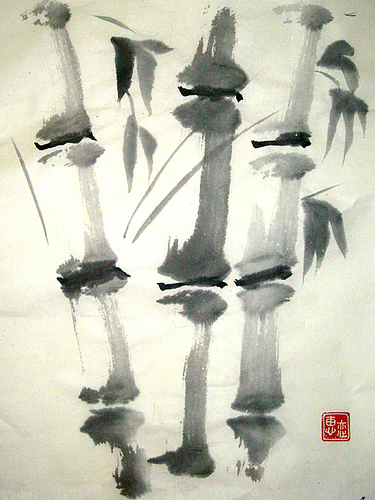
  An interviewer once took note of a “few black smudges on a yellow piece of paper” on a wall in his study.  Drucker said “I bet you don’t see much in that”.  Nope.  He then said that a Zen contemplative could offer the essential nature of a tree or whole landscape with a few quick strokes of a brush.  Forest gets lost in the trees all too often.

  Drucker was also an avid mountaineer.  He once said that: “I have always been a loner… I work best outside.  That’s where I’m most effective.  I would be a very poor manager.  Hopeless.”  Uh, yep, yep, and yep.

  Reminds me of Butch Cassidy and the Sundance Kid.  When they’re in the mountains of Bolivia looking for work, the Strother Martin character asks the Kid to shoot a few blocks of wood he tossed out so as to test Kid’s skill set.  Kid misses – to Martin’s disgust.  Kid asks “Can I move?”  Martin says “huh?”  Kid rolls into action with Smith and Wesson shock, awe, and accuracy.

  ‘Scuse me while I step outside.

*If you don’t feel like reading any of his books, search for quotes and you’ll find something that resonates:

– “Management is doing things right.  Leadership is doing the right things.”

– “The best way to predict the future is to create it.”

– “Follow effective action with quiet reflection.  From the quiet reflection will come even more effective action.”

– “People who take risks generally make about two big mistakes every year.  People who don’t take risks generally make about two big mistakes every year.”

– “So much of what we call management consists of making it difficult for people to work.

– “The computer is a moron.”

Old Friends

November 13, 2009

  Last weekend wife and I traveled north to visit a friend with whom I had crossed paths but once in the thirty-five years since college.  Make that twice – as I told his wife, last time I’d seen her she was all wrapped in white.

  Our college years were quite the mix of intellectual rigor and ribaldry.  Malheureusement, I’ve forgotten everything I learned, but can still be gross and disgusting with little trouble.  For example (and the only one I’ll provide) I’m still a urinary artiste.

  He met his wife when she was three days old.  I had to wait till kindergarten to find mine.  We exchanged that info after regaling each other with memories and new developments.  We agreed that it was an incredible stroke of something that we ever got a second date with any female, let alone a life long commitment from a girl with the advantage of a long view.

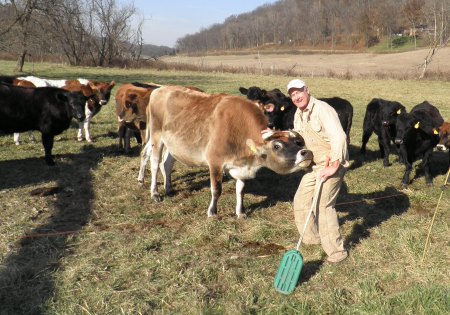
  Anyway, my friend and I both sought thrills and latterly careers and deep meaning.  He’s now a farmer quite close to the earth.  He raises grass fed cattle, humanely, gently even.  And is justly proud of his family’s stewardship of their rolling bit of Wisconsin.

  Before lunch we helped separate out a few head and then move the rest to a new pasture.  The process was beautiful.  There was rhythm.  No prodding or loud noise.  Like a shaman, farmer friend moved the cattle with softly shaken long handled rattles.  That’s all it took.

Cates 1a 

  “Cattle here have a great life up until that last day” he said.  For what more could one hope?  Herd eagerly entered the new pasture and its  fresh grass.  They change every other day or so.  I look out the same window every flippin’ day…

  Lunch was a fine repast of lean grass fed Angus hamburgers, pesto, and applesauce.  All procured by them, from their land, with care.  I had seconds.

  After lunch we hiked across fields and through timber for several hours.  I was amazed at his concern for the state of even remote bits of his land.  He’d bend, scoop, and toss sticks and small branches over the fence so as not to impede the verdancy. 

  Then, in the forest, he explained about the driftless area and how the nature of the landscape had evolved over the eons.  How the flora and fauna changed through the stewardship of the Native Americans and  now his. At dusk, we entered a clearing atop the last tallest hill open to the sky and through the leafless trees, beyond.  It had an aura, an incredibly palpable sense of place.

  Throughout our perambulation we talked about our lives through the years since graduation.  A lot of shit has happened.  Paul Simon’s song Old Friends came to mind. 

Old Friends,
Old Friends,
Sat on the park bench
Like bookends. 

  But, though creaky we’re neither ready for a park bench.  What struck me was a metaphorical take on that verse.  By graduation there were a few text books between us. Now pushing sixty however the volumes are many and the shelf bends under their weight.  Some were light and quick reads, some tumescent, several revelatory and wonderful, and, well, a few drew toward denouement with relentless and terrible power.

  Late in the lyrics Paul Simon wrote, “how terribly strange to be seventy…” But he was only twenty-seven then and might as well have written about what he knew about life on Mars.  Me?  Now forty plus years closer to that mark I’d say why look up from the book I’m reading now – might lose my place.

http://www.catesfamilyfarm.com/

Hearts and Hope

November 6, 2009

  This week, courtesy of NPR, I had occasion to listen to a fascinating program about stem cells on Speaking of Faith.  Host Krista Tippett visited the regeneration lab of Fr. Doris Tayor at the University of Minnesota.

  Problem with organ transplants is rejection.  Patient has to take powerful drugs for life to avoid a new heart from making an Alien-like exit.  Ms Taylor is working on a method to build a new heart out of one’s own cells. 

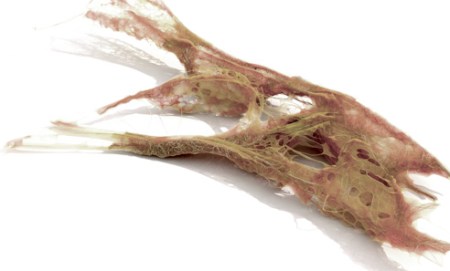
  Not yet in human trials, she starts with a heart from a rat cadaver and washes out all cells leaving an interstitial “scaffold”.  Then she uses stem cells to build a new heart upon that structure.  Below you can watch a video showing steps in the process culminating in a new beating heart!*

   Speaking of Alien: the video reminded me of the horrible part of Alien Resurrection where Ripley stumbles upon a lab filled with disturbing experiments with/on humanoids eerily similar in presentation to Dr. Taylor’s rat hearts in beakers.

  For her part, Taylor says she wouldn’t undertake anything she wouldn’t do on her mother.  People tell her that “she isn’t building hearts, she’s building hope”.  “The universe has given me tools: I’m going to use those tools.”  Progress is a series of discoveries.  When ill, our ancestors chewed on willow bark which we now use in the form of aspirin.

  Marveling over the beauty of the natural architecture of a heart with Dr Taylor, moderator Tippett said that “One of the things that I’ve been fascinated in… with scientists in general is how scientists have such a regard for beauty”.  Reminded me of a post far above in which I discuss nuclear weapon development by scientists eager to push forward savoring the “sweet technological problems…” 

  I’m all for progress and favor stem cell research, but I’m beginning to disagree with Keats’ famous lines from Ode to a Grecian Urn

Beauty is truth, truth beauty.  That is all
Ye know on earth and all ye need to know 

  This here universe is a whole lot more complicated than that.   Billowing cumulus might be beautiful, but so is a mushroom cloud.  Taylor indeed does give us hope.  We can make ourselves sick (physically or metaphorically), but we can also make ourselves well.

  All parts of our bodies are continually regenerating and the stem cells do the work.  Taylor calls it “endogenous repair, internal repair”.  Ageing of tissues and bodies is the failure of stem cells.  Stress ages stem cells by a known process. Decrease stress increase the life of a cell and a body.

  “… there’s a spiritual component to all of this” Taylor says.  “What we think impacts who we are.  She recruited well known Tibetan Buddhist monk Mathieu Ricard and measured stem cells in his blood before and after a meditation session.  “What we found was a huge increase in the number of positive stem cells in blood.”

  In an unrelated study of the neurological correlates of happiness at the University of Wisconsin – Madison Ricard was subjected to an extensive  examination with hundreds of sensors affixed to his noggin for a three hour ride in an MRI.  He was so far outside normal parameters that he was dubbed the “happiest man on earth”.  Wonder what he knows.

*Interestingly (but I guess not surprisingly), process sounds very much like morphogenetic architecture in which a pattern or process is observed in nature, algorithms developed, computer let loose, and voila: an, uh, as yet unbuilt research lab for the Santa Fe Institute designed by son and friends.

Andrew Surface 1


** For the complete interview and more video go to:http://speakingoffaith.publicradio.org/programs/2009/stem-cells/

Joy

October 30, 2009

  While driving across our beautiful state earlier this week, obsessing about problems and desperate for creative insight, I turned on the radio.  Iowa Public Radio, to be precise, and a program about lucid dreaming.  That’s when you’re in a dream and know it.  There is even such a thing as dream yoga in which adepts reportedly develop remarkable facility.

  The discussion also recounted a wide range of dream research and anecdotes.  Abraham Lincoln had a dream premonition of his assassination shortly before the tragic event.  Sting and Johnny Cash, to name but two, have had songs come to them in dreams.

  Solutions to important math problems have appeared in dreams.  Or moments after a sunrise awakening.  (Which brings to mind the incredible underpinning mathematics seems to provide our universe.  Hmm, brains certainly aren’t rectilinear…)

  One of the cofounders of Google had his flash of insight appear to him in a dream.  A Nobel winning chemist whose work had to do with the chemical transmission of nerve impulses in the brain owes his prize to a dream.

  “Sleeping on it” works.  A study was done in which a problem requiring a creative approach was presented to two test groups.  One group got the problem early in the morning and allowed half a day to solve.  The problem was given to the second group shortly before bedtime with the answer due by noon the next day.  Second group was far more successful.

  Brought to mind two of the most incredible dreams I’ve had.  Both occurred during visits to my terminally ill brother.

The first was when I joined him at a beautiful secluded meditation retreat in the mountains of Oregon.  He had been diagnosed just weeks prior.  He looked fine and acted fine, but wasn’t.

Tashi Choling

  We arrived at night in a blizzard.  My emotions were roiling and after meeting his friends, both enrobed monks and lay people, I slept in my clothes it was so cold.  Wood heat.  My dreams were of such utter tranquility that I awoke with a smile certain that all would be ok.  And he was during the next seventeen months during which I visited him several times.

  When I arrived for what proved to be my last visit though, his condition had worsened dramatically over the short interim since my previous appearance.  I was so shaken that upon first seeing him I called the nearby Golden Gate Bridge something other than that.  Clearly the end was near.  Couple weeks.  He could see that I was shocked and joked about my mistake.  I was nearly overwhelmed.

  Several of his fellow Tibetan Buddhists were there with us.  That night I dreamt that my wife was giving birth to another child, another girl and I was in the next room waiting for the announcement.  There was some sort of muffled commotion and I went in.  

  Those about me were sobbing. The baby had been born, but wasn’t yet breathing.  It looked healthy and was clean of all birth fluids and blood etc.  I held her and talked softly to her.  She smiled and began to cry.  We were all overcome with joy and so that was what we decided to name her – Joy.

  Next morning, amazed at the tone and nature of that dream given the situation and my mental state, I recounted it to my brother.  He said “I’m tellin’ ya man, there’s somethin’ to this stuff…”

*Interviewee was Robert Waggoner/International Association for the Study of Dreaming.

“The Fewer the Men the Greater the Share of Honour”

October 23, 2009

  OK.  Enough.  Enough with the peace and quiet.  I’m not a girlie man.  Back to the blood, guts, and gore.  Real thing this time though, with The Bard’s representation to boot.

  Sunday (October 25) is St Crispin’s Day.  It’s named for twins Crispin and Crispinian who were martyred in about 286AD.  They were removed from the liturgical calendar by Vatican II, but they’re not what make the date noteworthy anyway.  Several historically important battles have been fought on October 25s: The Battle of Balaklava (The Charge of the Light Brigade) in 1854, The Battle of Leyte Gulf in the Pacific in 1945, and The Battle of Agincourt in 1415.

  The event at Agincourt occurred because King Henry V of England invaded Europe to prosecute his claim on the throne of France, the hand of Princess Catharine daughter of Charles VI King of France, and a dowry of 2 million crowns.  It is notable because of the fact that the English force of some 6,000 defeated catastrophically the French who numbered perhaps as many as 30,000. 

  Several factors worked to King Henry’s advantage including: the composition of the forces, the nature of the battlefield, and the sure knowledge that defeat would mean annihilation.  The resulting motivation helped overcome fatigue, hunger, and disease.

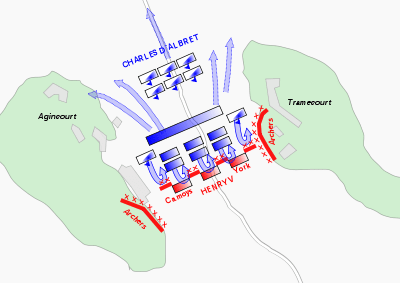
  Over 80% of Henry’s men were archers/longbowsmen.  Half of the French were dismounted knights and men-at-arms, a thousand or so mounted knights, and the balance archers.  These counter posed armies came to face each other in a very narrow strip of recently plowed open muddy land surrounded by dense forest.

Agincourt

  Short and simple, the English and Welsh archers on the flanks loosed tens of thousands of arrows killing and wounding many, hitting French horses on their unarmored hindquarters driving them madly through their own ranks. 

  The armor laden French pressed forward wave upon wave, but slogging through the muddy bottleneck tired quickly, were easy prey, and fell in huge piles.  Some even drowned in the mud.  Crucially, they were unable to outflank their opponents because of the thick wood on both sides.

  Once all arrows had flown, the English moved upon the French with hatchets and swords.  Without the weight of armor they tore through the horrible wallow with relative ease.  At the end of some three hours there were approximately 112 dead Englishmen, and as many as 10,000 French.  Uh, whoa.

  King Henry’s glory has regaled far more than just those with particular interest in military history through the agency of one William Shakespeare.  His Henry V dramatizes the story and Hank’s “St Crispin Day Speech” has to be one of the most stirring and momentous in all of literature.  After reading the play, you should rent and watch the film version with Kenneth Branagh in the lead role.  Or maybe be lazy and just watch the clip below.  Either way, be careful with your cutlery for a while thereafter.

Dunes

October 17, 2009

PA110378 

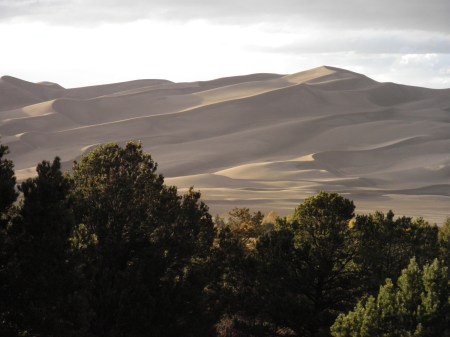
The huge dunes in the foreground were formed by the interaction of wind, water, and stone over the course of many eons.  They are the largest and most extensive (330 square miles) in North American and comprise the Great Sand Dunes National Park in south central Colorado.

PA050284 

  Most of the sand came from the San Juan Mountains to the west, but the larger grains were shed from the Sangre de Christos on the east such as Kit Carson and Crestone (pictured below) – two of Colorado’s fourteeners.

PA130413

  The dunes loom some 700 feet above the sand sheet and sabkha just to their west.  The visual effect of the afternoon sun upon them is unforgettable.  Why should the sun on a big pile of sand have such an impact?  Well, not long (in cosmic terms) after life evolved beyond a simple unicellular state, as ability to discern between light and less so developed.

PA120405

  Billions of years later we see in 3-D and Technicolor, but the pre-primal legacy still influences our perceptions.  The incredible lights and shadows of the dunes mediated by the undulating ridges transfix one’s gaze.

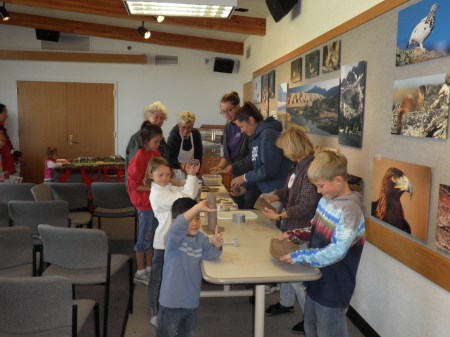
  All visitors thus moved, if only for a moment, what better place for an artist to imbue and convey?  Wife is artist-in-residence here and as usual has made the most of the situation.  Observations from many points of vantage have inflected her current work while observers, young and old alike, have added tactile impressions to their experience of this unique bit of terra firma NA.

PA110368

PA100346

  Bonus for this here strong back is that the location of the park, far far removed from the nearest town makes for a similarly prehistoric level of noise and light pollution.  Have seen more falling stars than I’ve fingers and toes.  Me lucky boy.

Ah, The Peonies!

October 9, 2009

Heat

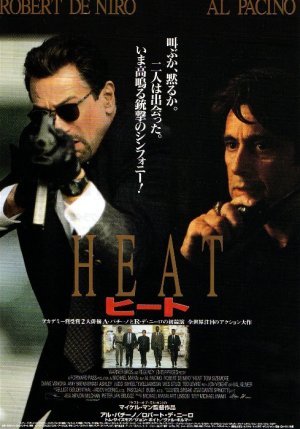
    Ever see the movie Heat?  It’s a really great cop v robber flic with Pacino (cop) and De Niro (robber).  Val Kilmer is a steely with chinks bad guy too.  Ashley Judd’s his wife.  De Niro and crew are skilled, astute, and only go after the largest of hauls.  Last one eight figures.  Movie is wonderful, mesmerizing, in your face violence.  In fact, De Niro demands that his last victim “look at me, LOOK AT ME!” before delivering the revenge fueled coup de grace.

  My savor of the gunplay and bloodletting came to mind while reading a bit about the President of Liberia – Ellen Johnson Sirleaf – the first female president of an African country.  Question: “If women ran the world, would wars still exist?” Answer: “No. It would be a better, safer, and more productive world. A woman would bring an extra dimension to that task – and that’s a sensitivity to humankind.  It comes from being a mother.” 

  Question: “But if women had power, they would be more likely to acquire the negative traits that power breeds, like selfishness and territorialism.”  Answer: “It would take a very long term of women absolutely in power to get to the place where they became men”.*

  What is up with us men?  I remember studying the Yanomamo people who inhabit a bit of the jungle between Venezuela and Brazil.  Napoleon Chagnon wrote the best selling anthropology treatise of all time about them.**  They were fascinating for having been theretofore untouched by civilization.  Real time look at primal.  Garden of Eden it was not.  Guys sat around blowing hallucinogenic drugs up each other’s noses all day while women slashed, burned, and cooked.  Third of the men died violent deaths.

yanomamo

  I’ve read elsewhere that our incredible inability to get along is what led to the original diaspora from Africa.  Group gets to 5,000 or so in size, factions arise, violence attends, they spread out.  Years on, given half a chance, a group more technologically advanced wipes out one less so.  Jeesh.

  Somehow though we’ve made it this far.  Truth and beauty do exist and are known to exist by men and women alike.  President Sirleaf might well see more soulful women than men, but some men have tamed or cathected their urges and transmogrified their blood lust. 

  Mountaineers, for example, challenge gravity and weather to suffer a cold and frightful experience risking their contribution to the gene pool all the while.  First ascensionists get to pick the line and have naming rights when successful.  Sometimes position and kinesthetics combine to make a stairway to heaven.  On the massive Gogarth Sea Cliffs in North Wales for example, Ed Drummond put up a spectacular route which he named “Dream of White Horses”. 

Dream of White Horses

  Or – just saw an exhibition of Cy Twombly’s late work.***  Unspeakable beauty.  Unspeakable.  The representation below of one picture from his “Peony Blossom Paintings” conveys only the slightest of hints of an in-person experience, but alongside panel six he has a haiku by Takarai Kikaku inspired by 14th century samurai Kusunoki Masashige: 

Twombly Peony 2

Ah, The Peonies

For which

Kusonoki

Took off his Armour

Cool, huh?

* NYT Mag, 8/23/09

** Yanomamo, The Fierce People by Napoleon Chagnon, Holt Rinehart Winston 1968

***Cy Twombly: The Natural World Selected Works 2000-2007.  The Art Institute of Chicago May 16 – October 11, 2009

C=BT2

October 2, 2009

  Ever I hear folks arguing vociferously about the ascent of man I think about fathers coming out of the bleachers at little league games.  Ridiculous irrationality.  Give me a break.

  On the one hand you have folks who believe that an old dude of their own race awaits them in the hereafter.  A scary throwback to Old Testament literalism.  On the other, well, scientist Stephen Jay Gould once wrote: “Most important scientific revolutions involve the dethronement of human arrogance”.  How many times have thinkers of one stripe or another claimed to have reached the end?

  Myself?  I think that the middle ground, if you want to call it that, will be found in relation to consciousness.  Significantly, it’s origin and nature have not yet been discovered.  Sure, correlates of mental phenomena have been observed through brain imaging, but there is no consensus about how thoughts actually arise or what constitutes mind (as opposed to a brain).

  Some respected thinkers believe that consciousness might be another force – like gravity say – and similarly permeate all existence.  As I’ve mentioned before, approximately 75% of the universe, that has been calculated to exist, has not yet been found.  I think it works out something like this: Consciousness x Bell’s Theorem* = that 75%.

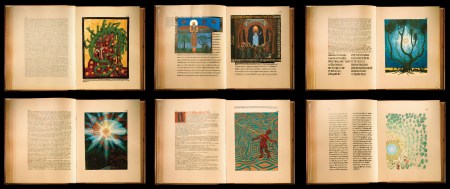
  Dial in the richness of Jung’s observations and there you have it.  In the September 20, 2009 New York Times Magazine there was an article about his long hidden “Red Book” titled The Holy Grail Of The Unconscious.  The book is said to stem from his mid-career “confrontation with his unconscious” during which lucid and florid dreams and visions came in “incessant streams”.  It is spectacularly illustrated by his own hand.

Jung Red Book

  He believed that we are all linked by a collective unconscious holding the whole of our history pretty much all the way back to stardust.  It manifests in each of us through the myths and archetypes that are made to constellate differently in an individual life by the forces borne upon them. 

  “Together, the patient and I address ourselves to the 2,000,000 year old man that is in all of us.  In the last analysis most of our difficulties come from losing contact with our instincts, with the age-old unforgotten wisdom stored up in us.  And where do we make contact with this old man?  In our dreams.”***

  There are many today skeptical, to say the least, of the utility of dream interpretation or any aspect of the “talking cure” for that matter.  I’d first refer them to the Gould’s words above and then simply say that once aware of Jung’s perspective it is incredible to follow him through a particular set of memories, dreams, and reflections – especially his own. 

  Herefrom echos my approach (only offered nearly seventy-five years ago). “I have been convinced that at least a part of our psychic existence is characterized by a relativity of space and time.  This relativity seems to increase, in proportion to the distance from consciousness, to an absolute condition of timelessness and spacelessness”.***

  Read some of his stuff, I’ll bet you’ll find resonance.

* Bell’s Theorem proves the non-local nature of reality.  cf July 18, 2008 below.

** From his autobiography, Memories, Dreams, and Reflections.

***NYT October 4, 1936

Rescuing Power

September 25, 2009

  Knee hurts, so instead of running early AM I’ve been riding my bike lately.  Trouble is it’s now fall and dark.  Oh well – the better…  Upon the razor’s edge once again.  More juice.  Might coast from time to time, but better not drift mentally till sunup.

  Right turn and fifty yards out of my drive I drop down a steep hill.  Feel like Batman falling off a lofty ledge Gotham dead of night.  Shirt flutters, cool air streams by my face, I use my night vision to search for potholes.

  Zoom through intersections and by homes asleep to another steep hill the climbing of which has me off the seat, pounds my heart, and puts me into oxygen debt. Just near the top, a light goes on in house on left.  Kitchen.  Lady.  Uh, sweet!

  Roll down other side a short way turn right and up beneath trees spread both sides touching middle.  Blocks the little starlight not already filtered out by clouds.  Hit puddle, sprayed from behind feel wet line up back must look like skunk.  Then nearly toppled by an acorn, but it crunches.

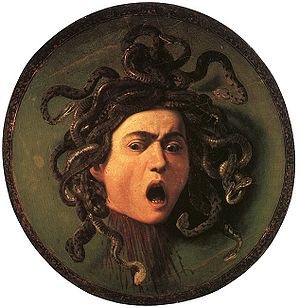
  Level out, cool down, cross a busy road against the light.  Down longest hill yet into a park and a cloud.  Thought of last time through  and a gorgeous field of daisy-like flowers stretched toward dawn.  Now though, dream dark, came to mind Piazza Campo Di Fiori* in Rome upon which a tennis match played 1606 ended with the brutal murder of one opponent by the other – great painter (and brawler) Caravaggio.

caravaggio medusa

  Funny, vigorous exercise almost always exorcises my demons. Or at least quiets them for a while.  Especially if hair on the back of my neck is up.  Quoting Holderlin Jung wrote: “Danger itself fosters the rescuing power”** 

  Out of the cloud mine sleep as I climb another hill then glide down the far side sharp turn right under bridge along swift creek.  Best Chinese restaurant in town on far side.  Ducks float in eddy to avoid Peking.

  Up last hill by kids’ elementary school (man, that was a long time ago…) turn left & coast to driveway. Twenty mile loop complete.  Stow bike  hose off French roast pat dog KISS WIFE ok. 

*”Field Of Flowers” in Italian.

**Carl Jung, Modern Man In Search of a Soul

***Painting is Caravaggio’s Head of Medusa which hangs in the Uffizi in Florence