Heh, heh, heh…

February 20, 2009

  p4080042

  Not long ago (well I guess you can see when), I was seated at a table with a bunch of crusty old (and not so old) farts discussing an important community development project.  A lot of money was involved and so were therefore complexities, hidden agendas, and outright misguided prejudices.

  Sometimes during such meetings I work on needlepoint or origami as sorts of insurance policies.  They ensure that the time spent is not a total waste.  To be fair though – the measure is usually not necessary and often my own contribution amounts to little more than a stupid joke.

  Both needlepoint and origami bear certain similarities with an arcane subset of mountaineering called ‘bouldering’ which consists of short routes of extreme difficulty.  All demand intensely personal – essentially solitary – commitment and creativity to engender any hope of real success. 

  They also help sharpen ontological acuity.  Paradoxically, acts of concentration such as these awaken a broad and deep sense of awareness.  I actually did most of the bit you see above while visiting my brother for a week some months before he died of cancer.  I remember every stitch I made, breath he took, and drip from the roof during that uncharacteristically wet Marin February.   

  Anyway, during the above referenced meeting I could tell by their furtive glances that several of my colleagues were discomfited by my silent activity. 

  Several times Mr. Curmudgeon fired a question at me to check for my attention.  Reminded me of grade school when I was the best day dreamer in class and loved to look out the window while we were taking turns reading aloud.

  The teacher would break order and call on me because she figured my mind was elsewhere.  She was right of course, but alas for her wrong too.  I’d pick right up where the last had left off without losing a beat.  Heh, heh, heh. 

  I nailed Mr. C’s questions, but nonetheless later was asked, anonymously, to leave my “stitchery” at home or the office or wherever.  In the end, the series of meetings wound up with nothing solved and no real purpose served, but the above project found its first incarnation as the cover of a graduation present/address book.

  Heh, heh, heh. 

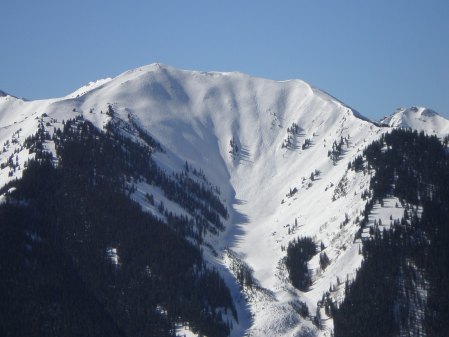
* Above L-R: Sun over surf; an Iowa farm; and mountains.

In the evening haze heroes are coming home

February 13, 2009

 mao1

  Edgar Snow was, I think, the first westerner to interview Mao.  He met with him in the old fortified stronghold of Pao An in northwestern China in 1936.  By that time Mao had already been fighting the Nationalists for 10 years.  Snow recounted this visit and much much more in his classic Red Star Over China which the Economist called “An exciting and vivid account of one of the world’s most important events…”

  His take squared with neither Warhol’s nor my facile conception.  Snow found Mao “gaunt” and “Lincolnesque”.  He sensed a “force of destiny” and was impressed with his breadth of knowledge.  Mao’s reading list included: Ghandi, Nehru, Spinoza, Kant, Goethe, Hegel, Rousseau, Darwin, Adam Smith, not to mention of course the Confucian analects etc and the Marxist philosophers.

  He had knowledge of the “negro problem” in American which he compared unfavorably with the treatment of minorities in the USSR.  He thought little of Mussolini or Hitler, but believed that FDR was anti-fascist and that they’d be able to work together. 

  Interestingly, Snow didn’t think Mao’d fit in with the intellectual elite because he could be found coarse and vulgar.  For example, during a meeting once, he took off his pants to attenuate the effects of the intense summer heat.

  Some thirty-six years later the image registered by Henry Kissinger was much more fully formed:  “I have met no one…who so distilled raw concentrated willpower… His very presence testified to an act of will.  His was the extraordinary saga of a peasant’s son… who conceived the goal of taking over the Kingdom of Heaven, attracted followers, led them on the Long March of six thousand miles, which less than a third survived, and from a totally unfamiliar territory fought first the Japanese and then the Nationalist government, until finally he was ensconced in the Imperial City, bearing witness that the mystery and majesty of the eternal China endured even amidst a revolution that professed to destroy all established forms.”

  Whoa.  Certainly the Chairman was also responsible for untold hardship, starvation, cruelty, misery, and death.  Those did loom largest in the memory formed by my early schooling.  Just as certainly however he was indeed the ‘Great Helmsman’ at the launch and early voyage of what has become modern China.  (Even though if back on the scene today he’d do a double take)

  Mao is on my mind because oldest daughter gave me a book of his poetry for Christmas.  Of interesting insights it is full.  Nixon recounts Zhou Enlai commending a verse of Mao’s: “The beauty lies at the top of the mountain”.  I agree with Mao, Zhou, and our former president, but probably with a far more literal interpretation than might have been theirs.

  In the spring of 1927 (the year my father was born…) Mao wrote The Tower of the Yellow Crane

China is vague and immense where the nine rivers pour.
The horizon is a deep line threading north and south.
Blue haze and rain.
Hills like a snake or tortoise guard the river. 
The yellow crane is gone.  Where?
Now this tower and region are for the wanderer.
I drink wine to the bubbling water – the heroes are gone.
Like a tidal wave a wonder rises in my heart. 

  Thirty two years later he wrote Return to Shaoshan*: 

I regret the passing, the dying, of the vague dream:
my native orchards thirty-two years ago.
Yet red banners roused the serfs, who seized three-pronged lances
when the warlords raised whips in their black hands.
We were brave and sacrifice was easy
and we asked the sun, the moon, to alter the sky.
Now I see a thousand waves of beans and rice
  and am happy.
In the evening haze heroes are coming home. 

  Clothes (or the lack thereof) don’t make the man I guess.  At least not less inscrutable.  Or two dimensional. 

*Shaoshan was Mao’s native village.

High Lands

February 6, 2009

0052 

  Daughter and I took lifts to the top of the ski area where we boarded a snow cat which took us up the ridge to a point where it narrowed and steepened.  We got off.

  After the drop off we began the hike up the ridge as it narrowed to a knife edge.  A sign read: “Hazards of back country skiing include death”.  Though wife and I had made this hike and ski descent before and though it is a far sight from the leading edge of this day’s temerity,  I had been sleepless the night before.

  To voluntarily enter a challenging environment with one of one’s progeny can only hope to be a healthy endeavor if accompanied by some degree of expertise, experience, and humility. And voluntary participation.  Kids are all adults now…

  Hiking in ski boots is not natural.  Hiking up a steep trail – actually only a succession of small slots kicked in the ice and frozen snow – focuses one’s attention.  Drop your skis and you’d never seen them again.  Slip, well, you get the picture.  The wind was blowing so fiercely that the contrails from my runny nose froze solid on the left lens of my shades. 

   We reached the top.  Rested a bit and considered best route of descent.  Couldn’t  see over the corniced ridge so to be safe skied down the shoulder a bit and then dropped in.  It was steep and cruddy.  Had to be athletic and assertive.  Perfect for #3.  She knew she’d be back to drop in from point zero.

   From the bottom of the bowl a short trip down a tortured trail to a cat walk and the lift took us to the summit lodge, her mother/my wife  (the real skier) and lunch.

  It is not hard to imagine how humans began to slide down frozen inclines and even began to perfect the activity.  Just watch kids in winter upon the most modest of slopes.  Thinking of kids, hundreds of years ago in Norway a child prince was spirited away from danger upon skis for some fifty kilometers.   Name of biggest cross country ski race in the states – Birkebiener – came therefrom.

  What is difficult for me to understand is how our evolution equipped us to seek, survive, and thrive in the steep cold environment.  Well maybe I can understand the seek part.   Without a thirst for adventure in at least part of the population we’d all still be starring into Olduvai Gorge.

  But the kinesthetic part I don’t get.  Such prowess must be an epiphenomenon related to swinging through a forest canopy.  Now to think of it, that does sound like fun.

  Clearly the huge ski industry is built upon a very wide range of athleticism.  Weighted toward the heavy end.  The fact that couch potatoes enjoy it is interesting.  The fact that a few seek out the steep quick and cold is fascinating. 

  Whatever.  The conviviality on top is a fine reward.  Humans are weird and I’m glad to be one.

004

From Iowa with Love

January 31, 2009

012

  The world looks different from a train.  When you’re driving you have to concentrate on what’s ahead. Keep your wits about you. It’s fatiguing.  You think in terms of starting point and destination.  Fuel and fast food.

  On a train you don’t look ahead unless you’re the engineer.  You look out to the side upon the world as it is.  No pavement, no bright lights.  Just now it’s dusk, January, and we’re crossing the Mississippi.  It’s frozen and covered with snow.  There are several bald eagles low over the small bit of open water still looking for something to eat.  I don’t envy them. 

  Now we are pulling through a small village and I’m reminded of Breughel’s winter scenes.  In those pictures you watch people interact and think about what their lives might have been like.  On a train, and in a museum, you can employ your mind to consider background, context, follow your thoughts wherever they might lead.  It looks cold out there.  I wonder if the people in that farmhouse are warm.  Do they have to go out and feed their livestock again tonight?     

  Train travel is also a kinesthetic experience.  Obviously one can rise and move about with much more ease than from the backseat or ‘the middle seat’.  On a train you become part of the swaying and the rhythms. At modest speeds it feels like a saunter on horseback.  Perhaps that’s why they’re called chemins de fer – paths of iron – in France.

  Certainly, road trips can be really great for extended conversation.  I’ve many, many very fond memories of being sealed in a vehicle with our whole family for hours on end. I’m sure my wife and kids would all agree those rides procured their own special sort of joy.  Back in the days before cell phones… 

  But kids are scattered to all four corners of the earth (well three) and I’m sitting across from their mother enjoying her company.  She’s sketching me which always sort of feels like, uhm, a homeopathic massage.  Makes me feel like daydreaming…

  “Everything conspired to make him sleep – the hasty metal gallop of the wheels, the hypnotic swoop of the silver telegraph wires, the occasional melancholy, reassuring moan of the steam whistle clearing their way, the drowsy metallic chatter of the couplings at each end of the corridor, the lullaby creak of the woodwork in the little room…” 

  “He looked down at the beautiful sleeping profile.  How innocent she looked, this girl from the Russian Secret Service – the lashes fringing the soft swell of the cheek, the lips parted and unaware, the long strand of hair that had strayed untidily across her forehead and that he wanted to brush back neatly to join the rest, the steady slow throb of the pulse in the offered neck…”*

obama-plate-0101

  Next morning we wake to the soft pink glow of first light upon the mountains.  All is quiet but for the clickity clack clickity clack.

Range after range of mountains
Year after year after year.
I am still in love**

  As we climb and draw near, lenticular clouds have formed and hover just above the ridge.  How do they hang there like that?

  Tunnel.

* From From Russia with Love by Ian Fleming

** Poem by Gary Snyder

Expecto Patronum*

January 23, 2009

  The headline of a recent Daily Mail from London tells us that: “Richard Dawkins warns Harry Potter could have ‘negative effects’ on children”.  Dawkins is a recently retired professor from Oxford, scientist, and author of best seller The Selfish Gene.  The book first came out in 1976 and has sold over a million copies in twenty-five different languages.

  It is a very interesting look at evolution holding that the theory is best explained or understood from the point of view of a gene.  They function alone or in combination with others with the sole purpose of ensuring their own replication.  This usually, but not always, works to the benefit of the particular organism in which a gene exits. 

  An example of a case in which it does not is that of a male praying mantis in search of a mate.  You probably know that the female usually eats the male after they’ve done the dirty.  Too bad for him fer sure, but his genes made it to the pool whatever his consort might have had for lunch.

  So why in the world would he worry about Harry Potter?  As I’ve said (way) above, there are fundamentalists of all sorts of stripes.  Indeed, Dawkins has been accused of attempting to establish a religion built around evolution.  Being a prominent and very public atheist, he makes a very odd bedfellow for those mustering the clerical assault on Hogwarts.

  Book bannings and burnings are nothing new of course.  In fact those ashen pages make quite an august group.  Leaves of Grass, Huckleberry Finn, Ulysses, and Civil Disobedience (!) just to name a few in English.  Why not Cinderella, Snow White, and the Wizard of Oz?  Hey, what about the witches in Macbeth?  “Double, double, toil and trouble; fire burn and cauldron bubble…”  Hmmm. I’m gonna guess that those who get worked up about Harry Potter haven’t made it to Shakespeare.

  Kids learn valuable lessons from fairy tales and other fiction.  And are OK at reality testing.  In his National Book Award winning (1977) The Uses of Enchantment psychologist Bruno Bettelheim wrote: “a child needs to understand what is going on within his conscious self so that he can also cope with that which goes on in his unconscious… It is here that fairy tales have unequaled value, because they offer new dimensions to the child’s imagination which would be impossible for him to discover as truly on his own.” 

  The problem with fundamentalist adults, it has long seemed to me, is that the words that leave their lips express desperate attempts to convince themselves that the doubts lurking deep in their unconscious are unfounded.  And as Bettelheim continues: “When the unconscious material is repressed and its content denied entrance into awareness, then eventually the person’s conscious mind will be partially overwhelmed by derivatives of these unconscious elements, or else he is forced to keep such rigid, compulsive control over them that his personality may become severely crippled.”

  They get stuck and never take up such important tomes as the one my thoughtful (and well yes perceptive) brother gave me for Christmas: The Encyclopedia Of Immaturity.  There are approximately 240 entries.  I’m already to page 18 which helps me brush up on “How to Make Noises Under Your Arm”.  I’m trying to get each lesson down before turning the page, but I couldn’t help noticing that “The Case Against Chores”, “Here are Your Lifetime Goals”, “Be a Stapler Artiste”, “Do the Bubblegum Nose Bubble”, and “The Cas Aginst Gud Spelg” lie ahead.

  My wife said it was the perfect gift for me.  Also that my brother is better looking than am I as well as much handier.  She hasn’t laughed at my new facility with the brachial noisemaker. Jeesh. I’ll get even once I master “How to Be A Rubber Band Ninja Warrior” and “How to Make an Air Puff Annoyer”.       

*Expecto Patronum is a spell first used in the Harry Potter book Prisoner of Azkaban.  According to Wikipedia it “Conjures an incarnation of the caster’s innermost positive feelings such as joy and hope…”

Grace Under Pressure

January 16, 2009

 Once heard Lorne Michaels, the producer of Saturday Night Live being interviewed.  Questioned about what made for the best guest hosts he responded “athletes” without missing a beat.  He said that people like Michael Jordan were used to being in front of a demanding audience and performing under pressure.

  He didn’t mention the tremendous work ethic that great athletes must also have.  Or the ability to take mistakes in stride or worse – how to deal with “the agony of defeat”.

  Youngest daughter played D1 soccer for four seasons.  Team made it to the Big 10 championships her last season.  Lost by one point to the eventual #1.  They worked out from 7:00 AM to 10:00 AM and several hours late in the PM six days a week.  And that was the off season.  Seniors all graduated with honors.

  She’s now in Aspen working at an exclusive club.  Waitress/sommelier.  Her first time in Colorado was during the summer before she was born.  I remember being concerned for her prenatal wellbeing when we all hiked above the upper lift at Aspen Highlands.  +12,000 ft.  I worried that the thin air might somehow attenuate her potential to, well, smile.

  Needn’t have worried.  On her Facebook wall her brother’s post read: “Why is it that in every picture you look like you are having more fun than everyone else in the room?”  In Sydney, Australia she and a friend won the grand prize at a karaoke contest singing “Born in the USA” along with the Boss.  Who else could get away with something like that?  In June of 2008?  Her name comes from a Hebrew word meaning “source of joy” so maybe that’s it.

  Lorne Michaels’ thoughts came to mind when we heard that senior staff at the club were favorably impressed with her performance.  Maneuvering trays and bottles through a room crowded with demanding folks has to be easier than doing the same with a ball through a bunch of Amazons intent upon inflicting bodily harm.

  These months have been a great opportunity for her to sift through her thoughts of the year she spent working at a fine winery in New Zealand.  She’s just now begun evaluating graduate programs in viticulture and oenology.  I was quite taken by her response to my question of what drew her interest thereto.

  She said “Dad, you can’t cheat or lie.  You can only do the best you can do with the soil and the grapes.  The fact that a crucial ingredient, the weather, is completely beyond the vintner’s control only makes the work more interesting”.

  Her first comment evoked a vision of the current scoundrels of Wall Street.  I thought about how all of the ugly headlines must reverberate across the cerebrations of those with career choices not yet hardwired in.

  Then it dawned on me that she was talking about farming and how, in any of its permutations, agriculture is the archetype for an honest living.  For exactly the reasons she mentioned. 

  A few years ago some urbanite asked Pulitzer Prize winning poet Jorie Graham why she lived in Iowa:

  “Iowans respect work.  When one comes to live and work here, from whatever corner of the globe, one realizes after a while that one is working amidst people who work hard, who work with their hands, who stand between land and sky, corn prices and weather, with determination and faith and courage and an uncluttered understanding of the value of work.  When you sit down to work in their midst – you have a deep sense of their being at work in your midst.  Whether it’s the farmland that surrounds us, or the small businesses struggling around us, writers in Iowa are encircled – and instructed – by all kinds of other real work being done… One can feel the rightness of a well-planted thing, the incredible hard work it takes to make it come to fruition, the miracles and the sweat and the patience and the technique – both literal and imaginary – are in fact poems or stories that carry in their marrow the values and the beliefs of that community…” 

  Yup, can take the girl out of Iowa, but can’t take Iowa out of the girl.

abby-stomping-grapes-1

The grapes of my body can only become wine
After the winemaker tramples me.
I surrender my spirit like grapes to his trampling
So my inmost heart can blaze and dance with joy.
although the grapes go on weeping blood and sobbing
“I cannot bear any more anguish, and more cruelty”
The trampler stuffs cotton in his ears: “I am not working in ignorance
You can deny me if you want, you have every excuse,
But it is I who am the Master of this Work.
And when through my Passion you reach Perfection
You will never be done praising my name.”


Persian mystic Jelaluddin Rumi  1207-1273

January 9, 2009

 grandpa 

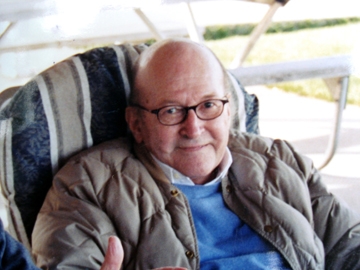
 It’s been nearly two years since my father passed away, but his office (adjacent to mine) has remained more or less the way he left it.  Only real work undertaken in there over the last twenty months has been the administration of his estate.  I used his desk for that effort and all sorts of statements, letters, appraisals, and other assorted documents have lain strewn atop it.

  Several weeks ago the notice came from Uncle Sam that everything seemed to be in order and I decided it was time to straighten things up.  I first looked through the old roll top desk (that was first my grandfather’s) behind his main work space.  Found two bank books from erstwhile institutions that didn’t make it through the thirties.   The last entry in the American Commercial and Savings Bank book was for a deposit of $883.36 on September 22, 1931.  I checked and that bank failed before the end of that year.  Hope Grandpa got his money out.

  Then I came across several of Dad’s report cards.  Grades 4,5, and 7.  Back then E was excellent, G very satisfactory, A average, F below average, and P “not sufficient for passing”.  Dad’s were all E and G in grade school, but dropped a bit in junior high.  I thought back to the horror that I found 7th grade to be and tried to picture him there.  I remember a few of his stories from grade school and all sorts of his exploits from high school on, but nothing in between.  Hmmm, I’ll have to ask my brother if he remembers anything.

  I decided to try to make space in a wide standing file cabinet just to the left.  I pulled the door of the second shelf out, up, and back and began to sort through the sheaves.  Estates.  My father’s parents and paternal grandparents.  Took me quite – way – aback.

  Dad’s passing, even though it was not sudden, left me feeling half exposed to the cosmos.  It was as if a hole in the ozone opened just over my head allowing a powerful new force to pour down upon me.  It was searing.  Sitting there behind Dad’s desk looking through generations of funeral bills I realized more fully than ever before that one day I’d find myself in that filing cabinet or one like it.

Chicago          March 3, 1914               
David D Mee & Co Undertakers:
1 Casket                $65
Embalming              $10.00
Auto Hearse             $13.50
4 6 passenger autos     $54.00
1 Auto Flowers          $ 9.00
Total                   $151.50

  After meditating upon this for quite some time, I was able to throw enough stuff away (old power bills, laundry statements etc with which even I have no problem dispensing) to find a place for a new estate file.  Dad’s.

  I pulled the file door closed and sat back in his chair and thought about all of the times I’d entered in search of his advice.  It was always better to seek it out than wait for it to arrive.  “Son…” he would begin.  Experience taught that I had to figure out some things for myself, but that for others Dad always had answers.  I asked him about an electrical problem the day before he died.

  I was awakened from this new sort of reverie by my own son who rolled in for some financial advice.  “Dad, would you co-sign on this lease and Fed Ex it out today?”  It was a bit after 4:00 PM.

  “Sure” I said listening to Dad chuckle in the background.

Here’s Hopin’ for a Draw

January 2, 2009

  Talk about a battle for resources.  A new theory asserts that mental disorders such as schizophrenia and autism result from competition between genes from the sperm and egg.  They vie in utero over management of available nutrients.  The mother fights for moderation so she might live to bear another day while, given the opportunity, the father would empty the refrigerator to enhance the chance that each seed grows to maturity.

  A gene called IGF2 is inherited from both parents and promotes growth.  Usually the mother chemically muffles it so that demands for sustenance do not become voracious.  If the gene is fully active growth can becomes excessive.  As much as 50% above normal.

  The implications for brain development arise in the same region on chromosome 15.  There dominance can lead to conditions associated with autism on the father’s end of the spectrum and mood problems and psychosis on the mother’s.

  “Emotional problems like depression, anxiety and bipolar disorder, seen through this lens, appear on Mom’s side of the teeter-totter, with schizophrenia, while Asperger’s syndrome and other social deficits are on Dad’s. 

  One of the researchers, Christopher Badcock of the London School of Economics noticed that: “some problems associated with autism…are direct contrasts to those found in people with schizophrenia.  Where children with autism appear blind to other’ thinking and intentions, people with schizophrenia see intention and meaning everywhere.”

  My roommate tells me that I am rude, crude, unattractive, and am extremely symptomatic of all sorts of social deficit disorders.   I love it.  I is fine.  Thanks Dad!

  AMF

* I learned about all of this in an article in the 11/11/08 NYT by Benedict Carey.

Think Responsibly

December 26, 2008

  Balzac wrote: “Behind every great fortune lies a forgotten crime.”  Combine that thought with Buffet’s “only when the tide goes out do you discover who’s been swimming naked” and you a great take of the current financial landscape.

  And while not quite completely systemic (thanks Mr. Buffet!) corruption and bad practice are, of course, rife.  The headlines have never before been filled with such a torrent of tales of Ponzi schemes, corruption, bribery, self delusion, and disingenuity.  Well maybe not never.  Paul Krugman and others have compared this state of affairs with the collapse of the gilded age.    

  The financial arrangements at the bottom of the housing bubble, while maybe not criminal, were disastrously hair brained.  Daughter traveled for a bit with several bankers from the UK who joked about financing their multi-continent peregrinations by means of liberal applications of their index fingers on the mortgage approval yes button.  Nothing easier to spend or risk than someone else’s money.

  Yet another case of “The Best and The Brightest” syndrome.  Just like intellectual war planning and the development of weapons of mass destruction undertaken by highly educated elites to which I’ve referred several times.  Another permutation of the Enlightenment conundrum.      

  This all brings to mind the last book of the letters of George Santayana that just came out.  His most famous words: “Those who cannot remember the past are condemned to repeat it” are not his only of interest.  “Where parties and governments are bad, as they are in most ages and countries, it makes practically no difference to a community, apart from its local ravages, whether its own army or its enemy’s is victorious in war.”  Will Durant wrote that “Santayana thinks that no people has ever won a war”

  Santayana was a materialist – he thought the universe was mechanistic with humans well understood and explained by behaviorists.  But it was a “buoyant” materialism in the words of Durant.  The life of the mind was important to him.  It is “man’s imitation of divinity”.

  “My atheism, like that of Spinoza, is true piety toward the universe and denies only gods fashioned by men in their own image, to be servants of their human interests”.  “…feeling attracted to the Church, feeling its historic and moral authority, and yet seeing that its doctrine is not true – in its “humility restores man to his only dignity, the courage to live by grace.”*

  I’d be interested in hearing his thoughts now that we know that behaviorists didn’t get it right, that Thoreau’s Walden was richer and made much more sense than BF Skinner’s. How quantum physics and dark matter would inform his thinking.

  I’d enjoyed renewing this old acquaintance over the course of the last few days until I came across this: “Some races are obviously superior to others…”  Jeesh.  He died in 1952 so I’d also like to ask him what he’d thought of the ‘master race’.  He later wrote that: “Wisdom comes by disillusionment” so perhaps that’d be his answer.

  I will conclude with a passage from The Once And Future King by T.H. White with which I often relate: “Long ago I had my Merlyn to help.  He tried to teach me to think.  He knew he would have to leave in the end.  So he forced me to think for myself.  Don’t ever let anybody teach you to think, Lance.  It is the curse of the world.”

  Yup, the ultimate mixed blessing.

*From a review of the book by Robert Richardson in the 12/20 – 21 WSJ

Er, hadn’t thought about the milkman…

December 19, 2008

 brainy-sperm

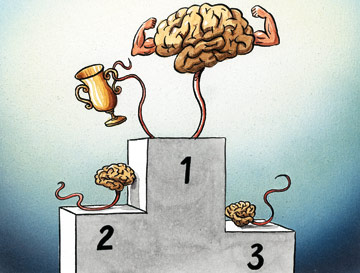
  Yet again, the Economist comes through. A bit in the December 4, 2008 edition basically sets forth how healthy, intelligent, and sexy I am. 

  I’ve long known that all the hot chicks can’t take their eyes off of me, but my wife and kids never believe it. I’m certain they won’t now disagree.  The thought of their chagrin is delicious beyond words.

  In a piece titled: “Balls and brains” we learn of recent research testing a thesis attempting to explain a newly discovered interrelationship between intelligence and health.  (As you will see, the thesis also tests political correctness).

  One view would hold that smart people, on average, make smart choices about such things as tobacco and exercise.  In other words, their intelligence would translate into good health. 

  In stark contrast however, some evolutionary biologists think that intelligence signals underlying genetic fitness and has thus forever been a source of attraction for potential mates.  (No bright woman would choose a dumb husband, right honey?*)

  Rosalind Arden of King’s College, London sought to test this idea through the analysis of semen.  Using samples from and interviews with 425 men she found that there is indeed a direct relationship between its quality**  and a standard measure of general intelligence called Spearman’s g.

  So sports fans, “The quality of a man’s sperm depends on how intelligent he is, and vice versa”. 

*This is the truth: Once asked why she agreed to marry me, my wife responded that she needed an encyclopedia.

**Comparative measures of concentration, count, and motility