Archive for the ‘consciousness/psychology’ Category

And I Thought It Was My Appendix

May 27, 2011


  In about the seventh grade I went to a church youth group meeting led by a dapper dude named Oliver something.  He told us he was forty years old and that his “way of thinking hadn’t changed much since I turned thirty-five”.  I was thrilled.  I hated junior high and though that birthday was some distance ahead, it was great to know one day the path ahead would be clear!

  No such luck.  Dude must have been lobotomized.  Or fundamentalized maybe.  That Christmas I watched William F Buckley interview Malcolm Muggeridge.  Even though they were both Catholics (Muggeridge one of great zeal) I found comfort in the overlap of our metaphysical perspectives.  Muggeridge:

  “It is only possible to succeed at second rate pursuits – like becoming a millionaire or a prime minister, winning a war, seducing beautiful women, flying through the stratosphere or landing on the moon.  First-rate pursuits – involving, as they must, trying to understand what life is about and trying to convey that understanding – inevitably result in a sense of failure.  A Napoleon, a Churchill, a Roosevelt can feel themselves to be successful, but never a Socrates, a Pascal, a Blake.  Understanding is for ever unattainable.  Therein lies the inevitability of failure in embarking upon its quest, which is none the less the only one worthy of serious attention.”

  Well, Blake framed his take as the apocalyptic “fearful symmetry” of tyger and lamb.  As I’ve said before* I prefer Jung’s: “Life is a luminous pause between two great mysteries which yet are one” with its intimation of meaning and perhaps even numinosity.  Both would probably agree that courage and will are necessary to emerge from problematic phases of the ‘pause’.

  In his book The Middle Passage, Jungian analyst James Hollis quotes Jesus from the Gospel of Thomas**: “If you bring forth what is within you, what you bring forth will save you.  If you do not bring forth what is within you, what you do not bring forth will destroy you”**.

Hmm.  Just what is it that’s eatin’ at me…?

*7/23/10

**The Gospel of St Thomas?  It’s one of the Gnostic Gospels as described by Elaine Pagels in her book The Gnostic Gospels.  They were discovered by farmers in Egypt in 1945.  The Gospel of Thomas dates to the second century.  Gnostics held that salvation will come from within.  Without need for clerical intercession.

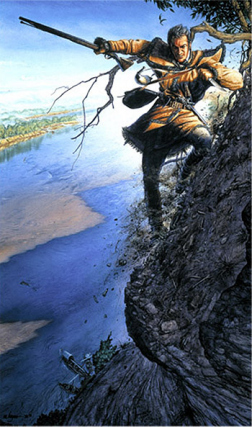
***The pictures above are drawings from Jung’s Red Book.  They are his representations of self induced hallucinations undergone in a midlife effort to figure out what was inside him trying to get out.

I (Sorta) Wonder What It’d Be Like…

May 20, 2011


  Brother was riding his bike recently, came upon an unexpected obstruction, went over the handlebars, and fractured his wrist.  His recollection of the event was interesting.  “It was all in slow motion.  I remember the sound pattern made by my helmet on the sidewalk.”

  Perfect timing.  Maybe not for him, but for us.  In the April 25 edition of the New Yorker, there’s an article about scientist David Eaglemen whose research seeks to understand our perception of time.  He was drawn to that study by the experience of falling off a roof as a child.  “In life threatening situations, time seems to slow down.  It’s a moment of absolute calm and eerie mental acuity.”

  Why?  Well, it seems that it’s a matter of how much information is on the way to the brain and how it coordinates.  By way of example, light travels faster than sound, but they use a starting pistol in the Olympics instead of a light flash because the brain reacts more quickly to sound.  Cavemen would have been well advised to flee a rustling of the brush long before a predator presented itself visually.

  The more stimulating and/or serious a situation, the more input sent to our accreted cerebral “hodgepodge of systems”.  One component, the amygdala, is sort of an emotional node and seems to become hyperactive when scared and records far more detail than when bored. 

  As a result, one’s experience of the passage of time is vivid and slows significantly.  During an experiment, subjects terrified by a uniquely “plausibly deadly” amusement park ride overestimated the passage of time by thirty-six percent.

  Ok.  What event would put one most in extremis… would push the phenomena the furthest?  Having your head cut off comes most immediately to my mind, but to be honest I have to admit that not an original thought.    

  From the perspective first of a caveman finding his neck in the jaws of a saber toothed tiger, through the likes of John the Baptist, Anne Boleyn, and Marie Antoinette, writer Robert Olin Butler wrote a book entitled Severance in which he presents sixty-two different takes of what the experience of decapitation might be like.

  He begins with these two epigrams to set tone and style:  “After careful study and due deliberation it is my opinion the head remains conscious for one minute and a half after decapitation.” (Attributed to a Dr. Dassy D’Estaing 1883) And: “In heightened state of emotion people speak at the rate of 160 words a minute.”  The math works out to about 240 words for that ninety seconds and is thus the length of each of the stories.

  Sweet précis, eh?  Mull that around a bit.  Would you be dizzy if your head rolled? Would it feel claustrophobic if your noggin fell into a basket?  Would you be able to close your eyelids?  Would you if you could?

  Courtesy of Mr. Butler, here’re the last 240 words that came to the mind of Ta Chin, a Chinese wife beheaded by her husband in 1838:

“straight and whole are my feet I would rise and run as I have loved for many winkings of the moon to run with my brothers but I press my feet side by side and wiggle my toes this last time and whisper to them goodbye I know what is before me my mother in the courtyard singing prayers to Kuan Yin the goddess of mercy, not to spare me a life of pain but to wither my feet to perfection, the mercy of the golden lotus, the mercy of a wealthy man to keep me, I tremble I am ready to weep but for these tiny stones of anger Kuan Yin has placed in the corners of my eyes even as the footbinder puts the soaking tub before me that first night even as my husband trembles before me in the torch light trembling always from the opium but this night he trembles from what he believes about the brushing of my sleeve by a man he himself brought to our house and my mother sings and my toes are seized and folded hard under and the wrappings wind and wind and squeeze and my arch cracks and I see Buddha in heaven sitting on his lotus but it is my naked foot the golden lotus he sits upon and hands push me down my neck made bare and I cry please, before my head cut off my feet

  Think I’d try to think of the Marx Brothers.  Or maybe Mel Brooks.  Ya, that’s it – Young Frankenstein.

*New Yorker, April 25, 2011, “The Possibilian” by Burkhard Bilger

**Sculpture above?  It’s Woman With Her Throat Cut by Alberto Giacometti.

I’m Glad I Don’t Have A Tail

May 13, 2011


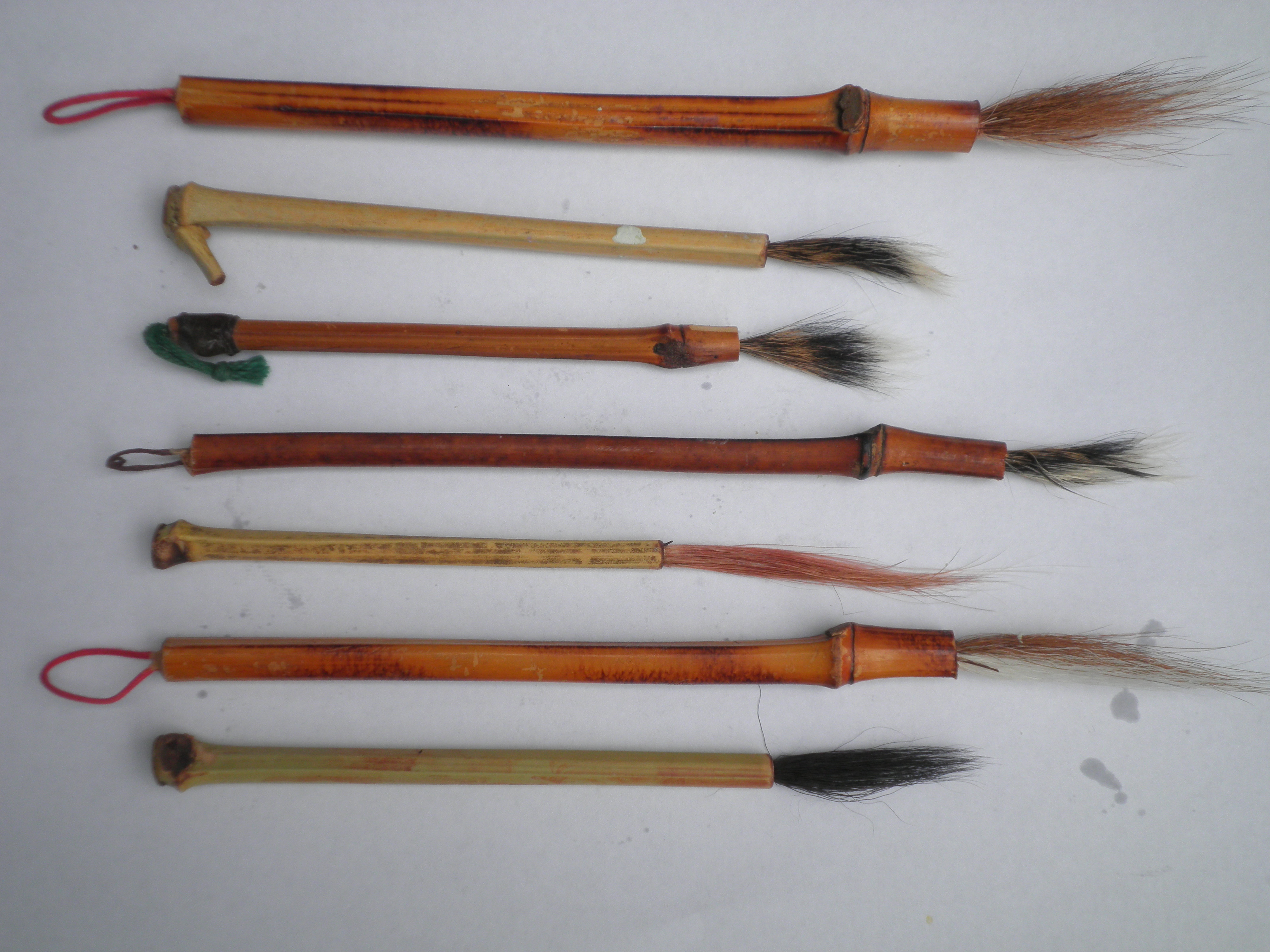
  Please, please, please don’t repeat this to anyone.  Last Friday wife and I rode our bikes along the river to a brew pub for dinner.  On way home via a different route just before dusk she (up ahead) exclaimed: “Is that what I think it is!?  Let me have your knife!”

  I did so and then watched as she cut the tail off of a dead black squirrel.  Jeesh.  Unfortunately I’ve many times found myself part of that peculiar sort of excision separating tail from torso of skunk, deer, raccoons, and more.  All in service to art.  She makes fine brushes with the hair.

  Jung wrote some interesting stuff about artists: “The artist’s life cannot be otherwise than full of conflicts for two forces are at war within him (her) – on the one hand the common human longing for happiness, satisfaction and security in life, and on the other a ruthless passion for creation which may go so far as to override every personal desire”.

  Furthermore: “The artist is not a person endowed with free will who seeks his (her) own ends, but one who allows art to realize its purposes through him (her)”.*  Mission for god as the Blues Brothers put it.

  Demanding a muse might be, but a grand thing which to follow should an audience later manifest.  What a way to live if people would cathect emotion and fork over dinero in response to what might express from the depths of one’s soul through a trained and tamed skill set.  Two examples:

  Mick Jagger arranged for Lucien Freud to paint his then wife Jerry Hall and baby.  Sitting for Sigmund’s grandson is an arduous process and Mrs. Jagger spent many many hours in his studio over the course of four months. 

  One day Freud called his dealer William Acquavella: “I want you to be the first to know, the painting’s had a sex change.”  “What!” Acquavella responeded.  “Well, Jerry didn’t show up for two sittings so I changed her into a man”.  Jagger rang up Acquavella but there was nothing that could be done.** 

  Similarly, if not quite as obstinately, architect Peter Zumthor picks his clients not visa versa.  “Normally architects render a service.  They implement what other people want.  This is not what I do.”  What he does is to take the measure of a site and client from which to distill his vision.  Not theirs.

  Actor Toby Maguire hoped for a Zumthor house in the LA hills.  The architect said he’d look at the site if Maguire’d educate himself by visiting several projects in Europe such as his spa in Vals Switzerland and museum in Bregenz Austria.  House went ahead.  Maguire asked for a basketball court, but apparently got a garden instead.***

  Uhm, I’m glad I don’t have a tail.

*Both Jung quotes are from his book Modern Man in Search of a Soul

**WSJ Weekend April 2011 by Tom Vandrbilt

***New York Times Magazine by Michael Kimmelman


Time Makes You Bolder

March 20, 2011


  Landslide.  Great song. Not least because it doesn’t’ easily give up much to exegesis. When you can learn all there is to know from one take of a work of art – whatever medium – it may be enjoyable, but also either shallow, pandering, or pornographic.

  Music and lyrics must weave fine fabric of course.*  More importantly however, the former must find that resonance rooted in our evolution that signals the presence of emotional and/or existential truth.  Then we find ourselves motivated to search for understanding.

  It is sort of like a shared dream.  The words draw meaning from that mind from which they emanate as well as that upon which they fall.  There’s an overlap, but not a complete one.  Each mind has its own constellation of chemistry, experience, and complexes.

  Ms. Nicks has offered different, even slightly contradictory, sources of inspiration for this song.  For me, this makes it all the more interesting – oracular even.  While you’re working to figure out where it came from in her, you’re trying to figure out why it fits with you.

  “I wrote it for Lindsey – for him about him.  It’s dear to both of us becaue it’s about us.  We’re out there singing about our lives”.  “It’s about a father-daughter relationship”.  “It meant the whole world could tumble around us.”

  As I piece the background together, the pair tasted a moment of success, but were quickly set back to waiting tables and cleaning homes.  Buckingham left Nicks in Aspen for a spell while he took a few gigs with the Everly Brothers.  Left alone to ruminate among the jagged peaks, Nicks conjured up all manner of pitfall and possibility. 

  She left to visit her folks for a bit for second opinion(s).  Dad told her to give it more time and that he and her mother would be there for her whatever fate might befall.  “Cool, I can do that”.  Father then fell ill and underwent successful surgery.

  Then back to Aspen with Buckingham, where they somehow found themselves in a beautiful house with a piano and – voila – out it poured.  “Landslide I wrote on the guitar and it’s another one that I wrote in about five minutes”.  Like how it takes only a few seconds to win the Olympic gold in the 100m dash.  That and a gift, work, and inspiration.

  Mountains can indeed be a place to see something about oneself.  French alpinist Gaston Rebuffat said that they brought “before him a mirror of stone or ice, a mirror which helps us to get to know ourselves…”  Same with relationships.  Love is not always long requited.  Bad shit will happen in both the physical and emotional realms.

  The issue is how one handles what comes.  Will he/she struggle past the mother and father complexes catalyzed in every youth – only after which can really begin the process of individuation?  Or will they first lead to a twelve step program?  Acceptance of the very real possibility for anxiety is preferable to giving up to depression and rage.

  Well, children do indeed get older; I’m getting older too; and amazingly enough it does feel like time is making me bolder.  Be interesting to see what happens next.  

*And well woven such fabric can even cover up mixed or run-on metaphors…

**Covers.  There have been a few.  Dixie Chicks below.  Their three part harmony is wonderful and I love myth and metaphor, but I prefer the video on top.  The one below – not without some beautiful images – is too florid for me. 


At Me Too Is Someone Looking?

February 25, 2011


  A recent experiment* suggested that certain sorts of simple movements can improve creative thinking.  Researchers had students squeeze a rubber ball with their right and left hands before taking a test – success on which required “the formation of associative links between otherwise unrelated concepts in order to solve problems in novel ways”.

  Those squeezing the ball with their left hand outperformed both those using their right and those with their hands clutching nothing at all.  Researchers assume that the activity undertaken on the left stimulated the brain’s right hemisphere in which at least part of one’s creative potential is thought to reside.

  I’ve exposited in this space many times in different ways about movement and its importance to cerebral dynamics and physical fitness.  If a few forearm contractions can measurably enhance one’s imagination, think about the benefits of a holistic regimen for a while and then consider the ramifications of a lack thereof.

  OK.  Let’s start at the very beginning – a very good place to start.  In an article in the New Yorker** Rebecca Mead tells us “How tot lots became places to build children’s brains”.  She tells us that an understanding the expenditure of valuable energy in ‘play’ activities begins with the observation that the most intelligent animals all engage in them.

  Ms Mead cites anthropologist Melvin Konner who defines play as “inefficient, partly repetitive movements in varied sequences with no apparent purpose”.  He goes on: “The idea is that natural selection designed play to shape brain development … [it is] directing [one’s own] brain assembly”.

  And ya gotta keep doin’ it.  Most will agree that physical activity is essential for physical health.  It’s essential for your headbone too.  No one will convince me that hours spent moving a mouse or flippin’ IPad pages will supplant squeezing that ball.

  If the only vigorous exercise you get is struggling with footwear at either end of the day you’ll end up like Vladimir in Beckett’s Godot: “We have time to grow old.  The air is full of our cries.  But habit is a great deadener.  At me too someone is looking, of me too someone is saying, He is sleeping, he knows nothing, let him sleep on”.

* Psychonomic Bulleton & Review 2010, 17 (6), 895-899 Goldstein et al

**State of Play, The New Yorker, July 5, 2010

***cf post 1/24/2008 – “Let’s Dance”

In His Image*

February 18, 2011

  On January 3, 1963 aired an episode of the Twilight Zone that I’ve not forgotten even though I was then not quite eleven years old.  My memory doesn’t always serve up perfection, but generally does well enough to summon up the gist. 

  We meet the chief protagonist, Alan Talbot, early on.  He seems to be going about his life in an average sort of way, but starts getting headaches and memory problems.  Visiting his hometown with his girlfriend he finds that nothing looks familiar.  Then, walking along a road confused, a car bumps him and he rolls into the ditch alongside.  Shaken, he stands up and checks for injuries. 

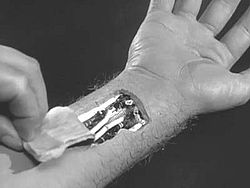
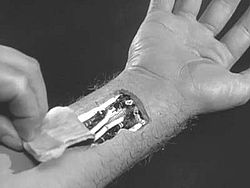
  Just before giving himself a clean bill of health, he examines an abrasion on his right forearm which strangely does not bleed.  We watch as he peels it back revealing lights and gears etc.  He’s a robot and no less astonished uncovering that fact than are we.


  Good story huh?  Well, it came to mind the other day when I read a paper written by Nick Bostrom, a professor in the Department of Philosophy at Oxford.  It’s serious, well wrought, and entitled “Are You Living In A Computer Simulation”.

  “This paper argues that at least one of the following propositions is true: (1) the human species is very likely to go extinct before reaching a “posthuman” stage; (2) any posthuman civilization is extremely unlikely to run a significant number of simulations of their evolutionary history (or variations thereof); (3) we are almost certainly living in a computer simulation.”

  It is all too easy to understand statement (1), but it is not unreasonable to doubt (hope!) that’s (not) how the future will unfold.  For statement (2) to be the way things pan out Bostrom argues that all future civilizations must converge in their inability or unwillingness to undertake ‘ancestor-simulations’.

  Statement (3) is by far the most interesting.  Perhaps we are not in the fundament of reality.  Perhaps some zitty ubergeek is at the controls.  When he/she/it detects incipient awareness in one of us he/she/it rewinds and edits or maybe just sends us to a bar.

  Computing power has increased incredibly and the pace seems only to quicken.  Moore’s Law has shortened from eighteen to twelve months.  Watson, the supercomputer that just bested the Jeopardy human champs juggles 80 trillion calculations a second spread over ninety servers.  At least one big thinker, Ray Kurzweil, predicts that a PC sized machine will be able crunch that much that fast in a decade or less.

  Bostrom demonstrates that there are no theoretical limits to continued expansion.  In a posthuman stage of civilization, he posits, such a mature stage of technological development will make it possible to convert planets and other astronomical resources into enormously powerful computers.

  Extremely sophisticated simulations are employed today for all manner of undertakings.  It seems inevitable that our distant descendants would run simulations of their forebears.  Furthermore, …”if we don’t believe that we are currently living in a computer simulation, we are not entitled to believe that we will have descendants who will run lots of such simulations…”

  Implications?  No radical ramifications.  There might well be subtle modifications to our belief systems related to a desire to understand posthuman motivations, but “no tendency to make us ‘go crazy’”.  However, I guess I’d hope that they don’t run out of computer power or trip over the plug.    

*In His Image was the name of the Twilight Zone episode…

**Veracity of proposition (3) would ‘aha’ the manner in which mathematics perfectly describe the whole fabric of our universe.

***cf Post of 12/24/11 in which I discussed the concentric circles in the cosmic background radiation that Roger Penrose posits are vestiges of a former universe and how it might relate to “a Platonic world of abstract realities that can be discovered by human investigation, but are independent of human existence”.

****Here is Professor Bostrom’s paper.  Read it.  You’ll be blown away.

http://www.simulation-argument.com/simulation.html

Take The Stairs

February 11, 2011

  I’m interested in stairs.  Their purpose is obvious, but appearance and experience vary considerably.  More than any other aspect of the built environment, they make you aware of your own presence within or upon it..  Successful negotiation of even a single step transition requires a greater portion of one’s attention than the whole rest of a structure’s circulation pattern. 

  That’s not my photo, but I’ve seen and climbed such steps (moki or moqui steps) in a place called The Maze in Canyonlands National Park.  I’m not afraid of heights and find pleasure in challenging vertical progress, but was impressed, scared, and thrilled during several such ascents.  I learned something about the nature of the consciousness of their engineers.

  They were hardy and adventurous souls not yet numbed by the comforts of life nor inured to the possibility of an exuberant experience of it.  They didn’t have to go up there.  Not that way anyhow.  Consequences of a fall are obvious.  That stairway to heaven is more than just a short cut in something “nasty, brutish, and short.

  A grander, more complex, and dramatic moment will be had upon the steps in the vestibule of Michelangelo’s Laurentian Library in Florence.  Even from the photo one can get a sense of the power of that small space.  Look at the foreboding cascade of those stairs.  They make you either shrink back or scurry quickly upward to the safe solemnity of the reading room.

  Other aspects add to the pressure by manipulation of classical ideas.  Michelangelo’s friend and biographer Vasari wrote that it: “broke the bonds and chains of … common usage”.  For example, the columns seem to be swallowed up by the walls rather than exhibiting discrete strength in the foreground.  They are indeed load bearing elements, but with convoluted psychological effect.

  This project, designed for the Medicis in 1558, displayed the range and depth of Michelangelo’s architectural power for the first time and marked the transition to its practice that dominated the rest of his life.  Even so, one might find him/herself here alone while having had to wait in lines to David across town or hours to gaze up at the ceiling in the Sistine Chapel.

  Finally, I’m just about ready to go to a meeting in our art museum.  All front of house traffic either ascends the staircase pictured above or via the elevator.  Which mode one selects significantly impacts the entire visit.  The interior of the large elevator is stainless.  You feel like you’re in a ‘Sub-Zero’ kitchen for a few moments and they you’re there.

  The Grand Stair, by contrast, makes for a powerful exercise in the clearing of one’s mind.  Thoughts fall away as you move slowly upward.  Wow.  Wonder what’s up here.  At the top you catch your breath eager for interaction with beauty – the world left far behind.  Take the stairs. 

“Of Such Poetry Is Consciousness Made”

February 4, 2011


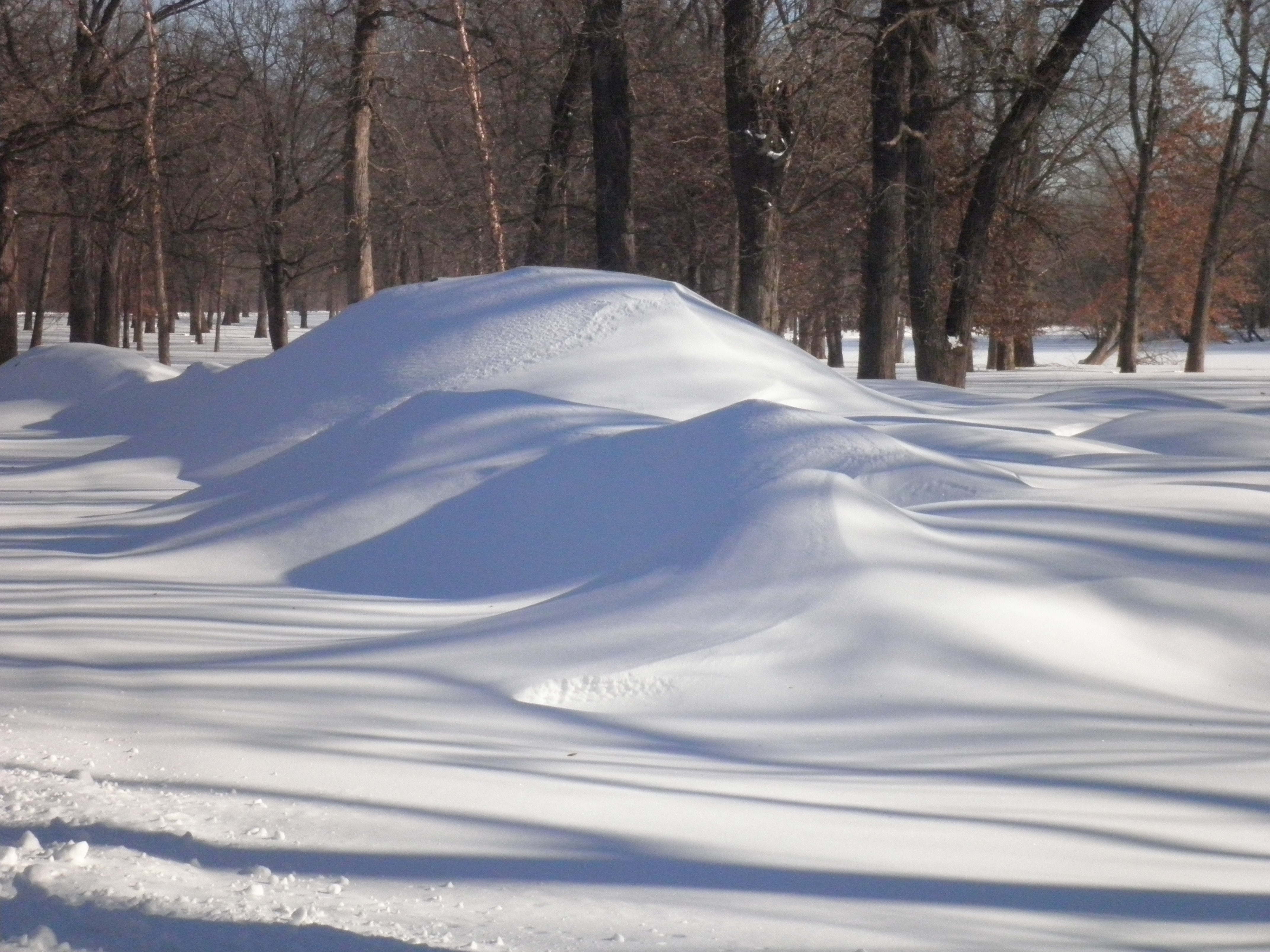
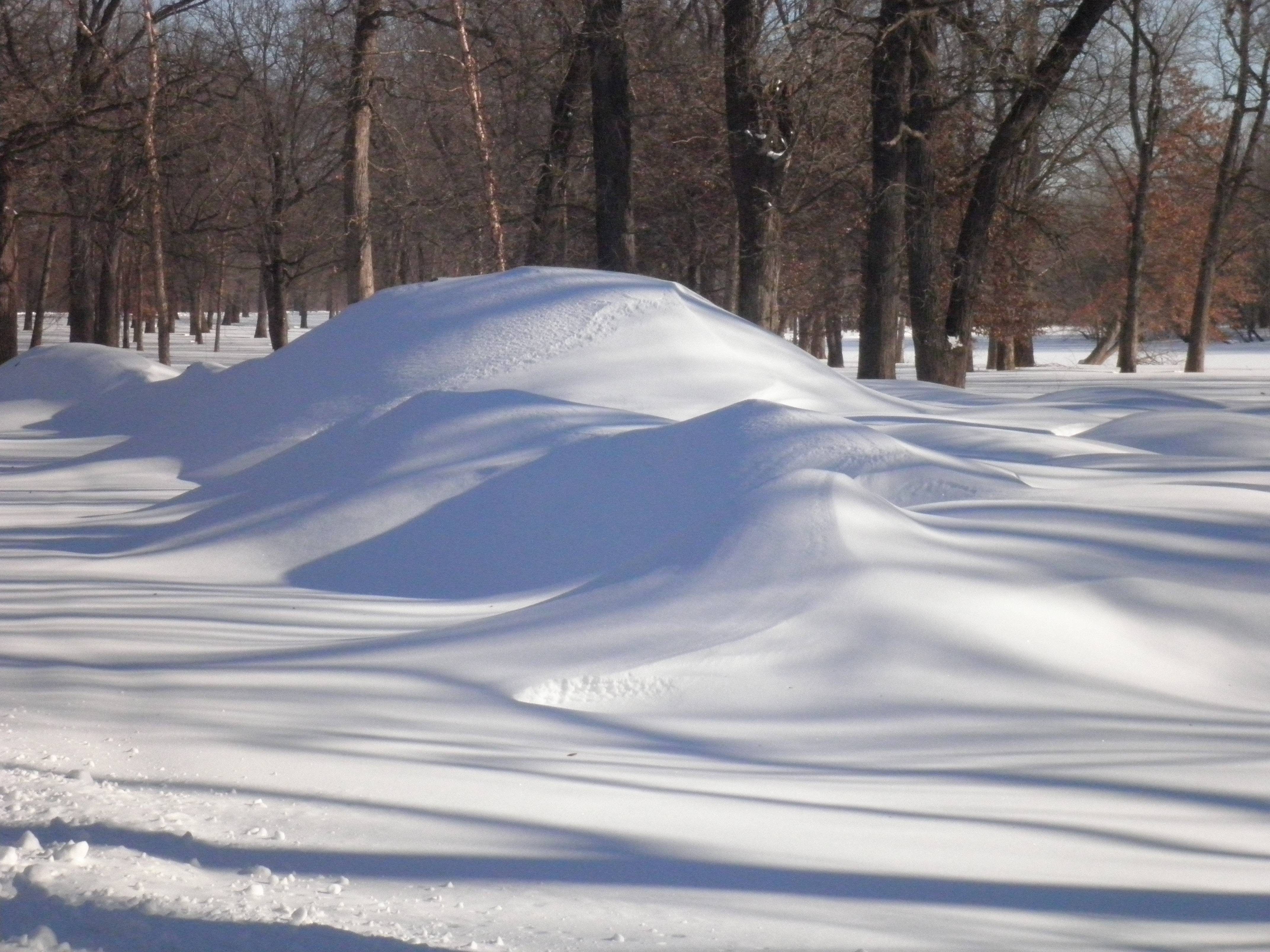
  Snow blanketing the earth… This metaphor came to mind while discussing figures of speech with my youngest daughter the other day just as the recent blizzard picked up steam.  (There goes another one – and I’ve mixed ‘em already!  Dang!)

  Metaphors and similes are interesting.  No, much more than that.  They’ve been the generative force behind the development of language and the concomitant expansion of our consciousness.  Think about it.  You’re trying to explain a new concept to, say, your child.  “Well sweetie, it is uh, sort of like…

  See what I mean?  Take that back a few eons when the tongues of our ancestors first started wagging and you will find that “language and its referents climbed up from the concrete to the abstract on the steps of metaphors”.  Take for example the conjugation of the elemental, but irregular verb ‘to be’.   

  It comes from a Sanskrit word meaning “to grow” or “make grow”.  The English forms ‘am’ and ‘is’ evolved from the Sanskrit verb ‘to breathe’.  The consideration of this is sort of like linguistic archaeology.  “It is a record of a time when man had no independent word for existence and could only say that something ‘grows’ or that ‘it breathes’. 

  The ability to construct metaphors and similes must have greatly quickened the pace of evolution for both language and consciousness.  Pick a body part and think off the endless words and concepts for which it is the root: “head of an army, table, page, bed, ship, household, nail, steam, water; eyes of needles, winds, storms, targets, flowers, or potatoes…” etc etc.

  Or back to the snow.  The idea of a white blanket upon the earth generates the notion of seasonal dormancy.  The earth, plants, hibernating animals are all put to a cozy rest till spring.  Whole lot of info conveyed by the employment of a single word in this referential manner.

  What really blows me away is that by extension, the content of our subjective conscious mind is but a metaphor itself for the external real world.  And, frustratingly, that being the case we shall never be able to achieve an understanding of our consciousness in the same way we can of something of which we are conscious.

*This quote, the ones below, and the content of this post were drawn from one of the most incredible books I’ve ever read: The Origins of Consciousness in the Breakdown of the Bicameral Mind by Julian Jaynes.  I’ve referred to it before and I’m sure I will again.

**In a footnote of my 9/3/10 post I mentioned the visit by my daughter and son in law to the library in Alexandria, Egypt.  They reported that 98% of the many computer screens were logged on to Facebook. It will be interesting to see how the current state of affairs pans out.  Social media breathing life into democracy or chaos.  And, in either case, does go any credit/blame to GWB?


I Can’t Stand It. I Been There Before

January 21, 2011

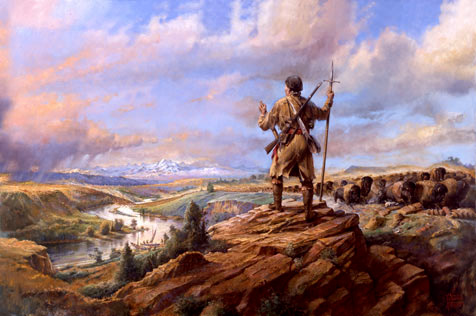
  At the behest of Thomas Jefferson, Meriwether Lewis and William Clark took their “Corps of Discovery” across the newly acquired Louisiana Purchase.  Leaving St. Louis on May 14, 1803 they made their way across the wilderness to the coast of what is now Oregon and arrived back in St. Louis on September 23, 1806. 

  Clark went on to hold a number of governmental positions and fathered eight children (one named Meriwether Lewis Clark!) with two wives.  Lewis became Governor of the Louisiana Territory, had no children, and shot himself on his way to deliver journals of the expedition to a publisher.*  I’ve long wondered what was up with that.

  He’d been leader of the expedition and must have felt exhilaration of uncommon intensity upon journey’s end.  He’d operated successfully through thousands of miles of unknown territory and hardship compiling the first account of America’s west.  There could have been no measure of accolade equal in proportion to having returned with crew largely intact after those many dangerous and difficult months. 

  Perhaps that was just it.  The return to civilization was more than he could take.  Compared with the clear choices of life and death in the wilderness, a desk job and starched shirts must have chafed not only his neck.

  Jungian therapist James Hollis writes: “…whenever we force ourselves to do what is against our nature’s intent, we will suffer anxiety attacks, depression, or addictions to anesthetize the pain of this inner dislocation”.**

  A recent evolutionary rationale for depression holds that it is a ‘healthy’ manifestation of the psyche in response to spiritual/emotional/existential dis-ease.  Some way down a certain path, one finds it problematic, stews for a bit, and then chooses a new direction.  Three years must not have been enough for Lewis to recalibrate.

  He probably should have turned around.  Like at the end of Huckleberry Fin when our protagonist said: “…reckon I got to light out for the Territory ahead of the rest, because Aunt Sally she’s going to adopt me and sivilize me.  And I can’t stand it.  I been there before.”

*Not all agree that Lewis took his own life.  Descendents of his sister hope to have his body exhumed to somehow prove that he was murdered.

**Hollis, What Matters Most, Gotham Books, 2009

***cf post of 2/20/08

No Fair!

January 14, 2011


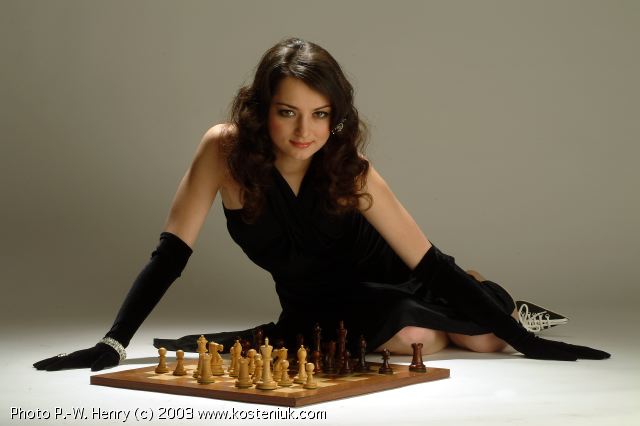
  This is going to be a shock.  A recent study* suggests that men do stupid things when interacting with attractive women! OMG!  Phrased otherwise, men are more likely to engage in counterproductive behavior under the gaze of beauty than women are before a handsome visage.

  Researchers reviewed the results of more than 600 chess games played by expert men and women whose photos were later anonymously rated for relative attractiveness.  The opening moves of each game were evaluated by professionals in terms of relative risk.  Games ending in ties were adjudged to have been of restrained play.

  Playing against women rated to be the hottest, men were much more likely to take risks.  And the risks didn’t pay off.  Women played no differently with good looking opponents – either male or female.

  Reminds me of the winter before our first child was born.  We were staying in a cabin by a frozen lake way up somewhere in the frozen north.  Being pregnant, wife was unconvinced that she’d have fun in the bars in town at night so we played Clue.  Like fifty times. 

  I only won once.  Given the opportunity, I could have murdered Colonel Mustard and the rest my own self.  With any of the assorted weapons or blunt instruments.  Feel better now knowing that it had nothing to do with my IQ, imagination, or creativity.  It was her fault.  And, as I now realize, has been so much else.

  Oh well, moving forward, I have a great excuse for my behavior…

*”Beauty Queens and Battling Knights: Risk Taking and Attractiveness in Chess” Institute for the Study of Labor.  WSJ 12/11/10

** Photo is of real life Russian Grandmaster Alexandra Kosteniuk.