Joe, Joe, and Joe

August 26, 2011


  Artist Hiroshi Sugimoto did a series of black and white photographs of Richard Serra’s Joe, a sculpture which sits in an outside courtyard at the Pulitzer Foundation for the Arts in St. Louis.  Sugimoto’s work is interesting for a variety of reasons not least because of Serra’s own surprise: “This is not about me”.

  The several ton piece was Serra’s first torqued spiral and he was shocked that the Japanese photographer had not undertaken a documentary style project.  Instead, Sugimoto used the opportunity to create a work  of his own and with it a more effective conveyance of the sense of Serra’s ideals than a more literal interpretation ever could. 

   The images abstract and cerebrate the unexpectedly complex physical experience of the huge hot rolled steel spiral.  The two dimensional representations are thus elemental forms manifested and manipulated by Serra and returned to the Platonic realm by Sugimoto.
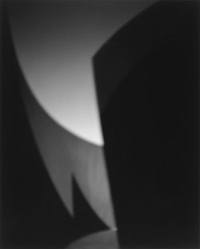
  Furthermore, fascinatingly, Sugimoto doesn’t see Joe as relating to its namesake, Joseph Pulitzer.  “I see it as related to my seascape series as a metaphor of human memory.”  He tells us that a seascape is likely the least changed vista since the rise of consciousness.  A gaze upon one thus shares an ethereal resonance with those of our earliest ancestors as well as all those between.

  An early product of this awareness was remembrance of the dead.  The first proto-human efforts beyond feeding, fighting, fleeing, or f______ (making babies) were the creation of graves, tombs, and then cenotaphs.  Sugimoto calls Joe a “metaphor and system of remembrance”.  Seems to me that the relationship between Joe and Photographs of Joe is a metaphor for the evolution of consciousness.

*Quotes from the exhibition brochure “Hiroshi Sugimoto – Photographs of Joe; edited by Matthias Waschek; published by the Pulitzer Foundation for the Arts; 2006.

**cf “Conquistadors of the Useless” 1/21/08
Partial Exsanguination

August 19, 2011


  Early AM last Friday pumping my bike up a steep hill central to our downtown I noticed a bright red light – “Plasma” – and a bunch of people coughing and smoking off to the left.  Oh my.  Nearly (to be honest, completely and wasted) out of breath, I didn’t realize till I crested that those folks were basically selling body parts to fund their bad habits. 

  Later in the day while donating some of my own good stuff I asked about that.  Turns out that plasma traded for cash won’t/can’t by law soon enter the system of another human.  Good to know.  It might though later, because it’s sold to pharmaceutical companies as an ingredient.  That business model is strangely analogous to the one beginning with a cocoa leaf grower and ending with a cartel kingpin.

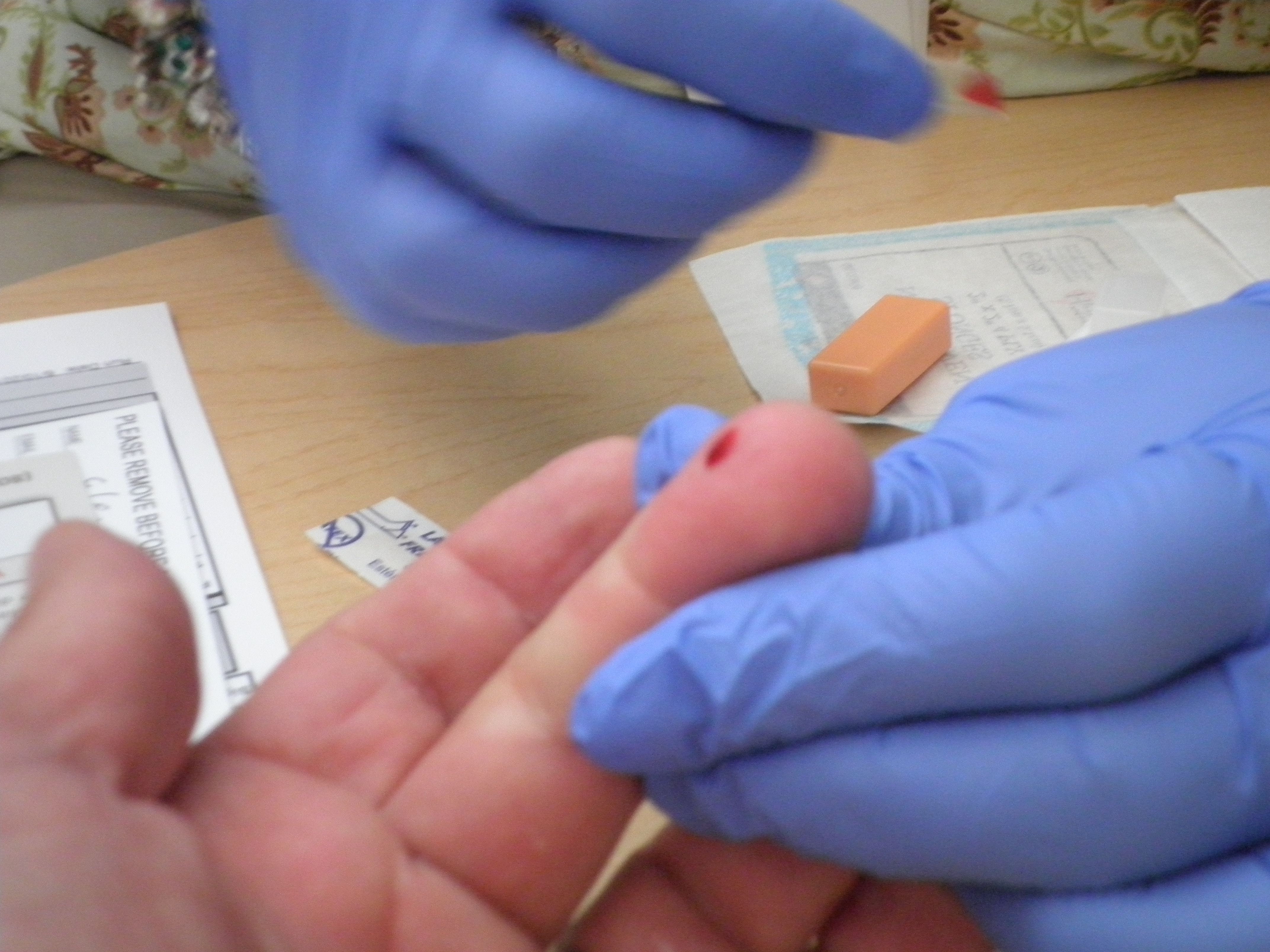
  The process of giving blood is surprisingly nearly without pain.  Remember when you were a kid and some mustachioed nurse would prick your finger with a broken rusty razorblade?  And it felt like an electric shock?  Well, now, at the blood center you do not even notice when they draw a small sample from your finger to check iron levels.  No foolin’.

  And when it comes time for what my kids call a blood shot, the comparison continues to be valid.  Metallurgical advancements have made today’s needles thinner and sharper.  Probably helps that they’re not sterilized and reused.  Just watch the large screen TV and you’ll hardly flinch. 

  The most unpleasant part of the deal?  I’ve noticed that vigorous exercise undertaken the day after a donation usually feels, well, crappy.  I asked my MD brother about this.  “Hey man, is giving blood sort of the opposite of blood doping?  When one gives back to himself a unit of highly oxygenated blood?”

  “Ya, genius, that’s why they tell you not to do anything strenuous”.


Meager Tools of Consciousness

August 12, 2011


  Do you dream in black and white or color?  Interesting that in the 50’s most respondents to that question would say b&w.  Now most say color.  What’s up with that?  Humanoid brains have evolved and grown in size, but not that much that fast…

  A philosopher* holds that the real answer is neither.  Those choices just happen to have been the most convenient metaphors or analogies for a given place and time – conjured up by those exposed to black and white film in the case of the former and color TV of the latter. 

  “Dreams don’t have to be pictures of any kind at all.  They could be simply thoughts – and thoughts, even thoughts about color, are neither colored nor noncolored in themselves.”

  We struggle with the meager tools of conscious experience to interpret the relationship between our brains – by far the most complex things in the universe – and everything else.  And to make it even (to me) less comprehensible, everything is relative.

  Know how if a tree falls in an empty glade there can be no sound?  Well, even should said tree remain upright, if there is no eye to look upon it, there is no color either.   Sight and sound are by definition the result of the interaction of stimuli, organ, and cerebral processor.

  At least to start with.  Research has shown that, for example, some originally sighted folks gone blind retain the ability to think in color, remember shapes of letters and faces while some do not.  Makes me wonder from time to time what one’s gray matter could cook up on its own.  Like, could one completely and forever sensory deprived somehow engender a hallucination? 

  Obviously, such experimentation has not been done on humans.  Unfortunately though. it has been on animals – monkeys.  Makes ‘em stark raving mad.  Would the far greater complexity of our neural networks make a difference?  For me the question comes down to the nature of consciousness.  Is it an emergent property dependent for its existence upon that meat pudding up there or does it exist independent of material origin?  There are respected thinkers on both sides of that issue. 

  At any rate, the richness of our interior lives is directly related to that of our experience.  Consider how different must be those of the two beings in the paragraph below: one an accomplished mountaineer on a ledge high of the side of a difficult and dangerous mountain and the other a peasant far below:

  ..We melt snow on our campstove.  Constellations cast flickering stories of gods, heroes and animals against a coal-black sky.  The earth spins, and for a few sleepless hours we linger far above the horizon.  We hover between the bliss of the heavens and the chaotic life on earth.  Time feels suspended: it’s as if we can view our planet from another, ephemeral world.  Far below, in the tangled rhododendron forest, the villagers of Moxi and Xinxing enjoy a rare cloudless evening.  With my headlamp, I signal our story to one resident, and he acknowledges our presence with his own flashing light…”**

*Perplexities of Consciousness by Eric Schwitzgebel reviewed by Nicholas Humphrey in the NYT BR 7/31/11.

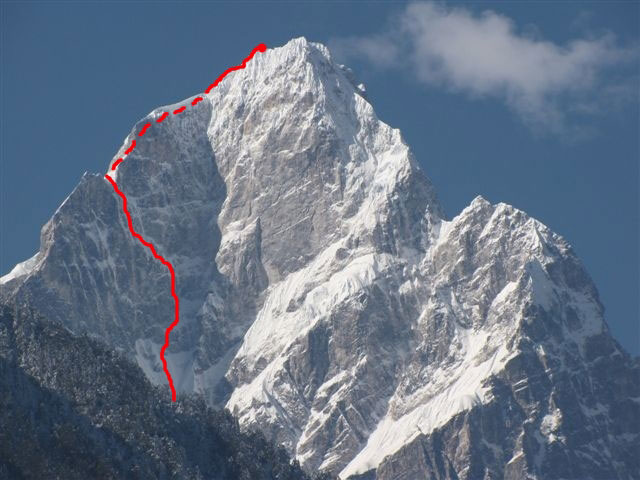
**”Out of Darkness” by Kyle Dempster in Alpinist 35/Summer 2011 His and partner Bruce Normand’s route on Mt Edgar pictured above

… the ongoing danger of collectively creating scapegoats

August 6, 2011


  Last week one lone deranged man killed seventy-three young people on an island near Oslo, Norway.  That terrible event was sort of an inverted reflection of another horror that took place in the far north of that country many years before.  During the course of the seventeen century,  the 3,000 citizens of county Finnmark convicted ninety-one men, women, and young girls of witchcraft and burned them at the stake.

  If you’re with me so far, you’ll find it quite the coincidence that a memorial for the earlier event opened just this past June.  It is the Steilneset Memorial To The Victims Of The Witch Trials and was a collaboration between Swiss architect  Peter Zumthor* and the late great nonagenarian Louise Bourgeois.  During the ceremony, presided over by Queen Sonja, general secretary of the Vardo Church City Mission Sturla Stalsett that “the memorial is meant to remind us of the ongoing danger of collectively creating scapegoats”.**

   Zumthor designed two structures for the barren rocky site.  Of the first, pictured above he said: “I didn’t want an aggressive massive monument.  Creating a light delicate structure was best for this rough space”.  It is 410 feet long, narrow, and has ninety-one randomly placed windows.  Behind each is suspended a single light bulb.  “The feeling is like being in the stomach of some prehistoric creature…except there is a glimmer of light”.

  At the south end a gangplank leads into the other glass and Cor-Ten cubiform volume housing Bourgeois’ work pictured below.  It is comprised of an aluminum chair with flames emanating from the seat and is encircled by seven oval mirrors.  “…like judges circling the condemned”.

  The location is remote, but not off of the beaten path.  The Varanger National Tourist Route program consists of eighteen major routes to facilitate interesting travel while punctuating the country’s magnificent geography with integrated points of interest.  It is overseen by the Norwegian Public Road Authorities and is scheduled to be complete in 2020.  Phew.  Guess don’t need to hurry

 *For more about Zumthor read post of 4/24/09 “Reading about Reincarnation is not the same thing as being reborn”

**Much of the information above was drawn from an article by Suzanne Stephens in the August 2011 edition of Architectural Record.

Short Circuit Enculturation?

July 29, 2011


  In the 7/23/11 Economist there is an interesting article about the evolution of gender roles in societies across our planet.  It cites convincing (to me) studies holding that the nature of agriculture in the land of one’s ancestors determines much about the economic roles of women in that society.

  Up to the fifth millennium BC Mesopotamian women did the farming, tilling their fields with hoes.  The invention of the plow somewhere around 5,000 BC changed things.  Women didn’t have the requisite upper body strength and men took over. 

  “Women descended from plough-users are less likely to work outside the home, to be elected to parliament or to run businesses than their counterparts in countries at similar levels of development who happen to be descended from hoe-users.”

    Things can change and have to some extent in the western world where much farming was done from behind plows, but it took the cataclysm of WWII.  Rosie the Riveter et al moved into jobs vacated by soldiers and sailors headed toward the battlefield.  Still, even now, sixteen per cent fewer adult women than men work outside the home in OEDC countries.

  Makes one think of other long long term ramifications.   Hmmm.  In her book French Ways and Their Meaning Edith Wharton wrote: “…one may safely say that most things in a man’s view of life depend on how many thousand years ago his land was deforested.  And…when…men…are plunged afresh into the wilderness of a new continent, it is natural that in many respects they should be still farther removed from those whose habits and opinions are threaded through and through with Mediterranean culture and the civic discipline of Rome.”

  For example: “There are more people who can read in the United States; but what do they read? The whole point, as far as any real standard goes is there.  If the ability to read carries the average man no higher than the gossip of his neighbours, if he asks nothing more nourishing out of books and the theatre than he gets in hanging about the store, the bar and the street-corner, then culture is bound to be dragged down to him instead of his being lifted up by culture.”

  I’ve recently been entertained by labor strife in France related to an attempt to raise the retirement age from sixty to sixty-two.  But now in light of the likelihood that the leaders of the richest country in the world have squandered our credit rating, the concept of joie de vivre rings with new resonance.  I’m thinking of short circuiting the slow evolution of enculturation by moving to the Cotes d’Azur.

Mens Sano In Corpore Sano

July 24, 2011


  I’d been wondering why my MD brother had no TV in his place (none!) till I began paging through another of his JAMAs (Journal of the American Medical Association).  I figured it out when the following heart pounding sounding title caught my eye: “Television Viewing and Risk of Type 2 Diabetes, Cardiovascular Disease, and All-Cause Mortality”.

  Made me think of the phrase above from the first line of Juvenal’s Satire X which reads in full: “It is to be prayed that the mind be sound in a sound body”.  It will come as no surprise that I’m in agreement and don’t think that either will be enhanced in front of a tube.  (cf “couch potato category tab below right.)  Still, it is fun to see actual peer reviewed evidence (for which I need a dictionary to understand!) in support.

  The study “revealed a linear increase in risk with the number of hours per day of TV viewing for both type 2 diabetes and cardiovascular disease; the association with all cause mortality appeared stronger with TV viewing time of greater than three hours per day”.

  Interestingly, the authors also relate that for a group of nine year olds, reduced time in front of the television slowed increases in body mass index even without change in physical activity.  No thoughts of “free” Happy Meals and “Livin’ It”.

  Or like Mason Williams* wrote in 1969, “Network television wants to keep you stupid so you’ll watch it”.  And: “Television is not a salesman with his foot in your door, it’s a salesman with his foot in your head”.  

*Mason Williams is an incredible creative force.  He recorded his “Classical Gas” on twelve string guitar in 1968 and won two Grammys.  He was a writer for the groundbreaking Smothers Brothers Comedy Hour the cancelation of which was in part the motivation for the book the cover of which you see above.  He was briefly head writer for Saturday Night Live and could be said to have conceived of music videos and recorded the first one.

The Almighty Has His Own Purposes

July 15, 2011


  OK.  Its having been Monday, the event is well outside the current news cycle, but on July 11th Newt Gingrich spoke at the University of Iowa in the latest of a series sponsored by the Family Leader organization.  That group is led by Bob Vander Plaats who in 2010 headed a successful effort to unseat three Iowa Supreme Court justices for their part in a unanimous decision – not a judgment regarding gay marriage, but rather whether a certain cohort had been subject to discrimination.

  Unanimous.

  Recently Family Leader offered that “slavery had a disastrous impact on African-American families, yet sadly a child born into slavery in 1860 was more likely to be raised by his mother and father in a two-parent household than was an African-American baby born after the election of the USA’s first African-American President”.

  Uhm, say again? 

  They’ve dropped that observation, but perhaps its utterance was at least partially responsible for Mr. Gingerich and others to decline to sign the Family Leader ‘Marriage Pledge’ endorsing a particular set of values – “…a consistent voice… always standing for God’s truth”.

  For his part, Mr. Gingerich does ask: “Do you believe this is still a country where your rights come from your creator and you are the center of the society…( or do you subscribe to a) worldview in which you’re randomly gathered protoplasm”?

  If you visit this space at all it is obvious that I think about this stuff too much and am fascinated by all that remains unknown in this universe.  What I don’t get is the Blues Brothers business about being on a “Mission for God”.  My suggestion for those who think they are is to test the theory with the purchase of a lottery ticket.

  Or, better, consider the perspective of Abraham Lincoln as given in his second inaugural address.  Citizens of both the North and South “read the same Bible and pray to the same God, and each invokes His aid against the other.  It may seem strange that any men should dare to ask a just God’s assistance in wringing their bread from the sweat of other men’s faces, but let us judge not, that we be not judged…The Almighty has His own purposes.” 

  Think?

*cf the Economist blog “Democracy in America” July 12: “Newt’s Theory of Exceptionalsim.”http://www.economist.com/blogs/democracyinamerica/2011/07/faith-and-freedom&fsrc=nwl


Awake

July 10, 2011


  Recently had the incredible privilege and good fortune to be the only dude in a camp for girls and young women.  For a week and a half I was there to help (well, watch) wife orchestrate a ceramic mural commemorating the camp’s centennial.

  The name of the camp is a Native American word which translates as the imperative “awake”.  Perfect.  Separated from all electronic devices for seven weeks and immersed in nature, the arts (studio and performing), and each other the campers must indeed emerge anew.

  I greatly enjoyed watching and listening to what only could be described as reveille to taps ebullience.  And very happily benefited by this most positive manifestation of emotional contagion.  I felt my psyche reconstellate as neuroses disappeared.  No foolin’.

  Every meal time is characterized by singing.  Songs in thanks, songs for dropping stuff, birthdays, introductions, goodbyes, everything.  I sort of felt like I was missing a gear.  Anyway, one evening after the meal was over, table cleared, and awaiting dessert, I was the only one who’d not retained a fork.

  I asked the sweet young thing next to me what was up.  She looked at me with something between mirth and pity and said “dessert”.  I then asked how all but I knew that it was going to be something for which one needed a utensil. 

  “Mr. Budge, we sang the song!”

  Sung to the tune of Frere Jacques: 

Save your forks
Save your forks
For dessert
For dessert
If they’re dirty lick them
Save your forks
Save your forks 

  It was a slap in the side of the head for which I’m grateful.

  I was sad to leave though knew that I was at least as much of a distraction as would have been cell phones, computers, Ipods etc.  Now back behind my desk at my office I understand how the similar experiences of wife and daughters leavened their lives and enhanced their sense of self.*  Needy they’re not.

*cf  Lucifer 7/30/10 

**Couldn’t help but recall that Buddha means “Awakened One”.


Probably Not PC

July 2, 2011

  I’ve always loved fireworks and come naturally by that I guess.  Dad always had ordnance around in abundance.  He went fishing once with dynamite up in Canada.  I love the memory of him relishing the retelling.  It was Bikini Atol revisited with boats rolling gunwale to gunwale; all soaked to the bone; and non-swimmers trembling uncontrollably.  But no fish.

  Explosives have successfully been employed to kill things of course,but – in an incredible yet elementally characteristic paradox of this universe – as modes and expressions of creativity as well.  Several examples:

  First, well first “Let there be light”.  The Big Bang from whence arose all beautiful metaphysical wondering.  Whether or not you believe these fireworks were orchestrated by a dude in robe and slippers you’ll have to admit its unfolding to date is amazing to behold.

  Isn’t that what comes to mind each July 4th or 14th or whatever national holiday or celebration as you watch maybe a chrysanthemum burst first forth

  and then a palm

  and then a crossette

  and then a kamuro

  All followed by first the light and then the resound of the mighty salutes?

  Fireworks were invented in China some 2000 years ago.  The story goes that a Chinese cook accidentally mixed the key ingredients too close to a fire and thus soon saw a flash.  Duly impressed with himself, he made more, packed it in a bamboo tube, and then, well, however you say ‘voila’ in Chinese.  Marco Polo took the stuff back to Florence where color was added and pyrotechnics joined the other arts of the Renaissance with which you might be more familiar.

  More recently, Chinese artist Cai Guo Qiang (b 1957 in Quanzhou) has built a career with gunpowder as the original component of his medium.  He’s big stuff.  He first employed it in the creation of (believe it or not) works on paper – ‘gunpowder drawings’- embodying spontaneity and confronting authority.  They’ve been the subjects of exhibitions in prominent museums around the world including one at the Hirschorn in 2004 over which wife, daughter #1 and I marveled.

  From there he’s gone on to create magnificently choreographed “explosive events” including one watched by billions – the opening of the Beijing Olympics in 2008.  His work is not just of chemistry.  It incorporates motifs, metaphors, and representations of shanshui paintings, Mao*, fengshui, and much more.

  After all of this one should not be surprised to learn that a certain pair became engaged on one July 4, watched the show from a mountain top, and had Handel’s Fireworks  play at the ceremony some weeks later.  It’s been a blast!

*cf Post 2/13/09

Ripple Patterns

June 24, 2011


  After innumerable vehicular gridlocked approaches to Chicago’s skyline over the last nearly sixty years, a recent one from the east afloat through mist and fog was ethereal and otherworldly.  It was like walking into a theater with the most magnificent of backdrops and a smoke generator laying cover for the first act.

  It was incredible.  We were sailing downwind in a light breeze, so it was silent at first.  All one could do was stare.  Time passed, we continued toward the marina at Monroe and Lake Shore Drive.  The air cleared a bit and the sounds of water lapping at hulls and unladen halyards woke us up.  Sun burned and we soon saw more clearly the iconic rectilinearity, strangely yet bereft of the usual downtown din.

  The experience reminded me of something I read about the ascent of man, how “From the stone age to ancient Greece to the Maya to modern Japan, the most technologically advanced and economically successful human beings have often been seafarers and fisheaters”*

  “…people reached the Andaman islands, Melanesia and Australia, all of which required sea crossing, within a few thousand years – whereas it took them tens of thousands of years even to begin to oust our Neanderthal rivals from Europe and inland Asia.

   I wonder about the conscious (or not so) experience of those voyages eons before even Columbus.  Were they reckless forays into the truly unknown or an adventurous hewing to a vestigial instinct?  I’ve read about Polynesian navigators able to find their way through open sea solely by reading ripple patterns on its surface. 

  Something’s gotta be going on there.  Something not to be found on a cruise ship.  Something the zeitgeist lost somewhere between the acquisition of language and literacy.  I need a compass.  Scratch that – I need a GPS.

*WSJ”We Are the Apes Who Took to the Sea”, Matt Ridley, WSJ 3-12/13/11