I Can’t Stand It. I Been There Before

January 21, 2011

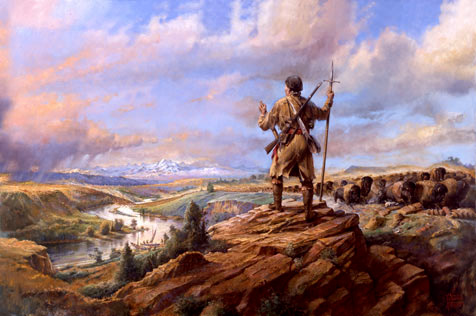
  At the behest of Thomas Jefferson, Meriwether Lewis and William Clark took their “Corps of Discovery” across the newly acquired Louisiana Purchase.  Leaving St. Louis on May 14, 1803 they made their way across the wilderness to the coast of what is now Oregon and arrived back in St. Louis on September 23, 1806. 

  Clark went on to hold a number of governmental positions and fathered eight children (one named Meriwether Lewis Clark!) with two wives.  Lewis became Governor of the Louisiana Territory, had no children, and shot himself on his way to deliver journals of the expedition to a publisher.*  I’ve long wondered what was up with that.

  He’d been leader of the expedition and must have felt exhilaration of uncommon intensity upon journey’s end.  He’d operated successfully through thousands of miles of unknown territory and hardship compiling the first account of America’s west.  There could have been no measure of accolade equal in proportion to having returned with crew largely intact after those many dangerous and difficult months. 

  Perhaps that was just it.  The return to civilization was more than he could take.  Compared with the clear choices of life and death in the wilderness, a desk job and starched shirts must have chafed not only his neck.

  Jungian therapist James Hollis writes: “…whenever we force ourselves to do what is against our nature’s intent, we will suffer anxiety attacks, depression, or addictions to anesthetize the pain of this inner dislocation”.**

  A recent evolutionary rationale for depression holds that it is a ‘healthy’ manifestation of the psyche in response to spiritual/emotional/existential dis-ease.  Some way down a certain path, one finds it problematic, stews for a bit, and then chooses a new direction.  Three years must not have been enough for Lewis to recalibrate.

  He probably should have turned around.  Like at the end of Huckleberry Fin when our protagonist said: “…reckon I got to light out for the Territory ahead of the rest, because Aunt Sally she’s going to adopt me and sivilize me.  And I can’t stand it.  I been there before.”

*Not all agree that Lewis took his own life.  Descendents of his sister hope to have his body exhumed to somehow prove that he was murdered.

**Hollis, What Matters Most, Gotham Books, 2009

***cf post of 2/20/08
No Fair!

January 14, 2011


  This is going to be a shock.  A recent study* suggests that men do stupid things when interacting with attractive women! OMG!  Phrased otherwise, men are more likely to engage in counterproductive behavior under the gaze of beauty than women are before a handsome visage.

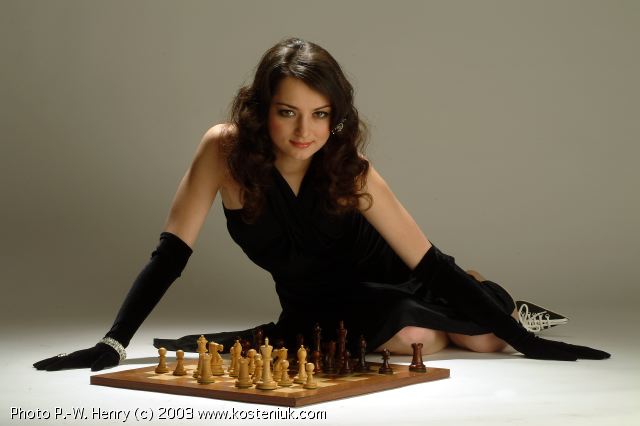
  Researchers reviewed the results of more than 600 chess games played by expert men and women whose photos were later anonymously rated for relative attractiveness.  The opening moves of each game were evaluated by professionals in terms of relative risk.  Games ending in ties were adjudged to have been of restrained play.

  Playing against women rated to be the hottest, men were much more likely to take risks.  And the risks didn’t pay off.  Women played no differently with good looking opponents – either male or female.

  Reminds me of the winter before our first child was born.  We were staying in a cabin by a frozen lake way up somewhere in the frozen north.  Being pregnant, wife was unconvinced that she’d have fun in the bars in town at night so we played Clue.  Like fifty times. 

  I only won once.  Given the opportunity, I could have murdered Colonel Mustard and the rest my own self.  With any of the assorted weapons or blunt instruments.  Feel better now knowing that it had nothing to do with my IQ, imagination, or creativity.  It was her fault.  And, as I now realize, has been so much else.

  Oh well, moving forward, I have a great excuse for my behavior…

*”Beauty Queens and Battling Knights: Risk Taking and Attractiveness in Chess” Institute for the Study of Labor.  WSJ 12/11/10

** Photo is of real life Russian Grandmaster Alexandra Kosteniuk.

Anthropology of the Wild West

January 7, 2011

  About halfway through Silverado the Kevin Kline character, Paden, takes interest in Rosanna Arquette’s Hannah whose husband had just been killed:

PADEN
He acted bravely out there, Hannah. 
Just bad luck his getting hit.  Could
have been any one of us.
HANNAH
I don’t believe in luck.  I know what
Conrad was like. Don’t tell me what you
think I want to hear.
PADEN
Never will again.
HANNAH 
We got married just before this trip,
so we could come out here and try
the land.  It’s hard to find a man
willing to take on a life like that.
Love isn’t the only important thing.

    The Kevin Costner character gives Paden a hard time: “Jeez, her old man ain’t even cold yet” as they ride off for action and adventure leaving Hannah and the other settlers to make their way.  After the passage of some time, their paths cross again.  Hannah asks Paden to admire her land:

HANNAH
…Mine starts right over there.  It’s all I’ve
ever wanted.  Pretty land isn’t it?
      PADEN
And a pretty lady.
      HANNAH
A lot of men have told me that.  Maybe it’s true.
I guess some women are slow to believe it.
      PADEN
Believe it.
      HANNAH
They’re drawn to me by that.  But it never lasts.
      PADEN
Why?
      HANNAH
Because they don’t like what I want.
      PADEN
What’s that?
      HANNAH
I want to build something, make things grow.
That takes hard work – a lifetime of it.
That’s not why men come to a pretty woman.

  Well, maybe not right off.  Both parties would agree, however reluctantly on the part of the men, that it is good for the woman to be wary.  Which makes the above exchange an interesting study in anthropology.

  Recent research shows that the nature of the environment bifurcates the decision path of a woman’s choice in mates.  “Whenever a woman has to choose a mate, she must decide whether to place a premium on the hunk’s choicer genes or the wimp’s love and care.”* 

  In other words: “It’d be great if Dad would stick around (and not beat me), but if he doesn’t, how likely is his/our baby to survive?”

  Turns out that the more disgusting, depraved, and/or difficult the environment the higher up the hunk scale woman are likely to chose.  Hmm. Guess I’m gonna tell myself that it was lucky that I did the last part of my courtin’ in a relatively rugged neck of the woods…

  Just like Hannah and Paden.  At the end of the movie as they stand side by side friend Emmett says:

      EMMETT
You might make a farmer yet.
      PADEN
I’ve got a job.

  As he puts his arm against the post, and his coat is drawn back to reveal the shiny sheriff’s badge on his vest.  Thus, not likely to ever be the “yes honey” type or care much for yard work Paden seems about to be invited into the gene pool. After evaluating her experience and circumstance Hannah chose not to make the same mistake twice.

*Economist: 12/11/10   


Hand to Mind

December 31, 2010


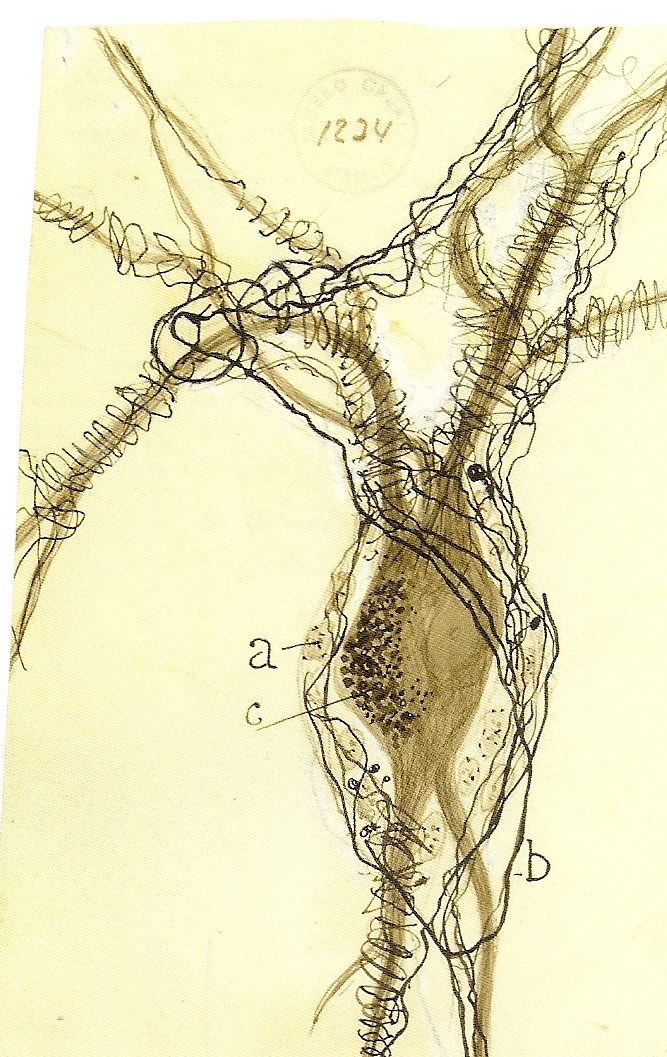
  The drawing above, by Santiago Ramon y Cajal, appears in the spectacular new book: Portraits of the Mind.  It is a fascinating tome leavening a narrative of the development of neuroscience with extraordinary images of milestones along the way.

  The exquisite quality of many of the images conveys a sense of wonder in three different regards: of the brain’s incredible intricacy; of the genius of the techniques invented to make that observation possible; and of the incredible talent employed in a variety of media bearing witness.

  Jonah Lehrer writes in the forward: “Keats knew that truth exists in a tangled relationship with beauty, and nothing illustrates that poetic concept better than these scientific images.  Their empirical power is entwined with their visual majesty.”  Yep.

  Nobel laureate (1906) Ramon y Cajal has been called the father of modern neuroscience.  Using a technique developed by his contemporary and co-Nobel recipient Camillo Golgi*, he found that the “fundamental organizational and functional units of the nervous system are individual cells” – neurons.  This ‘Neuron Doctrine’ supplanted the Reticular Theory which had held that the nervous system was a vast unorganized, unstructured, tangled net.

  The work above depicts axons wrapped around a neuron.  Specifically those of a thalamus.**  The draftsmanship is stunning – one gets a sense of three dimensions by the manner in which he manipulated the quality of the axon lines about the bulbous soma and its dendrites.  The axons have come from other neurons with messages.  The interaction is exquisite. 

  I was so moved in contemplation that a particular drawing of Albrecht Durer’s came to mind.  Look at the Head of Dead Christ below and see how his fine touch gave Christ’s beard a wondrous 3D tactility. Jordan Kantor wrote of the work that: “Through the miracle of Durer’s facile hand, the charcoal itself almost becomes the dead body of Christ”.***

  From vastly different perspectives, but with similar apparent simplicity, two great men have managed to take our breath away in  meditation on the nature of mind, man, and the human condition. 

*They didn’t like each other, didn’t work together, and spoke ill of each other during their acceptance speeches.

**Interestingly, Ramon y Cajal’s work showed that neurons and their parts differ from one part of the brain to another.  “Each part of the brain bears its own signature architecture of axons”.  The breadth of shapes and sizes (as depicted by R y C) is amazing.

***Durer’s Passions, Harvard

HO, HO, HO*

December 24, 2010


  Yup, just as you thought, the above image is evidence of a universe previous to the one in which we now find ourselves.  In a recently published paper, Roger Penrose (cf 12/18/09) and Vahe Gurzadyan theorized that these concentric circles are vestiges in the cosmic microwave background (CMB) of the cataclysmic end of the preceding cosmos in the collision of two supermassive black holes.

  A young universe is characterized by very significant homogeneity.  With time however, it becomes less uniform, objects coalesce, and (with luck?!) life appears and evolves.  Many cosmologists agree so far. 

  The new theory suggests (I think) that at the later stages of a universe, particles all become massless.  As they do, they begin to constitute black holes.  Ultimately, since massless particles must move at the speed of light and thus time would stand still, the universe becomes infinitely small.  The black holes explode, collide, and voila, big banged, the whole thing starts over again.

  Not surprisingly, other researchers posit different explanations for the recently discovered rings pictured above. Physics blogs are atwitter.  In the last entry I read on one however, Gurzadyan and Penrose say that: “…the low variance circles occur in concentric families, and this key fact cannot be explained as a purely random effect.  It is however a clear prediction of conformal cyclic cosmology”.

  Now, what really interests me is the relationship between the nature of the universe thus described and the nature of consciousness as described by Alan Wallace and others*.  They posit that there is a ‘substrate’ unstructured consciousness from which individual psyches arise and evolve.  “The human mind emerges from the unitary experience of the zero-point field of the substrate, which is prior to and more fundamental than the human, conceptual duality of mind and matter.”

  The substrate is layered above a “Platonic world of abstract realities that can be discovered by human investigation, but are independent of human existence”.  This concept has been advocated by respected physicists such as Wolfgang Pauli and “stems from an awareness of the unreasonable power of mathematics to describe the nature of physical processes.”

  Furthermore, Roger Penrose and many if not most others agree that “mathematical realities are not determined by physical experiment, but arrived at by mathematical investigation.  You don’t have to look far to find how math underpins our universe.

  Now for the best part.  Wallace describes how experience of the  Platonic archetype realm can be achieved.  The process begins with deep meditative contemplation of an archetypal form such as the concentric circles above.  No matter what you think by now, you have to admit it is interesting (and cool!) that patterns such as that atop this latest meander of mine can be found throughout our universe and at any scale.

*cf Post of 12/10/10 Nope I haven’t recently eaten any

**Hidden Dimensions, The Unification of Physics and Consciousness, B Alan Wallace, Columbia 2007

***To read about the Penrose/Gurzadyan theory of conformal cyclic cosmology start with the article on page 101 of the December 4, 2010 Economist.


D’oh

December 17, 2010

     Whether or not you buy the notion that magic mushrooms played an important role in the evolution of human consciousness, you must agree that the density of interconnections in our neural circuitry underpins the richness of our thinking.

  OK.  What could cause a reversal, a diminution, a loss of ‘stars’ in our cerebral constellation, a trend backwards toward the synesthetic threshold?   Television.  And it won’t take generations for evidentiary manifestation.  Just as DDT decimated avian populations within a generation, so is the boob tube laying waste to a wide swath of our individual and collective brainpower.

   US students were “mediocre”, faired poorly in a just released assessment of fifteen year olds across the planet.  Another recent report showed that Americans’ scores on a commonly used creativity test fell steadily from 1990 to 2008, particularly among our youth.  Time spent in front of screens was given as a primary cause.

  Not only do couch potatoes’ muscles wither and minds lose dimension while bellies grow, the attendant self isolation wreaks wider havoc.  Society’s collective consciousness attenuates along with the density of its interactions. 

  An article in the May 22 WSJ posited that: “Where population falls or is fragmented, cultural evolution may actually regress”.  For example, 10,000 years ago the 4,000 residents of Tasmania became isolated by rising sea levels.  They then “constituted too small a collective brain to sustain let alone improve the existing technology” and apparently lost the ability to fashion tools, clothing and fishing equipment.

  Reflect upon this the next time driving through a neighborhood and you notice that nearly every large window is illuminated by that familiar glare.  Or the next time in a big box store the walls of which are filled with incredibly expensive and huge television sets.  With $500.00 alters upon which to rest them available nearby.

  Most TV programs are either inane or pandering.  Not great art. Reminds me of what Iris Murdoch wrote about bad art: It’s “the soft, messy self-indulgent work of an enslaved fantasy.” 

  The other evening there was a prime time network program about losing weight.  How can there be viewership sufficient to satisfy advertisers?  We should feel insulted.  Newsflash – there is one and only one way: EAT FEWER CALORIES THAN YOU BURN!

  Jeesh. Who is going to fix stuff here in the States some years hence, let alone invent it? 

  D’oh!


Hope I Get Some Of These On My Buche De Noel*

December 10, 2010


  The mushroom pictured above is an amanita muscaria, also known as fly agaric.  The variety has an etomycorrhizal (a specific sort of symbiotic) relationship with conifers (of which  more later) and are hallucinogenic.  Some believe that they and their relatives played a role in the evolution of human consciousness.  

  At the end of the last ice age our ancestors left the jungle for grasslands and began to pursue the animals they found grazing thereupon.  Growing on and around the animals’ dung were varieties of hallucinogenic mushrooms which great great (etc) grandpa also consumed.

  The presence of this fun stuff in the early human diet led to important neurological manifestations chief among which was synesthesia, a blurring of the boundaries of the senses.  This opened the door for the development of language and the flowering of humanity nature.

  About 10,000 or so years ago, the climate changed again, drastically reducing the geography upon which mind altering foodstuff could thrive.  The party over (but not lost to our collective unconscious), our ancestors reverted to the innate brutality of primate society.

  Why is this pertinent now?  As I mentioned above, certain sorts of mushrooms often grow near coniferous (Christmas!) trees and thus and otherwise have been linked to atavistic traditions of the holiday season.  Possibly, original catalyzing agents in fact.

   More recent of our forebears would watch reindeer find them by the trees, eat them, and then prance about euphorically.  Village shaman would enter a yurt dwelling at night through its smoke-hole and leave some of the fungi in stockings by the hearth for later employment in religious practices. 

  That the amanita natural design scheme is similar to Santa’s is obvious.  The white gilled, white spotted, and usually (but not always) deep red mushrooms appear widely throughout popular culture.  Including Christmas cards, Christmas tree ornaments, and, well, Disney’s version of the Nutcracker in Fantasia.

  Finally, “Rudolph the red nosed reindeer had a very shiny nose.  And if you ever saw him, you would even say it glows… [O]ne foggy Christmas Eve Santa came to say, Rudolf with your nose so bright won’t you guide my sleigh tonight?”. 

  Who could make this stuff up?  Rest my case.  On Prancer!

*Yule log.  A rolled holiday cake upon which are placed mushrooms made from meringue.

The Outdoor Cure

December 3, 2010


  There is an impressive new indoor climbing facility not far from where I live.  Visited it recently with youngest daughter and had a blast.  Vertical kinesthetics always provide their own special sort of joy.

  Daughter has been frequenting one in the Bay Area and was quite a bit more fit than her pencil pushing old man.  She cruised up and past the overhangs to the fifty foot summit with grace and ease.  Climbing is one physical endeavor that is gender neutral. 

  The sport’s most groundbreaking feat to date – the first free ascent of the Nose of El Capitan in Yosemite NP – was accomplished by a woman.  Lynn Hill.  Women know right off what it takes most men a long time to figure out, that finesse trumps brute strength.

  Anyway, the new wall incorporates a few hand sized cracks which up to this visit I’d seen in nature, but not plastic.  Either way, that sort of feature provides considerable security.  Slide your hand in, cup it, pressing fingers and hand heel to one side and knuckles to the other, and you have a multidirectional bomb proof purchase.

  Only trouble is that after a bit of upward progress thus effected the backs of your hands tell a tale of woe.  Especially if you’re out of practice and uncalloused.  (There’s a short such climb in Yosemite named “Meatgrinder”)  Oh well, I was visited by a waves of ouch and masochistic nostalgia as I slid my hands into my pockets later on.

  We had great fun, but it is not the same thing as being outside – somewhere between a video game and the real thing.  That thought occurred a few days ago when I came across an article in the 11-30-10 Science Tuesday section of the NYT titled “Head Out for a Daily Dose of Green Space”.

  Turns out that there is something called “outdoor deprivation disorder” and we learn that its “effects on physical and mental health are rising fast”.  The diminished importance given to physical activity and the natural environment has led to a diminished populace young to old.  Obesity, diabetes, high blood pressure, heart disease, vitamin D deficiency, osteoporosis, etc, etc.

  Not to mention the most important thing of all – the state of one’s mind and the experience of living.  Depression, stress, attention deficit disorder, are included in what one researcher called “diseases of indoor living”.

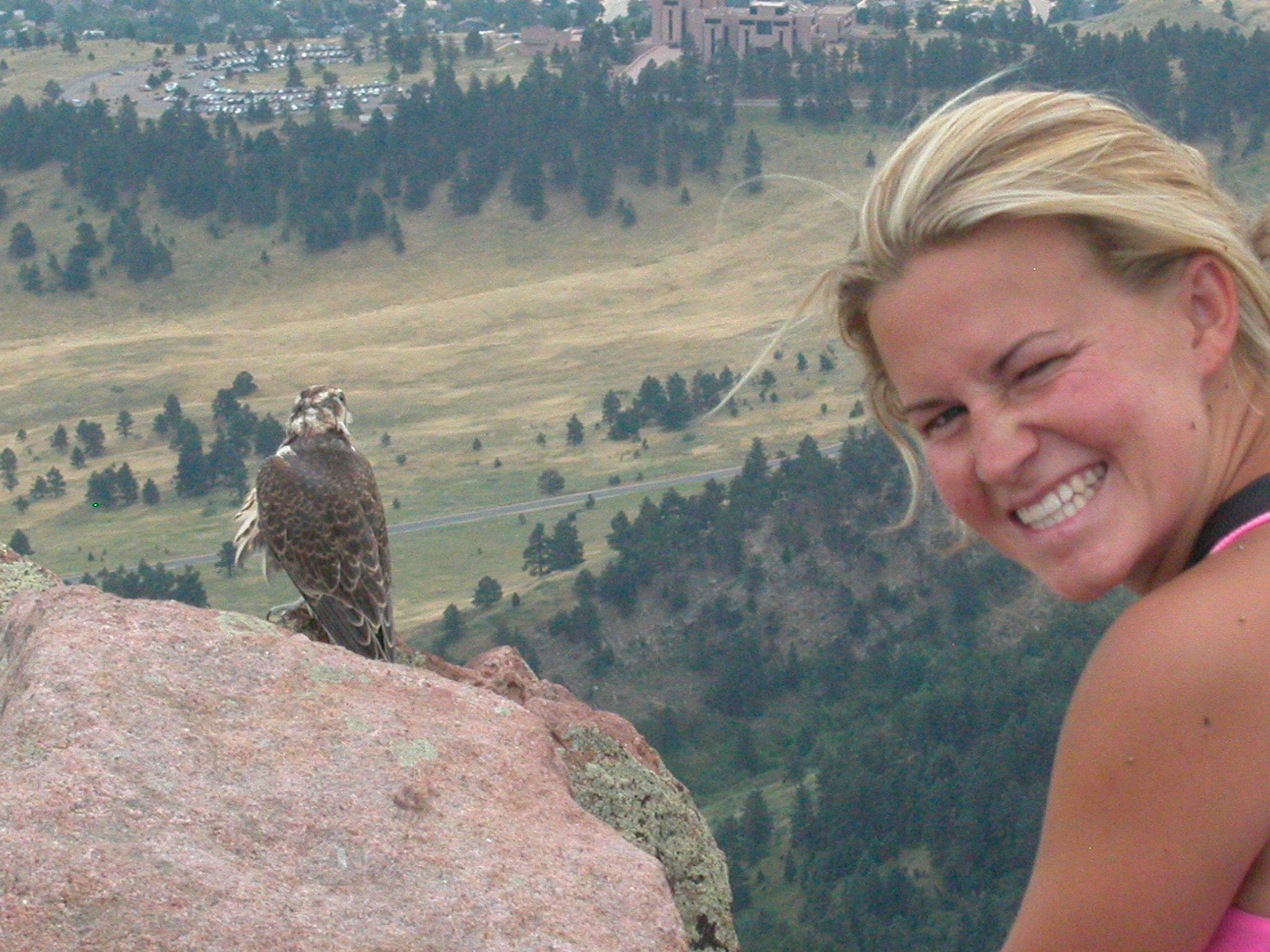
  Even regarding our present topic.  I’ve been repeatedly astounded to learn that gym rats visit other gyms within miles, within sight even, of world class natural outcrops completely unaware and uninterested.  You tell me which situation would constellate one’s neurons most spectacularly – the one above or the one below. 

 *The building in the background is IM Pei’s National Center for Atmospheric Research


Inexhaustable Flux

November 26, 2010

  From these temporal, geographical, and cultural points of remove, it is impossible to have a sense of the tumult in Japan at the end of WWII.  Among all else, the Emperor had been believed by many to have been a direct descendent of the sun.  Very few had seen him or heard him speak.  That his first public appearance was to announce the unconditional surrender of the centuries old dynaasty had to have been a shock of seismic proportions. 

  The zeitgeist of the uncommonly homogeneous and hierarchical island nation bore witness.  By the late fifties, any reticence to question or challenge authority had long since passed.  There were student riots.  Japan’s highly refined aesthetic patrimony convulsed.   

  One result was Butoh, an example of which you’ve just finished watching.  It is a typeof performance said to havebeen a reaction against traditional Japanese Noh, which dates back to the 14th century as well as to an incipient movement to imitate things western.  Almost unclassifiable, the term refers to a variety of inspirations, movements, or lack thereof.  

  Nonetheless, Butoh’s first proponents, Tatsumi Hijikata and Kazuo Ohno, having been dancers, that somecall ikt a form of modern dance is not surprising.  There is no set style, but white makeup and tightly controlled motion seems common.  Sankai Juku is the troupe most well known outside Japan.  It gathered much media coverage in 1985 when a rope suspending a performere from a tall building broke and he died.

  One artist,  Iwana Masaki, describes Butoh thus:  “I regard present day Butoh as a ‘tendency’ that depends not only on Hijikata’s philosophical legacy but also on the development of new and diverse modes of expression.  The ‘tendency’ that I speak of involved extricating the pure life which is dormant in our bodies”. 

  Sankai Juku recently gave a series of performances across North America.  Linda Sehlton, exectutive director of the NYC venue, said in an 11/0/10 WSJ interview that:  “you can interpret [the performance] in many different ways or not at all.  You can just enjoy how beautifully, peacefully they move and how visually stunning it is…”

  Sankai Juku translates as “studio of mountain and sea”.  The piece being performed below, Tobari, means screen or curtain.  It is subtitled “As if in inexhaustible flux”.  About it (in the WSJ bit) troupe founder Ushio Amagatsu said: “When human beings see stars, they see light emanated millions of years ago.  They are seeing something both in the far past and present.  That’s the reality of human beings.  We as individual human beings – our life span is limited.  However, we are part of a long history of life.  It’s so long that it’s continuous.”

  Yep.


Out of Africa Honeychile

November 19, 2010


  The score of Out of Africa won one of the film’s seven Academy Awards.  Composer John Barry did a masterful job at conveying what biographer Judith Thurman called the melancholy elegiac “clear darkness” of Karen Blixen’s story.

  Director Sydney Pollack originally intended to incorporate a background of East African sounds and tribal rhythms.  What a different film it would have been.  Barry was unconvinced: “Sydney, it’s not about Africa, it takes place in Africa, but it’s seen through two people who are madly in love with each other.  It’s really their story”.

  Though four-fifths of the book is a non-chronological take of the people and places of early twentieth century Africa from the point of view of a European visitor, the film does largely follow the relationship of Ms. Blixen and Denys Finch-Hatten.

  The pair did enjoy each other’s company and shared attitude and sensibility about life as expats in the Kenyan bush.  Finch-Hatten quoted Coleridge: “He prayeth well that loveth well both man and bird and beast”*.  Blixen wrote: “Here at long last one was in a position not to give a damn for conventions, here was a new kind of freedom which until then one had only found in dreams”.    

  The big ‘however’ though is that the emotional tone of both the book and film is hauntingly numb.  With third person knowledge this should be no surprise.  Blixen’s father hanged himself when she was quite young.  Her husband was unfaithful from early on and gave her syphilis.  Finch-Hatten refused to marry her even though he was her partner through at least one miscarriage.  Finch-Hatten died an accidental death.  (Only the last of these events is mentioned in Blixen’s book.

  The high point of the film (and perhaps the book) in every sense is when Finch-Hatten takes Blixen aloft in his Gypsy Moth biplane.  She called it “the most transporting pleasure of my life on the farm”.  Pollack and Barry collude to engender that feeling in us.  Upon her return to earth, several of Ms. Blixen’s Kikuyu colleagues ask if she’d had a glimpse of God way there high up above the clouds.  Oh how we wish for her that she had.

  Having seen the film several times and had my heartstrings plucked by the score alone, I was amazed – no shocked – to find that, among many other projects, Barry was responsible for the music of James Bond, from Dr. No through The Living Daylights.  Incredible for one person to be able to transmute the affect of both those two extremes.

  Thinking about that I realized that Out of Africa and the Bond series look at stuff of similar essence from the point of view of a woman in the first case and a man in the second.  The similarities between Denys Finch-Hatten and 007 are relatively obvious.  Both shoot first and ask questions later.  If at all.

  It is more interesting to consider just how kindred are the spirits of Ms Blixen and, say, Bond woman #1, Honeychile Rider.  Ms. Rider was born to a colonial family in Jamaica.  She was orphaned at an early age and raped not long thereafter.  She was beautiful, intelligent, and very independent.     

  Ladies Blixen and Rider would have enjoyed each other’s company – to the sorrow of Msrs Finch-Hatten and Bond…

*This would also be Finch-Hatten’s epitaph.

**It would be interesting to see if a technical analysis of the scores of the two films would yield a reflectivity similar to that of their emotional tones.