Non-Ergodic

May 1, 2009

mandelbrot

Read that word in an absolutely fascinating excerpt from the new book Reinventing the Sacred by Stuart Kauffman.  Didn’t know what it meant either and it wasn’t in my dictionary.  Tried to look it up in my digital OED but it locked up.

Courtesy of Google found that non-ergodic refers to a set or group or system, the universe say, that is incomprehensible by study of a single aspect or earlier state.  Ever since the Big Bang, the universe has been expanding and evolving.  One could not extrapolate its current state based upon its early arrangement any more than examination of a slice now would tell us much about the whole a billion years hence.

Kauffman is an atheist who wants to understand the nature of the universe.  At its earliest why did the atoms combine as they did?  Darwin’s theory of evolution tells us a lot about our biosphere, but what about before there was anything to evolve? How did the first reproducing cell form?

Framing the question with an example, he tells us that there are twenty different amino acids and 20 to the power of 200 possible combinations thereof to make a length 200 protein.  It would have taken ten to the power of thirty-nine times the age of our universe to make each of them once. Why did the ones that formed come into being and not any of the other possible combinations?

Kauffman began his quest with genes.  He earned his MD at UCSF and undertook research into genetic expression.  He found that they exist “on the edge of chaos” and that “the proper functioning of an organism depends upon its self organization and regulation”.  A trait does not come fully formed from a single gene, but from their interaction.  “Health is just a moment of stability in a very uncertain cellular world.”

The principles of self-organization found in complexity theory play an important creative role in the evolution of the universe, our biosphere, our genome, and our existence. It describes the behavior of systems that are sensitive to initial conditions, but evolve unpredictably over time.

The above Mandlebrot fractal is an example of a complicated structure arising from a simple set of points, a formula, and repeated iterations.  A slight difference in the points and formula would have led to significantly different evolution.  (cf the butterfly effect)

“Thus a radical and I will say, partially lawless creativity enters the universe.  The radical implication is that we live in an emergent universe in which ceaseless unforeseeable creativity arises and surrounds us.  And since we can neither prestate, let alone predict all that will happen, reason alone is an insufficient guide to living our lives forward.  This emergent universe, the ceaseless creativity in this universe, is the bedrock of the sacred that I believe we must reinvent.”

“What about all the aspects of the universe we hold sacred – agency, meaning, values, purpose, all life and the planet?…One response is that if the natural world has no room for these things, and yet we are unshakably convinced of their reality, then they must be outside of nature – supernatural…”

“The ground of our existence, then is not to be found in physics alone, but also in the partially lawless becoming of the biosphere, econosphere, culture that we self-consistenly co-construct.”

A universe not understandable by reductionism? Nor by a grand patron in robe and slippers?  Kauffman gives us a radical appreciation of an unpredictable creativity that underpins and leavens our cosmos.

*Interesting (to me anyway) Kauffman was president (in 1961) of the same mountaineering club as was I (1974).  Makes me wonder anew about the field of embodied cognition to which I referred  in “Let’s Dance” 1/24/08 below.  Kinesthetics, adventure, and cerebration  can combine to powerful effect.

**Dang if he didn’t figure out how to get paid to sit around staring off into space while I still need my day job.   Teaching at Harvard this spring,  he heads the Institute for Biocomplexity and Informatics at the University of Calgary.
Reading About Reincarnation Is Not The Same Thing As Being Reborn

April 24, 2009

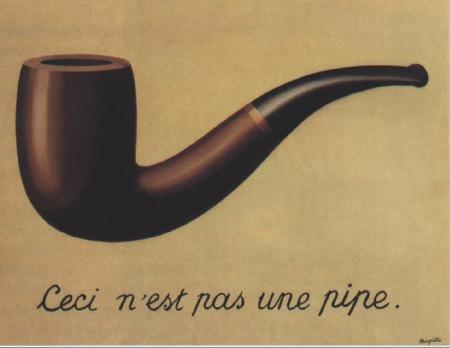
  Consideration of a work of architecture suffers from anything less than an actual visit.  A virtual representation of a painting, pot, or, well, turd* can only approximate a real-time in-person experience.  But a photo of a building conveys even less information of value.  A well known Magritte picture makes the point:

magrittepipe1

  The title is Ceci N’est Pas Une PipeIt Is Not A Pipe.  It’s not – it’s a painting of a pipe.  A photo or digital representation of a building bears even less resemblance to an intimate experience of it than the Magritte picture to the pipe.

  Thus the award of the annual Pritzker architectural prize must hold far more mystery (and allure) for the public than an Oscar, Pulitzer, or Grammy.  One can easily develop a relationship with the body of work of an actor, writer, or musician.  Very few knowingly visit multiple examples from the oeuvre of one, let alone several prominent architects.

  It is then quite ironic that most of us must in fact peruse the works of critics and photographers to develop any sort of opinion at all.  It is not impossible that we could admire the words and pictures, but find ourselves surprised or disappointed upon a visit.  Ceci N’est Pas Une Batiment.

  This year’s Pritzker winner for example, Peter Zumthor, leads a very small practice the output of which is almost all to be found in or near his native Switzerland.  The jury citation tells us that: “he develops buildings of great integrity – untouched by fad or fashion…only accepts a project if he feels a deep affinity for its program…modesty in approach and boldness in overall result are not mutually exclusive…”  It calls his chapel in Wachendorf, Germany “a universal breath of faith”.

  I’ve had the good fortune to visit one of his projects – The Kunsthaus Bregenz on the shore of Lake Constance in Bregenz Austria.  I had read about the building in preparation for the visit and expected not to like it.  I found the photos unattractive and befitting the “severe” label given by several critics.  Plus, it would have no views out from its perch on the eastern shore of a beautiful lake in-between Austria, Germany, and Switzerland.

bregenz-exterior

  All too true.  However, it worked.

  The overlapping etched glass plated exterior has tremendous effect both inside and out.  Its translucency both allows sun to pour into the six foot inter-floor light catching spaces and then down upon the rooms and their contents. The non-reflective nature of its exterior mitigates the potential for glass to transgress a site.  No blinding glare.  Finally, the angles and lines one can just make out through the rough glass sheets relate to the lines and castellation of the surrounding buildings enabling it to fit in.

  The building is deeply rooted in the site.  The nature of the glass curtain wall allows one to peer below grade (along with the sun) toward lecture and service spaces. A subdued office/shop/restaurant structure nearby works with the museum building make a pleasant open space.

bregenz-interior

  Ground floor reception is indeed severe if not foreboding.  The walls are bare highly finished concrete, floors gray terrazzo. The lighting of the 80 sq ft by 14 ft space creates an austere numinous experience.  Three exhibition levels lie above and one doesn’t know whether to expect a Teutonic warlock with an obsidian blade or a priest to deliver last rites. 

  Attention acutely engaged, the similarly proportioned and finished temp spaces do way heighten the impact of the narrow range of objects and talismans not overwhelmed or neutered.  Shows have been primarily if not exclusively contemporary.  The Peter Kobler installation there during my visit was up to the task and provided perfect counterpoint.  Almost hallucinatory.  A tour felt like the traverse of a difficult transmigration.

kogler

  Zumthor likes tennis, cigars, margaritas, and jazz.  Apparently he doesn’t allow his professional and private lives to overlap.  Kunsthaus Bregenz is dead serious.

* I had a professor once who asked the class “If a bear shits in the woods, is that art?”  Stuck with me.

* The museum’s homepage: http://www.kunsthaus-bregenz.at has a neat bit of embedded flash animation showing elevations, interiors, and detail.  Check it out.

Please Don’t Let My Wife See This Either

April 16, 2009

  A while back* I described the joy I take in the gorgeous array of dandelions that presents itself every year at about this time.  More subtle (at least visually) as well as more interesting is the ground ivy which is just beginning its ephemeral (again visually) resplendency.

ground-ivy-2

  To all but those who take pride in their bluegrass and fescue, the lavender blanket is a welcome sign of spring.  That the color lasts but a week or so makes it worthy of a Basho haiku.  He’s long no longer with us so: 

Lush thick lavender.
Funeral blanket for the
Mouse the hawk swooped up? 

  It’s scientific name is Glechoma hederacea and is found just about everywhere.  When in flower, it stands only a bit taller than the newly awakened and as yet uncut lawn.  It is a member of the mint family and spreads even more aggressively than the Derby Julep eponymous component.

  I find it interesting on account of its provenance.  Settlers from Europe brought it to the new world to help in the brew of their beer.  Its use predates hops and was called Alehoof and employed widely by Saxons for the flavoring, clarification, and preservation of their favorite beverage.

  There should be no surprise that it found its way to these parts given the large scale nineteenth century emigration of people from that region of Germany to our area.  Some of my own ancestors, even.  Prost!

  Most of the time when we hear about mankind abetting the migration of some species or other from here to there it is with a more or less negative tone.  Like zebra mussels across the inland waterways, or rabbits to Australia, or (believe it or not) everything not winged or finned to New Zealand.

  Diets of the developed world would be far less kaleidoscopic had it not been for, say, potatoes coming north from Peru, tomatoes and corn to Europe, and ground ivy from our Teutonic ancestors.  And the sun in my every breakfast, oranges.

orange

  Columbus himself brought them to these shores (well close), but they are thought to have originated in China near the South China Sea.  From there they made their way down the Malay Peninsula and then probably with the Indian Ocean current to the east coast of Africa.

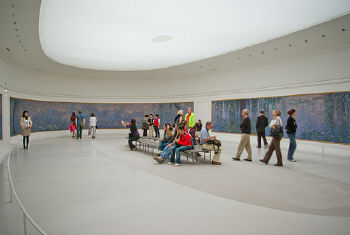
  Caravan north to the Mediterranean and thence throughout Europe. In Paris Louis XIV thought so highly of his 3000 orange trees that 1n 1617 he built the Orangerie in the gardens of the Louvre to house them.  In that pre-Versailles palace is no longer a citrus arbor, but rather a display of Monet’s water lilies of incredibly ineffable beauty.  It’s a 360 degree experience and imbues even the most stolid with a wonderful spiritual tumescence.

orangerie

  Funny how stuff works out.  Just think of all that would be lost if we were alone in this universe and collided with an asteroid.  Poof.  Remember, In Heaven there ain’t no beer. 

*5/9/08: Please don’t let my wife see this.

**If you like oranges read John McPhee’s Oranges  It’s fascinating.

Philadelphia

April 10, 2009
        Had a great few days visiting son in Philadelphia.  Undertook examination of several different important bits of our culture. 
      First was Kenny Powers, the lead character of the HBO show Eastbound and Down which you’ll find disgustingly hilarious if you’re a guy.  Only disgusting if you play for the other team. 
      Kenny never read any Greek tragedies otherwise he’d have recognized his hubris and the show would have been one-of and not a series.  It starts with him, as a rookie pitcher, winning the World Series for the Atlanta Braves.  He immediately develops a hugely oversized ego, declares himself a free agent, and begins a long obnoxious fall.  
      Our star levels out as a substitute high school gym teacher living with his brother and family.  He happily tells the school principal that his fiancé was an old KP flame and the flame that he was still in love with her chest. Drunk and high on ecstasy at the school dance he parts the crowd to strut his stuff for her.  
      There is a video of it on You Tube which I thought about inserting here, but didn’t after wife said “You better be careful, I’m a substitute too.”  Matter of fact, I looked at all of the clips on You Tube and found none appropriate for this more or less PG space.  
      Next day son and I went to an incredible show at the Philadelphia Museum of Art – Cezanne and Beyond – which intersperses about sixty works by the master with over a hundred by his heirs.  The experience makes for the enlightenment of even the most benighted philistine.*  Just take the two pictures below. 
      On the left Painting with Two Balls 1960 by Jasper Johns and (one of many of) M. Cézanne’s Mt. St Victoire (1903) on the right. johns-j-painting-with-two-balls  There is an elemental simularity – without the balls and thrust of the mountain both would be pure abstraction.  In a cezanne-msv-2very real sense the one by Johns is a reflection of the other.  Relation I mean.  Cezanne himself said “In my thought one doesn’t replace the past, one only adds a new link to it”.  So here we have the Fin de Siècle revolutionary dressed up for the 60’s.  Shows the truth in the saying: “Mediocre artists borrow.  Great artists steal”. ** 
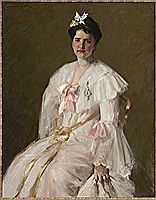
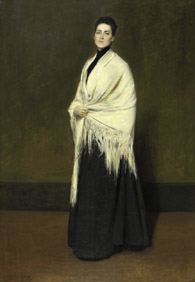
      Son then had to take an exam (Mr.”I got ’em all right…” since the crib) and I went to another museum – the Philadelphia Academy of Fine Arts where many great American artists took training.  Importantly for me, this included William Merrit Chase whose (one of many) portrait(s) of his wife hangs in our museum here in town.

    chase-mrs-chase-in-pink1

      I have returned many times to visit  Mrs Chase In Pink starting years ago when I was younger than both then were to now older making all manner of attempts to divine something of the nature of their relationship.  Without success.  I was never able to learn anything.

    chase-portrait-of-mrs-c

      Thus I was pleased to find another portrait of her at a much younger age in PAFA thinking that a youthful impetuosity might betray something for me.  No luck.  Thinking about this while reading a review of the Cezanne show I came across a description of M. C’s portrait of Mme. C calling her his “inscrutable muse”.  Aha!

      I’ve written in a post below how it feels to be caressed by the cerebrations of an artist/spouse and realized first that both women enjoyed each sitting.  More to the point neither was a mistress, but a life partner and a hint of ire or eroticism or pretention or whatever (while well within the power of the artist/ husband) would indeed be a betrayal of confidence and likely the last such opportunity.

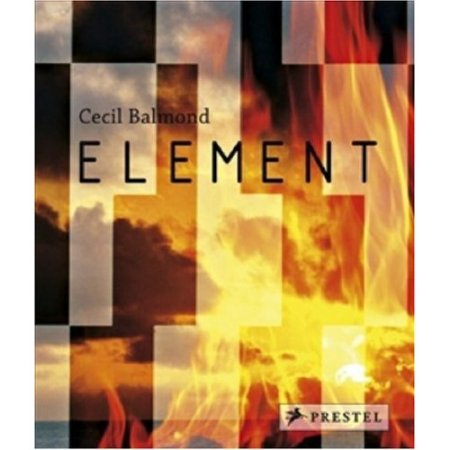
      Later that afternoon as I was relaxing in son’s apartment enjoying the urban street noises below and waiting for him to return I looked through a book by one of his professors: Arup Uber Engineer Cecil Balmond.  In it (Element)  he draws attention to the, uh, congruence of all the myriad wonderful patterns found the world about  and says: “We are the nervous system of a great mystery”

    balmond-element

      Ya, but I’m working on it. 

    *Given a hint and some time, even Kenny would figure out to what the two balls relate…

    ** Jasper Johns said about a Cezanne picture: “As for the Cezanne, it has a synesthetic quality that gives it great senuality-it makes looking equivalent to touching”.

Mirabile Dictu

April 3, 2009

toilet-1

Ever concerned that I relentlessly hone my intellectual acumen, son gave me a special book for Christmas.  Toilets of the World.  It is a colorful tour of this important, but often overlooked corner of the built environment.

From a rugged plein-aire outhouse in British Columbia to an aluminum one that pops up like a periscope at night in Soho in London, to the dual culture stool in India upon which you can stand or sit, we visit all manner of approaches to these bits of the daily life of every single person on the planet.

toilet2

You may find this hard to believe but(!), there is even a website devoted to the best restrooms in our country.  www.bestrestrooms.com Even more surprising is that the facilities in our local airport were voted #5 in the USA in 2006!  The one in the video below (21C Museum Hotel Louisville, KY) was voted #2 last year and  I’m proud to say that I was a able to add it to my tick list when in that city for a ceramics convention with guess who.

Perusal of the not quite coffee table tome led me to reminisce and recall related memorable moments of my own.  And lest you think poorly of me for so indulging I will hasten with the reminder that I’m far from the first to incorporate such, uh, organic matters into exposition.

Take Aristophanes, for example, who several thousand years ago in Athens wrote a play (Peace) in which a major character rode to heaven on the back of a dung beetle.  Why?  Perfect feedback loop.  Passenger doubles as source of fuel.

Anyway, the list of course is endless.  Writing names in snow with my brothers.  Lifting a lid and watching railroad ties pass beneath.  Using snow for the hygiene part.  Standing at a urinal in a fancy hotel (see above) and watching people in fine evening attire make their way through the hallway.  Stack of books in my own special place at home…

No regular visitor to this space will find it difficult to believe that my fondest such memories are set in the out-of-doors.  Once a friend and I were stuck nearly frozen on a ledge knees to chest in a blizzard for two days.  When the storm broke I commenced up the next part soon to feel an intense churning deep within.

My partner was directly below me holding my rope and I was thus loath to do anything to annoy him.  Took all of my will power to both make the necessary progress and purse a certain orifice till I made it to the top of that pitch, tied off and moved to the side.  I won’t go into any more detail, but will speculate that the occasion may well have led to the new National Park Service regulation that thenceforth climbers in that park must step off terra firma with a means of not leaving anything behind.

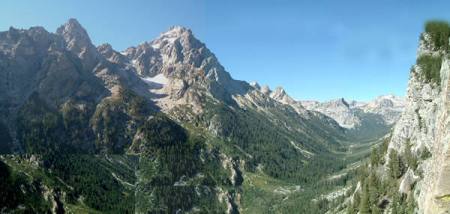
The last experience with which I will regale you was as an observer.  Years ago a friend (became my brother-in-law) and I were doing a route called Guides Wall in the Tetons.  Mid-way up on an adequate ledge that sloped back to front, he realized that there was business to be done.  He undid what was necessary, backed up, leaned against the wall, and lost himself in thought.  Unfortunately, the sloping geometry allowed the ‘fruit’ of his efforts to roll down upon and into his knickers.

Oh well, be honest, who hasn’t found themselves in something of the same predicament?

And, oh, the view!

view-from-guides-wall

My Kind Of Town

March 27, 2009

chicago-skyline-day-2

  Next time you stay overnight in Chicago and get up for your morning run, make sure to go south along the lake a bit, past the Shedd Aquarium, and then east out the Solidarity Drive peninsula to the Adler Planetarium.  Then turn around and look back. 

  You will see why the Economist called it “…architecturally the most interesting city in America”.  And a better point of vantage could not be had.  If done just as I described you’ll already be on an endorphin high and with your first look, your breath will be taken away as it was just after first hearing the major movement of some great piece of music.  You will agree with (Chicagoan) Frank Lloyd Wright that “architecture is nothing more than frozen music”.

  With each repeat of this experience, I get the feeling that the final reverberation ended just the second before I turned.  Instruments are at rest.  Orchestra standing about to bow.  Remember – this is far removed from the sounds of the city.  In the early AM there is near silence out there.

  When I noticed a nearby statue I figured it must be of a great composer, seated, listening to a performance of his finest work.  Upon closer inspection however, it turned out to be of Copernicus which in a sense is just as appropriate.

  Chicago’s architecture would not be nearly so moving and dramatic had it not been for the great fire of 1871 which burned a wide swath to the ground.  From the ashes arose what is there now there to be seen.  A big bang of sorts.  It thus makes sense to have that important early cosmologist looking upon what hath been wrought.

KC-GULL-3C-830PM_MET 0624 C03 KOZ24

  It is especially fulfilling to consider this particular measure of the built environment as of a whole rather than of its pieces.  It is a nearly perfect oeuvre of quite large scale and, in comforting contrast to the terror and turmoil about these days, shows what can be achieved through harmonious collaboration. 

  Iris Murdoch wrote: “Good art, whatever its style, has qualities of hardness, firmness, realism, clarity, detachment, justice, truth.  It is the work of a free, unfettered, uncorrupted imagination.  Whereas bad art is the soft, messy self-indulgent work of an enslaved fantasy.  Pornography is at one end of that scale, great art at the other end.”*   Hardness, firmness, realism; doesn’t that sound like Chicago?

  It is incredible to learn that the city was built upon a swamp; that its name relates to the onions found therein by Native Americans; and that the land from Michigan Avenue to the lake was reclaimed and filled with the conflagration’s remains;

  As Carl Sandburg wrote in his Chicago Poems:

Come and show me another city with lifted head singing
so proud to be alive and coarse and strong and cunning

  And:

By night the skyscraper looms in the smoke and the stars
and has a soul

  My kind of town.

chicago-skyline-night

Could It Have Been Her Perfume?

March 20, 2009

  Most don’t realize it, but there is more involved with a rich experience of a perfume than simple inhalation.  If you rush it or force it, all is lost.  In fact, it is best not to inhale at all.  To maximize the olfactory uptake, especially of a really fine subtle sent, you let it flow through your nostrils of its own accord.  Allow it to linger.  Then maybe draw in more very gently and slowly.  While keeping an eye on she off whom it floated.

  The very old part of your brain that manages the sense of smell will conjure something up for you to combine with the view.  Unfortunately the process often ends up feeling like inhaling screen or something out of Bosch. Get what you pay for, tart. 

  But sometimes when my wife walks past I’m left in a special sort of ethereal reverie.  An unexpected existential elevation – transitory to be sure, but all the more effective for the fact.  Oh yaaa.  Wow!  That’s who she is…

  One’s sense of smell can be  incredibly generative.  The briefest waft can catalyze memories by the torrent.  I remember once when my kids were very young I picked up a crayon and smelled it.  A hallucination ensued of me in my youth with coloring books and my brothers at our kitchen table.  Proust began his novel In Search Of Lost Time with the protagonist sniffing a small French cake called a Madeline which act brought forth such cerebration that seven volumes were required to get to the denouement.

  Remember in Silence of the Lambs when Lecter first meets Clarice and says: “You use Evyan cream and sometimes you wear L’Air du Temps, but not today…”?  It was a crucial part of the flic for a variety of reasons.  We already knew that he was a beast, but then in that dungeon we learn that he was cultured and preternaturally discerning.

  The choice of that particular scent was prescient. The name translates as “the air of the time” or zeitgeist in other words.  The film went on to win five Academy Awards and could thus be said to have been at the leading edge of consciousness back then in the early nineties. 

  What in Lord’s name does that say about us?  That millions around the world would pay good money (and still do) to watch a horrible cannibalistic psychopath?  Does it numb or sensitize?  It’s interesting to juxtapose Dr. Lecter and Hanna Schmitz (cf March 6 below).  Few would find Lecter banal.  Should that be reassuring in some way?

  In the end, after his gruesome escape when he called Clarice from calm repose, how was it that his feelings toward her would have him say: “I have no plans to call on you, Clarice, the world being more interesting with you in it”?

  Could it have been her perfume?

FASHION TIPS

March 13, 2009


         mid-light                                        retro-bustier1

  Hi girls!  Well, I said I’d get to fashion tips one day…  Such a steady and deep stream of women’s clothing catalogues flows through our mailbox that it would be impossible for me not to have honed a related set of skills.  Read what follows, but don’t tell your mother what I’m up to.  I’m pretty sure that she wouldn’t be interested.  Your brother will understand.

  The girl on the right (Victoria’s Secret – ‘Beach Sexy’ Collection) is real nice, I’m sure.  And I too would do just about anything within reason for the bucket of shekels she probably takes away for her efforts.  Nonetheless, she looks like something you’d see in a window in Amsterdam.  Why else would the company sell their undergarments in multiples?  The only point that comes across has to do with something one is born knowing how to do even if it does take some number of years to rev up.

  The girl on the left (Patagonia Spring 2009) is nearly atop the most famous boulder problem in the whole world.  It’s called Midnight Lightening and is in Yosemite National Park.  It was attempted many times when I was hanging out in the Valley, but was not climbed until the year after my last serious visit (1978).  Once she presses up, she will be past the crux of the extremely difficult (5.13b) forty foot route.  Gently holding both lips between her teeth (opposite of the pout on right) and not setting her jaw, she makes it look easy.

  That photo and shots like it in other catalogues and depicting other sports make me remember stuff like: the fact that your mother could throw the softball farther than I could in grade school and still is a much better skier; the girls state tennis tournaments; the Big 10 Women’s Soccer Tournament; climbing with you; and climbing in Yosemite myself.  

  Only after all that does it dawn on me that the girl is cute.  Uh, for her age.  And realize that since she’s obviously not a hack (to the contrary, world class) she must be particular about the quality of her gear.  It has to be comfortable and move with her.  She’s not getting paid so it’s gotta last.

  The cover of the Title Nine catalogue sitting on the kitchen table just now has an attractive woman in a bathing suit holding her surfboard and young son.  Thus we can see that she was able to convey a thought similar to that on the mind the young lady above right without, well, having to resort to skankitude.

  Finally, in the spring Athleta catalogue there are some attractive running outfits.  The caption for one reads: “Turn Every One of Your Runs INTO A SPECTATOR SPORT”.  The getup looks great and is not risqué, but that intent compels me to advise you to take care.

  You know that I never wear a shirt if it is anywhere near warm enough and certainly wouldn’t begrudge women any opportunity for ventilation and vitamin D.  Furthermore, I won’t ask you to consider a habit or burqua.   However, in the case of clothing, less is not necessarily more*.  Unless you’re chumming for sharks and ok with the ensuing mindless frenzy, remember that form should follow function*. 

* I paraphrased architects Mies van der Rohe and Louis Sullivan so that your brother wouldn’t feel left out of the discussion.

**Left photo by Rich Wheater: http://www.richwheater.com  Check out his site.

Can’t Read It Out Of A Book

March 6, 2009

reader1 

  In the New Yorker Anthony Lane called the film version of The Reader “dramatic roughage”.  Rex Read, in an advert pull quote, used the phrase “one of the most uplifting films of the year”.  Wikipedia holds that the main theme has to do with how Germans have struggled to come to terms with the holocaust and what it did to postwar intergenerational tension. 

  That’s not what I got out of it. At all.  Or rather, I guess I buy the above, but was nearly overwhelmed by something else.

  For me it was a deeply troubling personification of Hannah Arendt’s observation that the perpetrators of the holocaust were in no way special.  She called it the “banality of evil”. In fact, by either deliberate allusion or fortuitous coincidence, the main protagonist’s name is Hanna(h).  Hanna Schmitz. Late in the book one even learns that Frau Schmitz became familiar with Arendt’s reportage of the Eichmann trial which led to the coining of that chilling phrase.

  Frau Schmitz was a simple person who could not read and was ashamed of that fact.  The shame led her to quit good jobs twice so as to avoid promotions and discovery.  The first led her to take work as a guard for the SS at a concentration camp.  The second to recall the first and leave her then current circumstance and the life of a young lover.

  From the moment we meet her (which in story sequence is 1958) Schmitz appears to be a joyless working woman.  Her apartment is quite spare and she works as a conductress on a streetcar.  The highly publicized eroticism of her chance encounter and subsequent affair with fifteen year old Michael Berg is diversionary. Years later the mature man, our narrator, looks back and realizes that she’d had a “seductiveness that had nothing to do with breasts and hips and legs, but was an invitation to forget the world in the recesses of her body”.

  The story takes its name from her perusal of literature by a variety of means for first, other attempts at escape, but later for insight. She becomes absorbed, as do we… 

  Several years after her disappearance, Michael learned that her (literary and then physical) departures were not from the workaday world but instead from the memory of her complicity in the deaths of 300 innocents in the camps.  There could though be no real escape.  “…escape involves not just running away, but arriving somewhere”.

  During her trial we watch as she, lone among her group of defendants,  subconsciously struggles to understand why she did not unlock the doors of a burning church in which women and girls were penned.  She had been instructed to keep order and that was what she had done.  It had been her job.  “What would you have done?” she asks the judge who did not respond.  For himself or us.

  One can only say what one thinks one would have done in a hypothetical situation.  It is easy to be heroic from several points of remove.  Look only to Cambodia and Rwanda and Srebrenitca for subsequent episodes of horror in which multitudes of common people chose not to break rank. 

  Just before her scheduled release from prison, Schmitz tells Michael that “no one understood me…and when no one understands you then no one can call you to account… Not even the court…But the dead can. They understand.  Here in prison they were with me a lot.  They came every night, whether I wanted them or not.  Before the trial I could still chase them away when they wanted to come.”

  By that time she had taught herself to read and as indicated above had read the likes of Primo Levi, Elie Wiesel, and Arendt.  She learned that the dead were many more than 300 and decided that if they understood she would join them to finally thus enable her own understanding.  She hanged herself. 

  Only the film could be called uplifting and then only in the narrowest of senses.  At the end of the movie (not the book) Michael begins to attempt to remove some of the distance between his daughter and himself by taking her to Hanna Schmitz’ grave and initiating a cathartic dialogue.

  So, for his daughter there could perhaps be some measure of understanding.  But not for us.  It has happened again.  And again.  And again.

I Am Not Myself

February 27, 2009

  That’s Swedish singer Karin Dreijer Andersson in When I Grow Up from her Fever Ray project.  The video was directed by Martin De Thurah. DJ Dirt McGirk introduced me to the piece calling it stunning and mesmerizing.  I agree.

  From an initial brief placidity, the music quickly lets you know that something’s awry in suburbia.  Rounding a corner we see a disheveled waif atop a diving board facing away.  With contorted steps backward, she gathers strength and begins to writhe and sing as if possessed.  The water initially trembles with potential, but soon roils to her incantations.  She turns and communes with the water beast which displays its spiritual tumescence.

  At the peak of the tumult we briefly see a man through glass darkly – a minder, intermediary, sacerdote there to make sure things don’t get out of hand.  He’s like dark energy, the 70% of the universe about which we know nothing and looms large for the fact.

  Spent, our shaman folds her wings and the water calms.  Even though she did all of the work, it was good for us too and we’re newly invigorated.

  Clearly this is not just a “silly little love song” or anything else we’ve previously seen or heard.  (Well, at least not this 56 yr old technophobe.)  And more than any other video  I’ve seen neither meaning nor valence can be teased out of the lyrics alone. Here’s the first verse:

When I grow up, I want to be a forester
Run through the moss on high heels
That’s what I’ll do, throwing out boomerang
Waiting for it to come back to me.

  It’s oracular.  Like, say, the I Ching.  Jung wrote in the introduction to the Wilhelm translation that “The heavy-handed pedagogic approach that attempts to fit irrational phenomena into a preconceived rational pattern is anathema to me.”  Let it sift for a while, let the other side of your brain kick in.  What does it mean to me

  Indeed, Andersson says that “half of what the songs are about is the subconscious… A lot of it is like daydreaming, dreaming when you’re awake, but tired.  I try to write when I’m in that state.”

  The piece brought immediately to mind African maskers – dancers wearing those beautiful/grotesque wooden masks seen in museums.  They are fascinating and often spectacular objects in and of themselves, but purposeful and part of a larger whole in their use.  Wearing one, a dancer says “I am not myself” meaning he/she has become the evocation of a spirit. 

  Perhaps enabling a rite of passage in this case.  Try something out.  Throw something out there.  Wait for feedback…

  Masks in museums are shorn of much decoration attendant to them when in use such as raffia, textiles, animal hides, feathers, leaves etc.  Their makers say that “their work actually came from the spirits who revealed themselves in a dream or vision…”*

mask-2

  Joseph Campbell wrote in his incredible Hero With a Thousand Faces that: “It would not be too much to say that myth is the secret opening through which the inexhaustible energies of the cosmos pour into human cultural manifestation”.  I know Jung would agree, but probably also would an African dancer and Andersson herself.

  There’s lot’s at stake.  Close to the end she sings:

On the seventh day I rest
for a minute or two
then back on my feet and cry for you

  Perhaps she needs our help.  Nikos Kazantzakis, author of Zorba the Greek wrote in his The Saviors of God “Gather your strength and listen: the whole heart of man is a single outcry.  Lean against your breast to hear it; someone is struggling and shouting within you.”

  At the very least, as the author of a tome on African Masks** says of them, cultural myths, and Fever Ray also “represent part of a larger cultural ethos”. 

  That old zeitgeist again.  Where, exactly, are we?  To enjoy one’s stay here it is important to be comfortable living in that question.

*African Masks from the Barbier-Mueller Collection

**Andersson is the mother of two young kids and all I know is that if I had seen my mom (or my kid’s mom) acting like that I’d think that she’d had too many of what the Stones called “mother’s little helpers”.

*** I once heard Kazantsakis’ widow speak.  She said that he’d held that humankind’s biggest problems were the comforts of life and syphilis.  The former, at least, seems to be taking care of itself these days…